Systems approaches to studying cancer metastasis and gene regulation

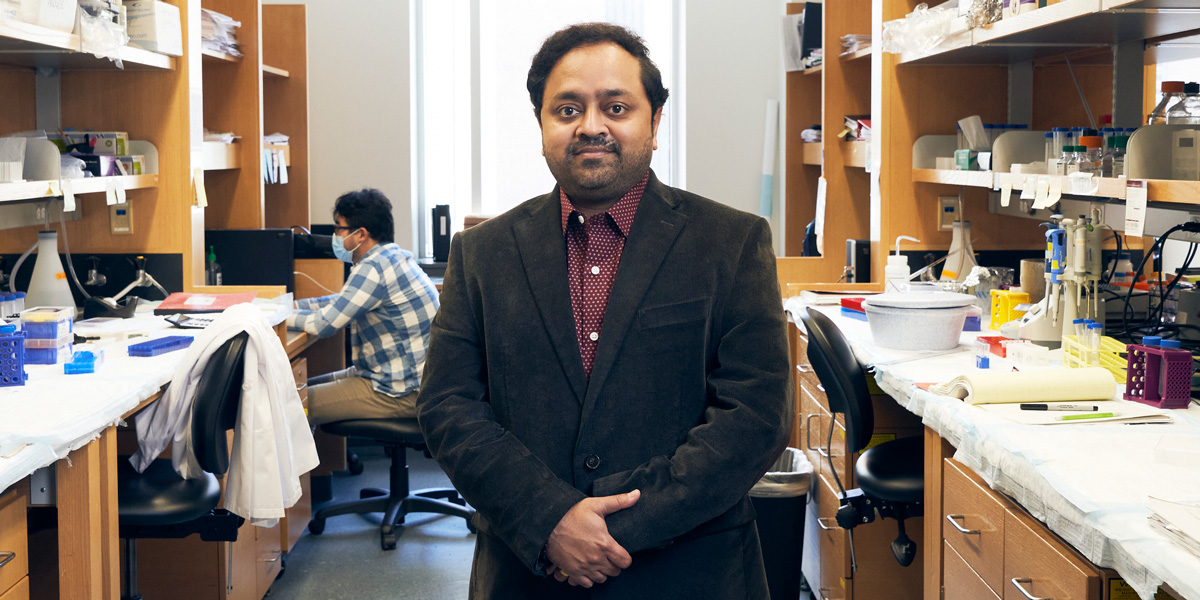
Our laboratory focuses on defining the underlying mechanisms that promote tumor progression and metastasis.
We take a systems biology approach investigating metabolic pathways, genetic and epigenetic regulation, and immune evasion mechanisms that selectively sustain the growth and progression of metastatic tumors.
Our research is supported by grants from the National Institutes of Health, the National Cancer Institute, the Susan G. Komen Foundation, and the Roswell Park Alliance Foundation.

Research directions
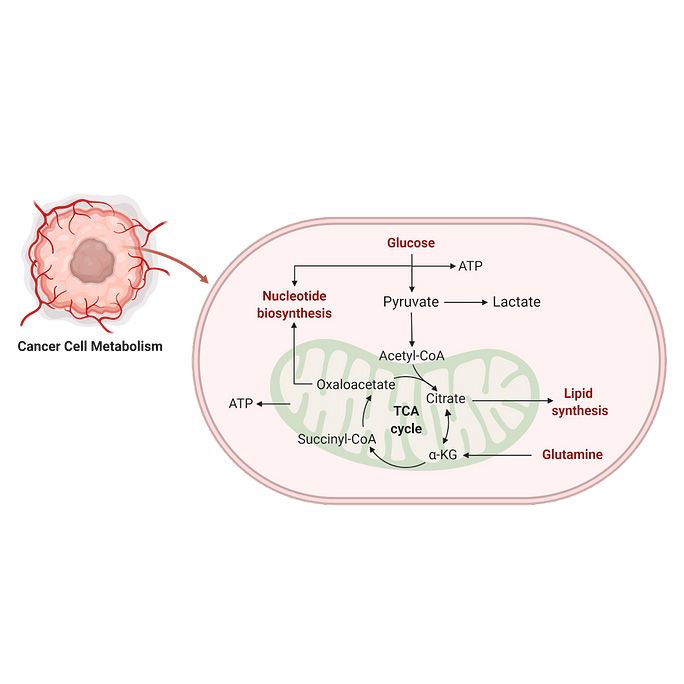
Discovering Metabolic Dysregulation in Cancer
Learn more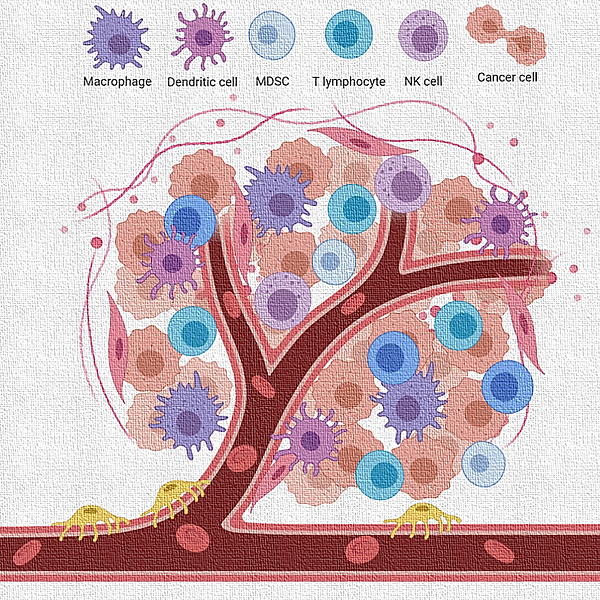
Decoding Tumor Microenvironment and Immune Response
Learn more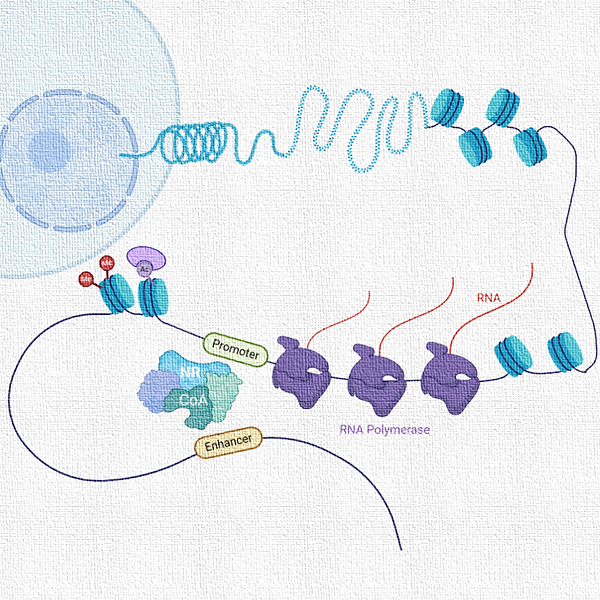
Defining Transcriptional and Epigenetic Regulation
Learn moreSelected publications
- Nuclear-specific reductive carboxylation of alpha-ketoglutarate fuels histone acetylation to induce chromatin accessibility and gene activation. Sawant Dessai A, Elhalawany NA, Dai T, Jacobi JJ, Prechtl C, Dimeck AN, Morton SR, Long MD, Singh PK, Putluri N, Lopes M, Liu S, Smiraglia DJ, Gurova KV, Lund PJ, Gates LA, Jung SY, Dasgupta S. Nature Communications (2026).
- Differential bone morphology and hypoxia activity in skeletal metastases of ER+ and ER− breast cancer. Das A, Barry MM, Ernst CA, Dahiya R, Kim M, Rosario SR, Lo HC, Yu C, Dai T, Gugala Z, Zhang J, Dasgupta S, Wang H. Communications Biology (2024).
- TRAF4-mediated nonproteolytic ubiquitination of androgen receptor promotes castration-resistant prostate cancer. Singh R, Meng H, Shen T, Lumahan LEV, Nguyen S, Shen H, Dasgupta S, Qin L, Karri D, Zhu B, Yang F, Coarfa C, O'Malley BW, Yi P. PNAS- Proceedings of the National Academy of the Sciences U S A (2023).
- Hypoxic activation of PFKFB4 in breast tumor microenvironment shapes metabolic and cellular plasticity to accentuate metastatic competence. Dai, T, Spencer R; Katsuta, E; Paterson, EJ; Novickis, AT; Dessai, Abhisha Sawant; Gomez, Eduardo Cortes; Zhu, B; Liu, S; Wang, H; Abrams, SI, Seshadri, M, Bshara, W, Dasgupta, S. Cell Reports (2022).
- Metabolic enzyme PFKFB4 activates oncogenic coactivator SRC-3 to drive breast cancer. Dasgupta S, Rajapakshe K, Zhu B, Nikolai BC, Yi P, Putluri N, Jung SY, Coarfa C, Westbrook TF, Zhang XH, Foulds CE, Tsai SY, Tsai MJ, O’Malley BW. Nature (2018).
Are you a graduate student?
Graduate students from any PhD track admitted to the Roswell Park Cancer Sciences Graduate Program and University of Buffalo MD/PhD Program are accepted for laboratory rotations. Email Dr. Dasgupta with your research interests.

Graduate Student Tao Dai Earns Prestigious Breast Cancer Predoctoral Fellowship
His project for the Breast Cancer Research Initiative examines how the PFKFB4 enzyme prevents immune cells from attacking breast tumors, and how the enzyme increases the motility of TNBC cells, allowing them to spread to different organs.
More news headlines


Contact the Dasgupta Lab
Email: Subhamoy.Dasgupta@RoswellPark.org
Phone: 716-845-2461 or 716-845-2462
Lab Location: Center for Genetics & Pharmacology (CGP) L3-101- 106
Department of Cell Stress Biology
Roswell Park Comprehensive Cancer Center
Elm and Carlton Streets
Buffalo, NY 14263