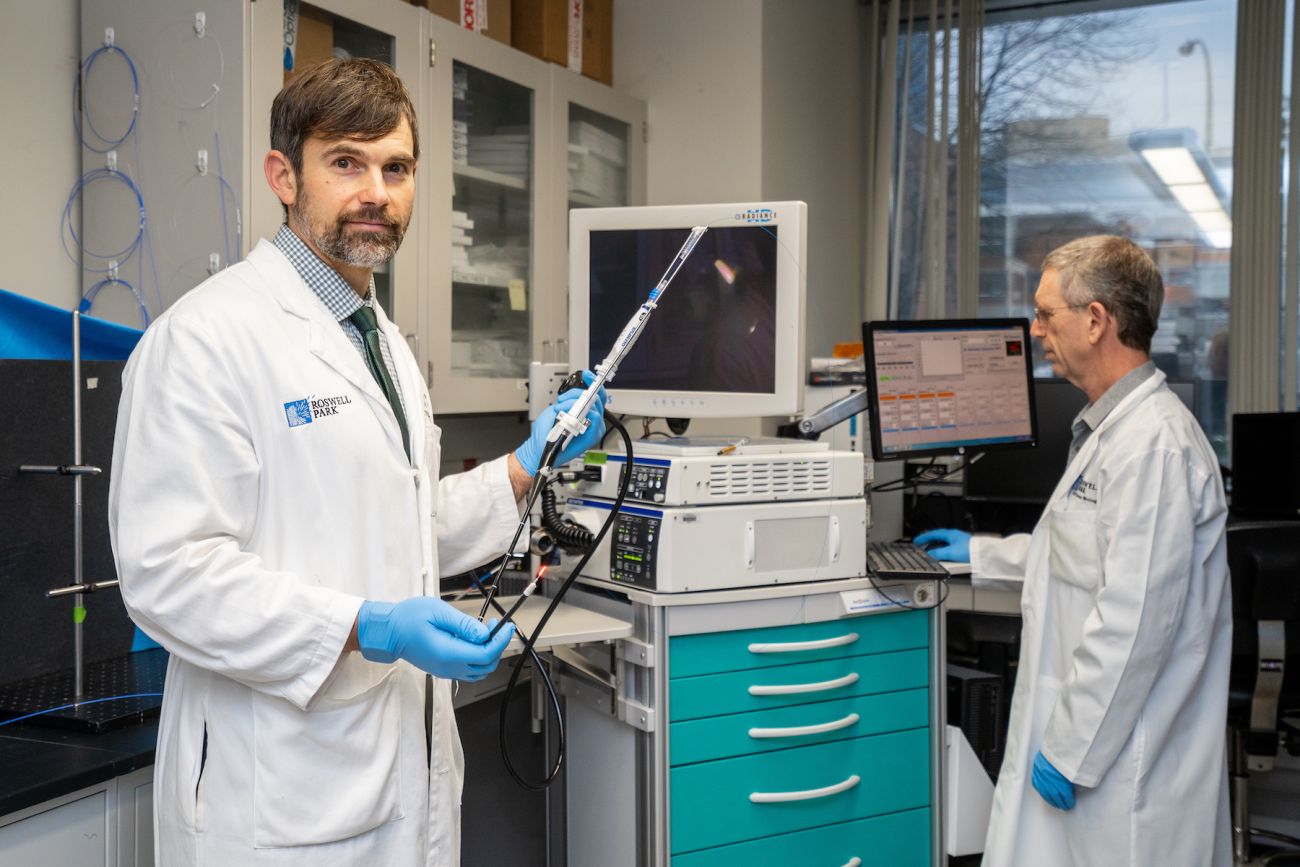
Photodynamic therapy is an anti-cancer treatment that uses bright light combined with a light-sensitive drug to kill cancer cells.
Photodynamic therapy (PDT) is mostly used to treat pre-cancerous skin lesions and small non-melanoma skin cancers. It is also used to ablate obstructive non-small cell lung cancer tumors, esophageal cancers and other cancerous and pre-cancerous tumors. Because it is a localized therapy, it is generally not recommended for treating cancer that has metastasized, or spread, to other areas.
PDT also helps relieve tumor-related symptoms and offers palliative care that can extend and improve the quality of life for people who do not respond well to any other standard of care cancer therapies.
Your care team may recommend PDT as part of your comprehensive treatment plan that may include surgery, chemotherapy, immunotherapy, radiation and other cancer drugs.
How photodynamic therapy works
PDT is only effective in areas that can be exposed to light. Healthy tissue outside the treatment zone is not affected.
First, you are given a photosensitizer drug which has little effect on your body. Depending on where the treatment is, the drug may be given as a pill, by IV or for the treatment of skin lesions as a topical solution. It is absorbed by both healthy and cancerous cells, but pre-cancerous and cancerous cells become more sensitive to light. After about 24 hours, the drug is eliminated from most of the healthy cells and remains mainly in the cancerous cells.
Second, the tumor and tissue near the tumor (called the margin) are exposed to laser light. Your doctor uses a specialized light source that emits a stream of light directly onto the area to be treated. The light causes the photosensitizing agent to react with the oxygen inside the unhealthy cells and destroys them and shuts down the blood vessels that nourish the tumor.
For internal or large tumors, your doctor will insert one or more very thin (about 0.5 or 1mm) flexible fiber-optic tubes into your tumor to illuminate the tumor and activate the photosensitizer.
What to expect with photodynamic therapy
Photodynamic therapy is clinically approved byt the U.S. Food & Drug Administration for the treatment of tumors where laser light can reach and may be curative for some pre-cancers and early-stage cancers. Good candidates for PDT are people with pre-cancers or early skin cancers on the surface of the skin, or with cancers on the lining of internal organs that can be reached by delivering laser light through a thin fiber optic tube.
There is minimal scarring with PDT and there aren’t usually any long-term side effects. PDT allows normal tissue to regenerate. This means PDT treatment can be used repeatedly as needed, in combination with other cancer treatments if necessary, without long-term harm to your body.
A PDT procedure typically takes between 30 and 120 minutes, depending on the area to be treated. It is generally an outpatient procedure, and most people can go home the same day. A fan, saline or topical numbing cream may be used to reduce discomfort from the light during a skin procedure; anesthesia or sedation may be necessary for internal treatment of tumors in the esophagus or lungs. The main side effects during recovery are moderate pain and photosensitivity.
Pain from the laser light exposure is usually managed with OTC pain medications. To minimize photosensitivity (a temporary sensitivity to light that can last from a few days to 3 months depending on the photosensitizer used), you’ll need to avoid sun exposure and bright indoor lights during this period of increased light sensitivity.
Diseases treated with PDT at Roswell Park
The following diseases are treated at Roswell Park with PDT:
- Skin precancerous lesions
- Non-small cell lung cancers that cannot be treated effectively with other therapies
- Esophageal cancers that cannot be treated effectively with other therapies
- Barrett's esophagus
At Roswell Park Comprehensive Cancer Center, PDT can also be used to treat large tumors or tumors within different part of the body in clinical research or compassionate care settings where no other effective treatments are available. In these cases, the laser light is transmitted through optical fibers inserted into the tumor. This type of treatment is called interstitial photodynamic therapy and can only be used with prior approvals by the Institutional Review Board and often requires additional clearance by the FDA.
PDT clinical trials at Roswell Park
Only patients who cannot receive an effective standard of care therapy may be treated with experimental PDT. Typically, the following cases may be eligible for experimental use of PDT:
- Inoperable malignant airway obstructions that cannot be removed with surgery or treated with radiation therapy
- Advanced or recurrent colorectal cancer that requires PDT after surgery
- Recurrent Head & Neck cancers that fail to respond to prior therapies
- Precancer in the mouth that causes excessive suffering from standard therapies
- Recurrent malignancies that do not respond to prior therapies and have no other effective standard of care treatment
Your care team must determine if there is no other standard treatment for you and your disease prior to offering PDT. If you are eligible, your doctor and care team will design an individualized care plan that includes a schedule for the number of treatments you will receive and the overall timeline.
Roswell Park's role in PDT development
Photodynamic therapy (PDT) was developed at Roswell Park, and our PDT Center is a worldwide leader in its use for treating many types of cancer.
The idea behind photodynamic therapy was discovered more than a century ago in Germany, when a medical student noticed that microorganisms colored with different compounds died when they were exposed to light. Inspired researchers he then tried, but failed, to find ways of using light-sensitive compounds to treat cancer, smallpox, tuberculosis and other diseases.
A breakthrough occurred at Roswell Park in 1975 when the late Thomas Dougherty, PhD, successfully treated cancer in preclinical trials. Three years later, he conducted the first controlled clinical study in humans, ushering in the modern era of PDT.
The photosensitizer developed at Roswell Park in the 1970s is called porfimer sodium (brand name Photofrin™). Researchers have since developed new photosensitizers that can reduce your sensitivity to light after treatment.
PDT research at Roswell Park
Roswell Park researchers are currently investigating ways to better control extrinsic airway obstruction, which has few treatment modalities. Phase one of the clinical trials has been published and shows increased efficacy in tumor shrinkage when non-curative palliative radiation is used before photodynamic therapy.