- Genetic mutation led to more robust breast cancer screenings
- ATM mutation inhibits the ability of DNA to repair itself
- Rang the Victory Bell this year with her family at her side
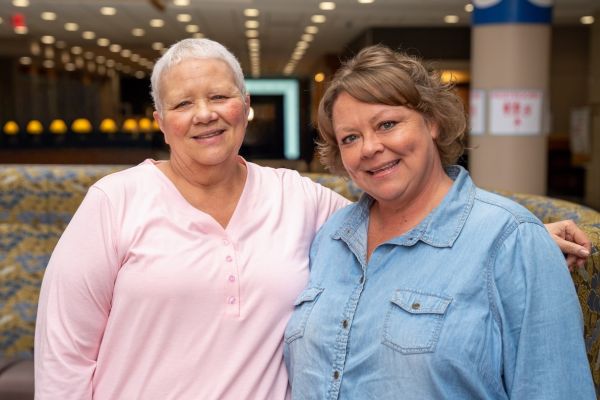
Jill Komm sat side-by-side with her mother as she went through breast cancer treatment at Roswell Park Comprehensive Cancer Center in 2021, caring for her through a lumpectomy, radiation, chemotherapy and the hard days that follow a diagnosis.
Her mother also saw an oncologist in Florida, where Komm’s parents spend some of their winter months, who suggested genetic testing.
“Her testing came back that she had an ATM gene mutation,” Jill says.
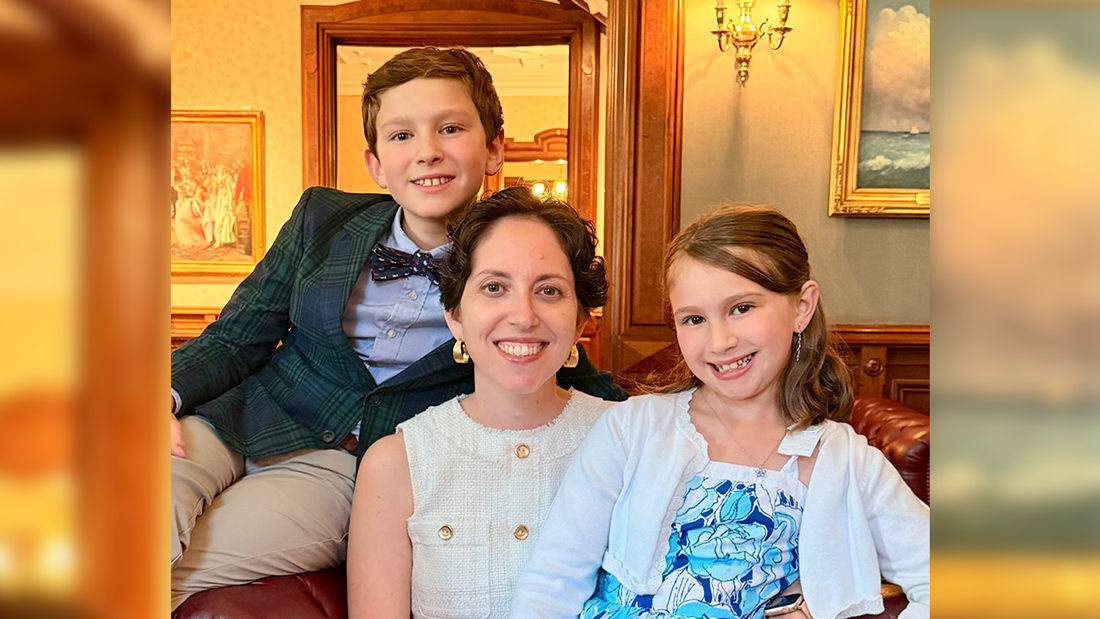
Like the more commonly known BRCA1 and BRCA2, mutations in ATM are linked with an increased risk for breast, ovarian, prostate, pancreatic and other cancers. In her early 40s with two young children at home, Jill decided to undergo genetic testing herself and learned she, too, carried the same mutation. As a result, she was eligible for a more rigorous breast cancer screening schedule, with mammograms and ultrasounds in June and MRIs in January.
“I started getting mammograms regularly as soon as my mom was diagnosed with breast cancer and they had all been great and clean,” Jill says. Her summer scans were clean, but “the MRI in December 2024 is what picked up the tumor,” which initially looked like one small cluster of cells. The initial biopsy results indicated stage 2 breast cancer.
What is an ATM mutation?
ATM, or ataxia telangiectasia mutated, is a gene that codes for a protein involved in repairing our DNA when it’s been broken or damaged by ionizing radiation from natural sources like the sun, radon gas, or human-made sources like medical x-rays, explains Simon Fung-Kee-Fung, MD, Director of the Breast Radiation Service at Roswell Park.
“Our DNA gets damaged a lot, more than we think or realize. It usually does not cause harm because our cells have built-in DNA repairing mechanisms that work in the background, restoring our DNA. The ATM protein is a key part of these mechanisms,” he says. “Naturally one might worry about the safety of using radiation cancer treatments in patients with known ATM mutations. With increasing access to clinical genetic testing came a greater awareness of the presence of these mutations, and subsequent questions about potential radiation-induced side effects.”
Fortunately, patients have two copies of each gene, and a mutation in one copy does not affect our cells’ DNA repairs. Therefore, patients with ATM mutations are not at increased risk and may safely proceed with radiation treatment for their cancer if indicated, something Dr. Fung-Kee-Fung explained to Jill before she began treatment, which also included a bilateral mastectomy, chemotherapy, and later, breast reconstruction.
“I wanted the double mastectomy because I did not want to be worried” about the possibility of undetected cancer cells, Jill says. While her initial scans only found one small lump, additional scans and tissue tests after her mastectomy found a second small lump and that the cancer had spread into some of her lymph nodes.
Despite her initial frustration — Jill had hoped for “surgery and that might be it” for treatment — and hopes for immediate reconstruction, the larger presence of cancer required additional treatment under the care of Drs. Fung-Kee-Fung, breast surgeon Helen Cappuccino, MD, FACS, gynecologic oncologist Nicole Gaulin, MD, plastic surgeon Cemile Nurdan Ozturk, MD, and breast medical oncologist Sheheryar Kabraji, BMBCh.
“Everyone was just so nice. This doesn’t happen everywhere. This is a bubble,” Jill says of the kindness shown to her and her family. “It was so refreshing to come in here and these people are all legitimately caring and concerned and want to make sure I’m having an okay experience. It totally changed my outlook in the trajectory of my care. I already knew this was a place that took care of people, because I saw it through my mom’s cancer.”
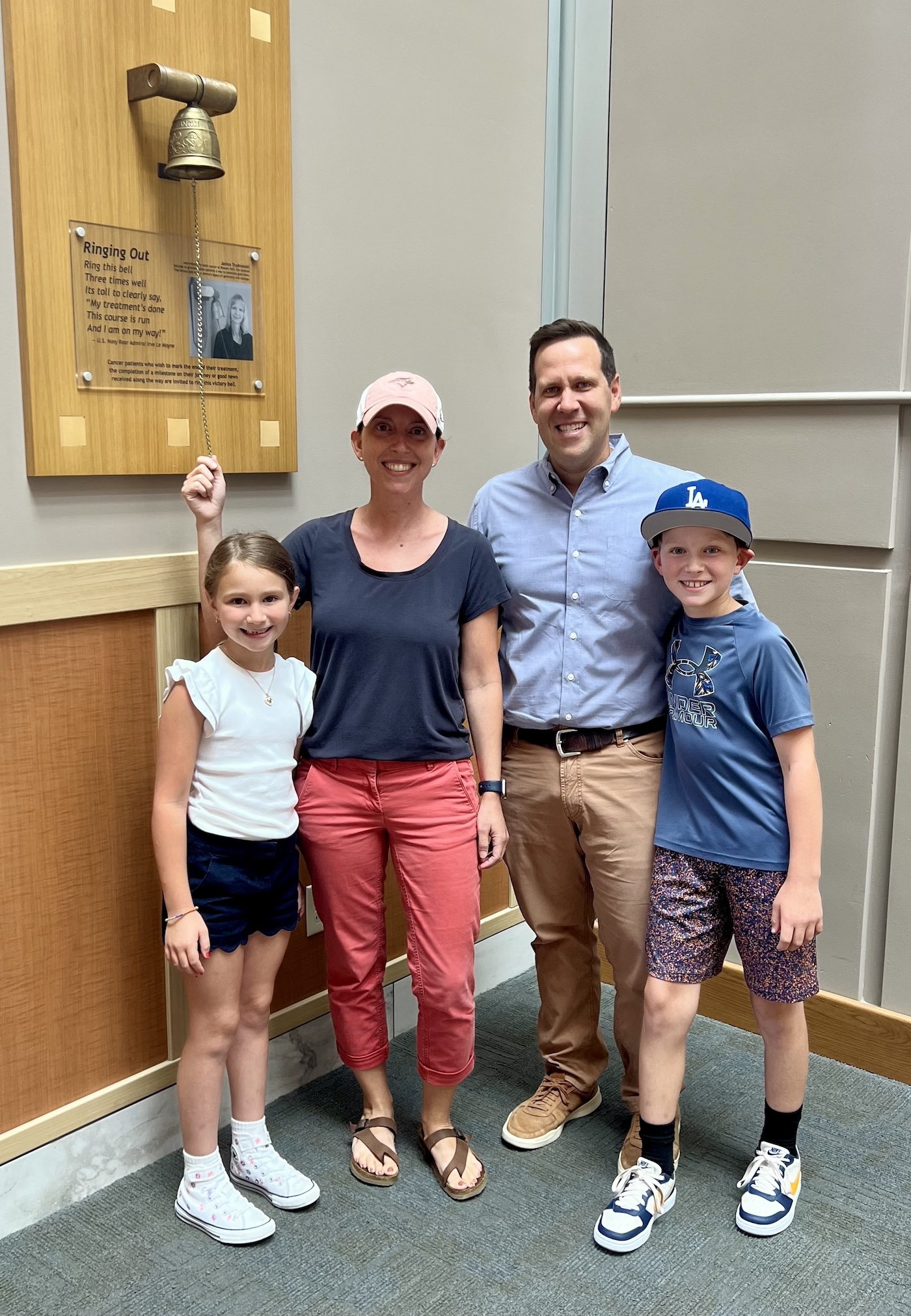
On her last day of radiation with Dr. Fung-Kee-Fung, Jill rang the Victory Bell, joined by her husband, Michael, and children Ethan and Sarah. “It was important for me to have them experience that. I wanted them to see that mom is not going to go to the doctor every day anymore. It was a really good experience.”
Taking extra preventive measures
But she wasn’t done with her journey just yet. Because mutations in ATM are associated with an increased risk for hormone receptor-positive breast cancer, Jill had been on estrogen-suppressive therapy, administered through stomach injections every 12 weeks. In talking with Dr. Gaulin about having to stay on those injections for 10 years, and knowing she was done having children and would likely be entering menopause by the end of that decade, Jill opted to reduce her risk of developing ovarian cancer by having her ovaries and fallopian tubes removed. The risk of developing ovarian cancer in patients with ATM mutations can increase by 2 to 3%.
“For her, it was about reducing her risk and simplifying her adjuvant therapy,” Dr. Gaulin says. She adds that she encourages all women, regardless of their cancer risk, to consider having their fallopian tubes removed when they are done with their childbearing years if they are already having pelvic surgery. The procedure, called an opportunistic salpingectomy, can reduce the risk of developing ovarian cancer by up to 65%.
“We know that an incidence of cancer, even among high-risk patients with mutations, is not 100%, but there is a role for surveillance,” adds Dr. Kabraji, Chief of Breast Medicine. The additional monitoring Jill, and her children when they are older, are eligible to receive because of her genetic mutation means if she does develop another cancer later in life, the odds are better that it will be caught early, at a stage when treatments are more effective.
That’s why resources have been dedicated to creating the Roswell Park Center for Family Genetics and Cancer Prevention, designed to be a medical home for patients and their families found to be at higher risk for developing cancer because of their genes or family history.
Additionally, it’s through genetic testing that new mutations and other risk factors for cancer are identified, says the center’s director Ken Onel, MD, PhD, Chief of Clinical Genomics.
Relatives of people diagnosed with mutations, in addition to cancer patients, should undergo genetic testing, too, Dr. Onel recommends. “It’s critically important. If a person is at increased risk for cancer, then the normal screening guidelines don’t apply. We do things differently. For women who are at an increased risk of breast cancer, we would start breast MRIs earlier, between 30 and 35 and, at age 40, add mammograms and alternate with MRIs every six months,” as was the case will Jill’s cancer screenings. Earlier and more robust screening practices provide the best opportunity to find cancer earlier and at its most treatable stage.
Should you consider genetic counseling?
A consultation is recommended for persons concerned about their risk for cancer due to a personal or family history of cancer.
Healing herself and her family
All of these factors Jill has discussed with her children to some degree, as a way of helping them understand her health as well as the screenings they’ll be eligible to have when they’re older.
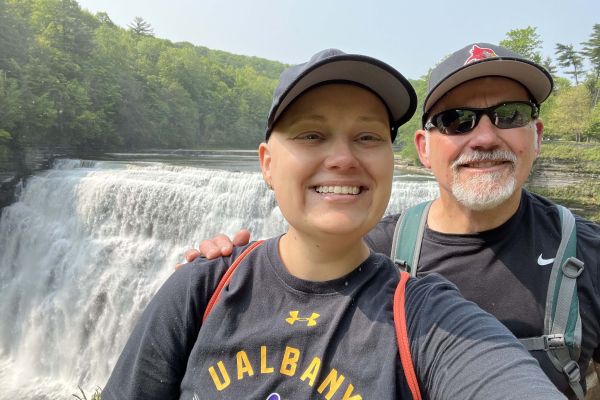
For now, Jill returns to Roswell Park every six months for infusions that help keep her bones strong, and she hopes to transition fully into survivorship care in the next few years. She’s back to her normal life and pre-cancer activities and continues to be grateful to her care team, who “moved mountains” to help her feel more confident and comfortable in her body again after her mastectomy and reconstructive surgery.
One of her proudest moments came on Mother’s Day, when she received a gift from her son. It was a fill-in-the-blank page from his fourth grade class.
“I think it was ‘my favorite memory with my mom,’ and he wrote ‘ringing the bell at the cancer center,’” Jill says. “It was so touching. To know that was special to him, I knew it did what we needed it to do, to let him know that this is good. We’re moving on.”
Editor’s Note: Cancer patient outcomes and experiences may vary, even for those with the same type of cancer. An individual patient’s story should not be used as a prediction of how another patient will respond to treatment. Roswell Park is transparent about the survival rates of our patients as compared to national standards, and provides this information, when available, within the cancer type sections of this website.