- Genetic testing can save lives through early detection.
- BRCA mutations significantly increase cancer risk for patients and families.
- Knowledge empowers prevention, monitoring and informed medical decisions.
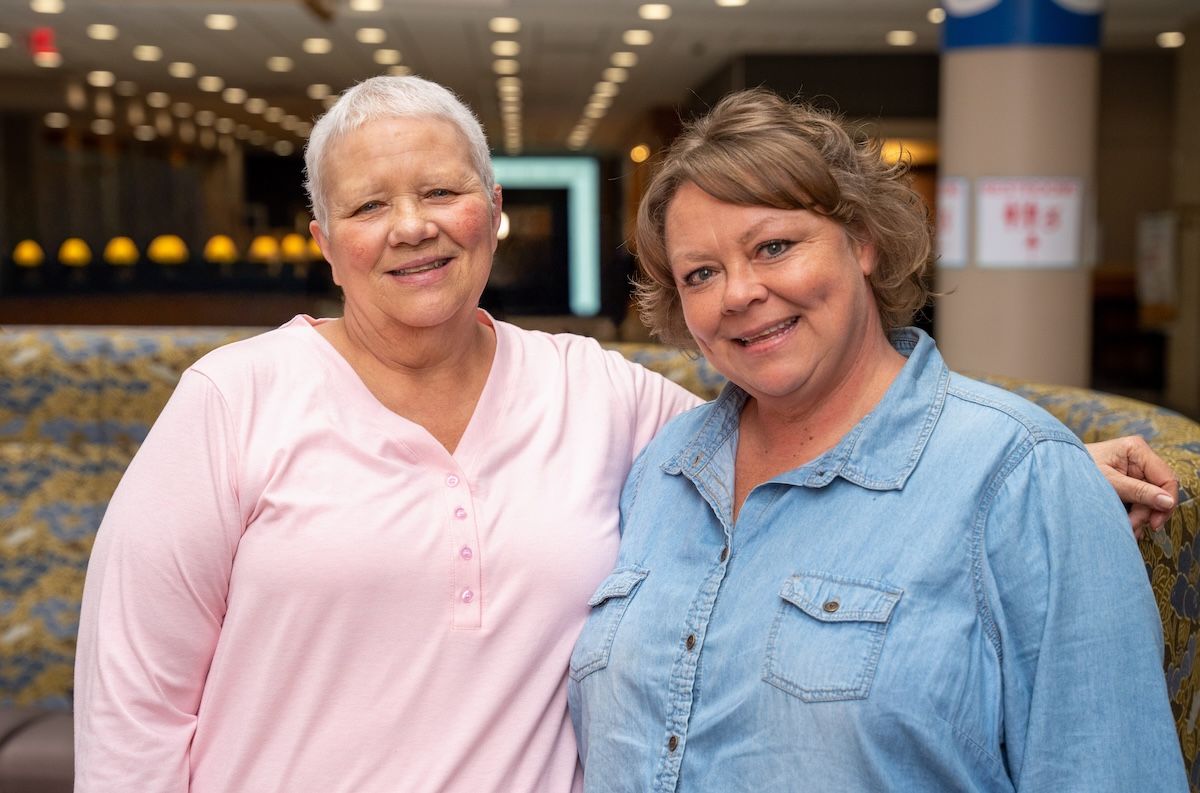
SallyAnn Decker is a cancer survival soldier — a trooper. She’s a two-time breast cancer survivor and now a survivor of ovarian cancer that was diagnosed early because she said yes to genetic testing at the Roswell Park Comprehensive Cancer Center.
“Go for it!” she advocates when asked about the importance of knowing your genetic status. “If you have cancer in your family you should definitely go for genetic testing, because I wouldn’t be here without it."
Her parents were both from Buffalo, but she grew up with six brothers and sisters on military bases along the East Coast, because her father was in the Navy. He retired in 1969, after 22 years of service and the family returned to Buffalo.
“There’s four of us left,” Sally says of her remaining siblings, adding that one sister died of cancer at age 32: “She left three children.”
After surviving breast cancer, a recommendation for genetic testing
Sally was first diagnosed with triple-negative breast cancer in her right breast in March 2018. She received chemotherapy and radiation before having the tumor surgically removed.
“In August of ‘22 I was having pain in that breast again, so my doctor said, ‘let’s do an MRI to make sure everything’s okay.’ That’s when they found I had cancer in my left breast. That was in November of 2022. I only had six weeks of radiation for that,” she says.
During a follow-up appointment, her attending physician assistant asked if she ever considered genetic testing, give her two breast cancer diagnoses.
“I didn’t really even know what genetic testing was,” she remembers. “But I said, ‘Yeah. Let’s do it.’”
Sally was referred to Kenan Onel, MD, PhD, Chief of Clinical Genomics and the Roswell Park Center for Family Genetics and Cancer Prevention. Her test revealed that she carried a mutation in the BRCA1 gene— a red flag for developing breast and other kinds of cancer.
Cancer risk connected to the BRCA gene mutation
Everyone — male and female — has two BRCA genes (generally pronounced “bracka”), identified as BRCA1 and BRCA2. When functioning normally, these genes keep tumors from forming by helping to repair damaged DNA and prevent cells from growing and dividing uncontrollably, leading to cancer. If you have an altered or mutated copy of either of these BRCA genes, the inability to suppress tumor growth increases your risk for developing breast, ovarian, prostate, pancreatic, melanoma and, in some families, colorectal cancer.
For Sally, identifying the BRCA1 gene mutation through genetic testing led to the discovery of stage 1 ovarian cancer. At present, there is no routine screening test for detecting this aggressive diesase, which is usually not symptomatic until it becomes too advanced for optimal treatment.
After talking with Dr. Onel and her care team — and fully understanding the cancer risks associated with having a BRCA1 gene mutation — Sally decided to have a full hysterectomy (surgical removal of the uterus) as a potential stopgap for developing ovarian cancer.
“I made the decision after understanding what it meant to have the BRCA1 gene mutation,” she explains, adding that she had the full support of Dr. Onel and his team. “When I said I wanted that hysterectomy, within three weeks, I was scheduled. I had the hysterectomy and they biopsied it and the cancer was in my fallopian tubes already. I was so shocked. If I would not have taken that out, who knows if they would have found that cancer.”
Following the surgery, Sally completed six rounds of chemotherapy in October 2025. While she is still navigating through some lingering effects of chemotherapy, she is being closely monitored by her Roswell Park care team to make sure tests show she continues to stay in remission.
Should you consider genetic counseling?
A consultation is recommended for persons concerned about their risk for cancer due to a personal or family history of cancer.
Encouraging others to get evaluated for genetic status
After learning about her own BRCA1 mutation — and the role the knowledge has played in her survival — Sally is determined to spread the word to family, friends and everyone else about the benefits of knowing your genetic status.
“I have a huge family, lots of nieces and nephews. I have two brothers and a sister left so I asked them to please get tested,” she says. She and her husband, a retired Buffalo firefighter, have three grown sons and four grandchildren. Most of the family declined, but her youngest son is now waiting for his results.
If a parent has an inherited gene mutation, each child has a 50% chance of inheriting the same mutation, according to Dr. Onel.
One of Sally’s nieces, a daughter of the sister who died of another kind of cancer, has also been tested.
“My sister who died, her name was Michelle; her daughter Stacy decided to get tested. It came back that she has the same exact BRCA1 gene as me,” Sally says of her niece, who likely inherited the gene from Sally’s sister. “Stacy has a brother and sister, so we’re really trying to get them to go.”
Stacy Kilianski admits that the family is hesitant to find out if they carry the BRCA1 gene mutation. “Because, you know, who wants to know?” she says. Recently, however, one family member made an appointment with a Roswell Park genetic counselor; two uncles are considering it.
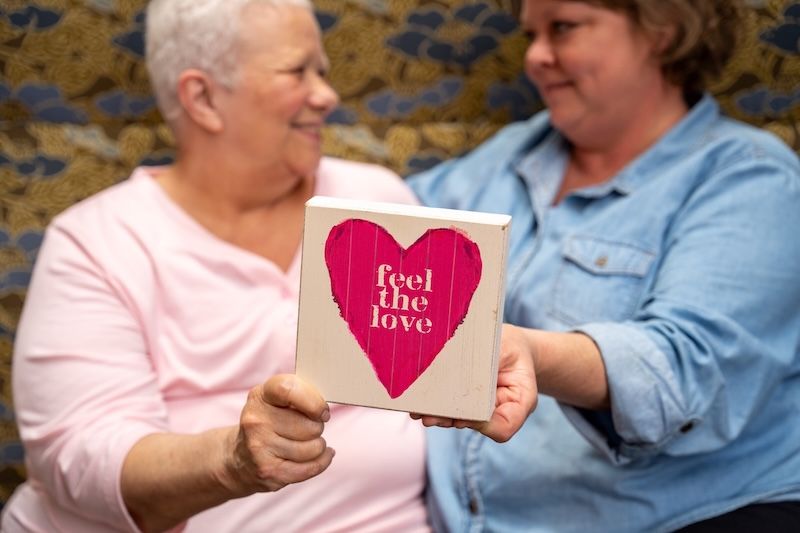
“We didn’t know what being tested would do for us,” Stacy says. “But I learned that I can get earlier screening. I can get an MRI once a year along with my once-a-year mammogram and there’s screening every six months. Without knowing I had that gene, I would have had a mammogram once a year and that’s it. It really helps with earlier detection.”
Stacy is now under the care of Mariola Poss, MD, a surgical oncologist and breast care specialist at the Roswell Park Care Network locations in Williamsville and Orchard Park. On her next visit, she is planning to talk with Dr. Poss about whether her risk factors are high enough to consider a double mastectomy and full hysterectomy.
“That’s why that decision to get tested is important,” Stacy says.
Ringing the Victory Bell
“After I survived this third cancer, I said, ‘I’m ringing the bell!’,” Sally says. The much-beloved matriarch of her big family, she is steadily optimistic about the future and says that whatever it holds, she is prepared to “deal with it.”
On December 1, SallyAnn Decker rang the Victory Bell as part of the Roswell Park 2025 Tree of Hope celebration. She was cheered on by about 50 family members and friends, Dr. Onel and his team – and featured in a WGRZ Channel 2 news story.
“I love my family and I don’t want to go anywhere,” says Sally positively. “I’m going to fight this thing as long as I can.”
Editor’s Note: Cancer patient outcomes and experiences may vary, even for those with the same type of cancer. An individual patient’s story should not be used as a prediction of how another patient will respond to treatment. Roswell Park is transparent about the survival rates of our patients as compared to national standards, and provides this information, when available, within the cancer type sections of this website.