- Initial breast cancer treatment involved mastectomy, removal of lymph nodes
- Recurrence 16 years later included metastasis to the bones
- Cancer research led to new treatment options available for him today
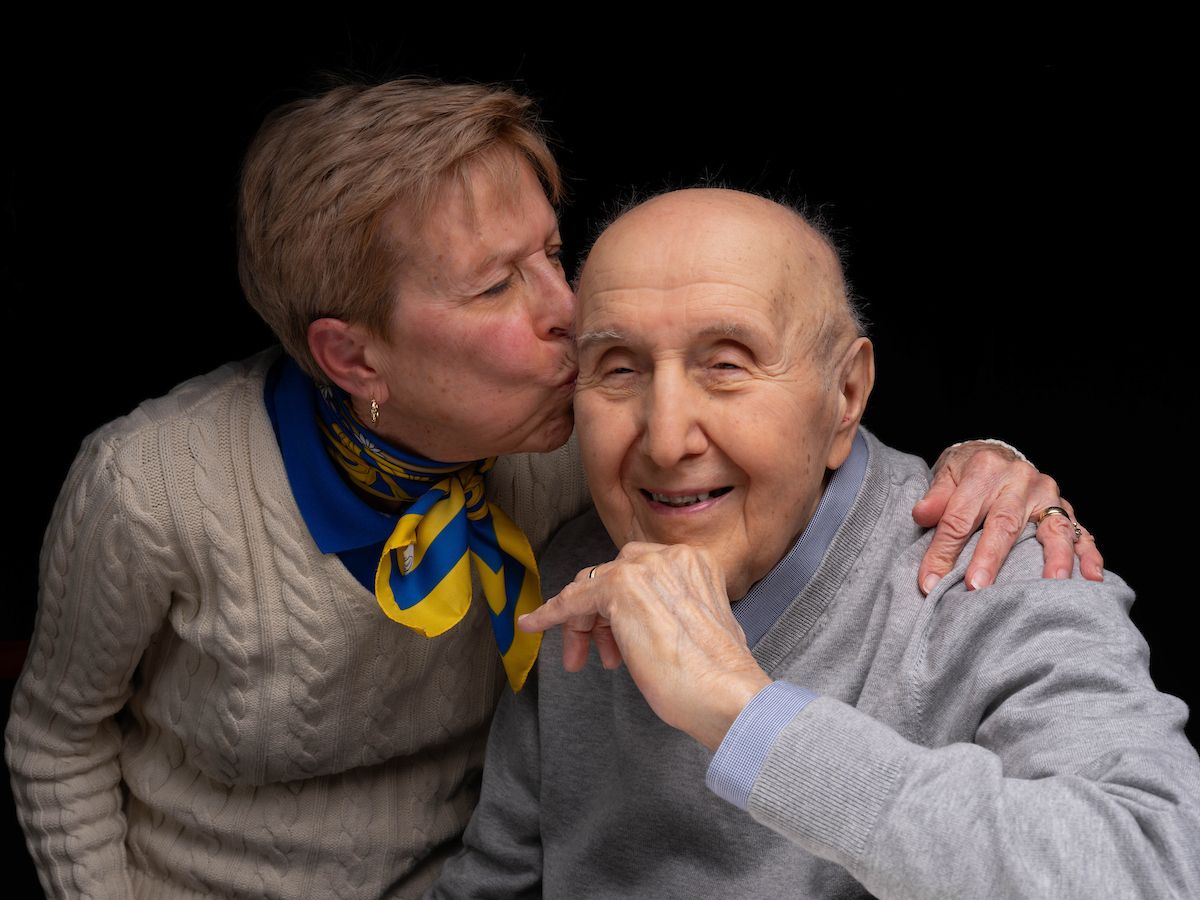
Joe Gadawski knows he’s a lucky guy. He was introduced to his wife of 44 years, Nancy McGlen, by a priest at Niagara University, where his son was a student and Nancy was his professor.
Little did he know his request to find someone interested in getting married would save his life — twice.
In 2009, Joe was outside mowing the lawn and complained of feeling itchy when he came into the house. He took off his shirt and Nancy noticed his inverted right nipple. They called their family doctor and were instructed immediately to come to Roswell Park Comprehensive Cancer Center.
“We went to my first mammogram and they found I had breast cancer,” says Joe, now 90 years old. “They did the surgery to remove the cancer, which the size of my thumbnail, and they took all the lymph nodes out of my arm” as a precaution, under the guidance of Stephen Edge, MD, FACS, FASCO, now an emeritus faculty member in Roswell Park’s Department of Cancer Prevention & Control.
Cancer made an unexpected return
Joe continued to come in for regular mammograms on his remaining left breast tissue and other tests to monitor his health and, “for 16 years, I was breast-cancer free,” he says. Everything was clear and uneventful until summer 2024, when a blood test showed a higher-than-expected level of a biomarker indicating the cancer had returned and metastasized into his bones. Joe had been feeling tired and unable to complete his normal rounds of golf with his son and grandson, who happens to work as a nurse at Roswell Park, but thought it was just the flu or some other bug.
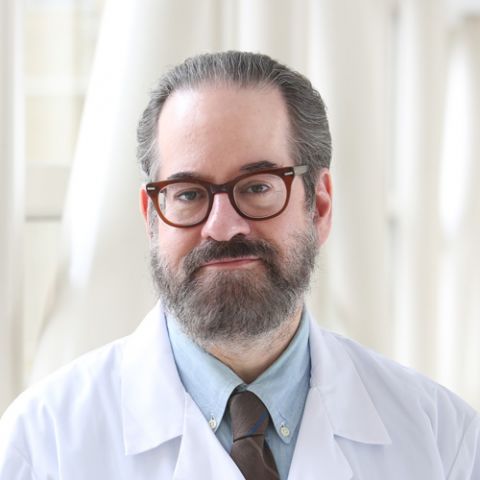
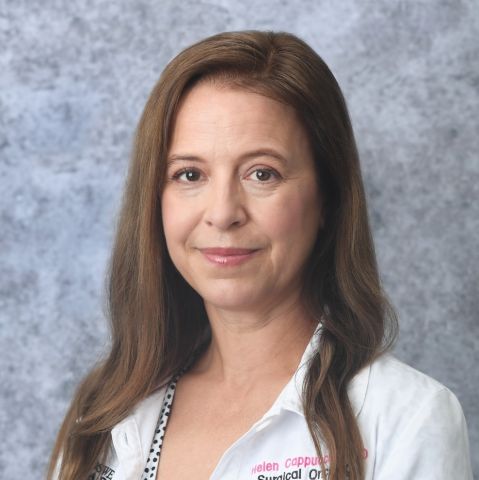
Within hours of getting the test results, Joe and Nancy returned to Roswell Park and met with breast oncologist Ellis Levine, MD, who immediately left his office and returned with surgical oncologist Helen Cappuccino, MD, to review Joe’s biopsy and PET scan. They quickly identified a tumor in in the breast tissue on his right side.
“They knew right away by looking at it,” he says. “We met with them on Friday and quickly scheduled a number of tests to determine the best course of treatment.”
“They suspected it went into his bones,” Nancy says. “Dr. Levine was really worried about Joe’s spine, because bone cancer can be invasive and cause real problems. He ordered radiation on Joe’s shoulder, neck and spine, where the cancer was the most concentrated, in addition to chemotherapy.”
By September 2024, Joe started taking Kisquali, a kinase inhibitor used to fight breast cancer that has metastasized, to help protect his bones.
“Within six months, it was gone,” Joe says.
Joe currently remains on four medications: one for estrogen suppression, a testosterone suppressor, an infusion for bone strength and Kisquali, a comprehensive approach to keep him healthy and strong.
A fresh look for a new chapter
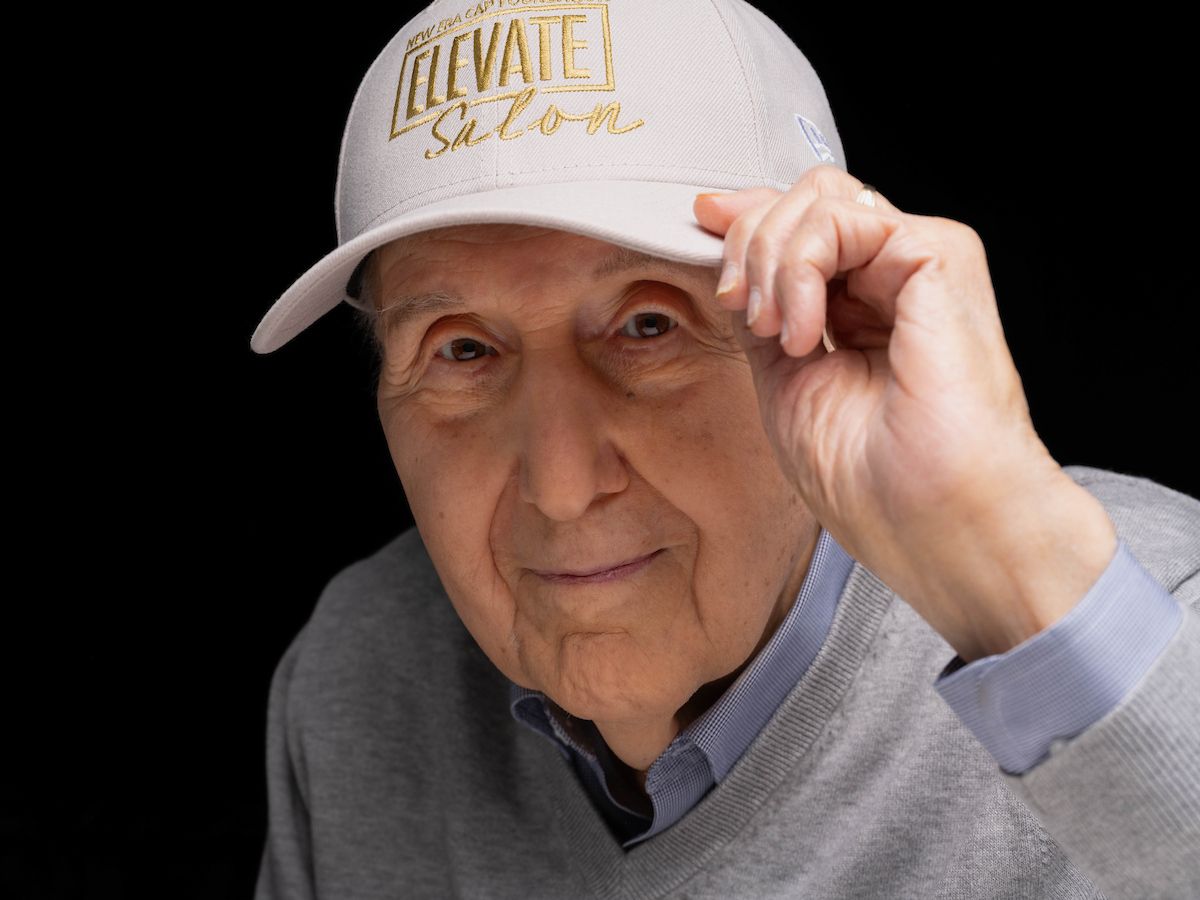
It was during his treatment the second time around that Joe was introduced to the New Era Foundation Elevate Salon, just around the corner from the breast clinic on the first floor of the Scott Bieler Clinical Science Center. “I just popped in one day and the ladies there were so nice to me,” Joe says. “They set me in a chair and gave me a haircut. They said they have caps they offer people under radiation or any kind of chemotherapy and asked if I would wear one. They gave me three! I rotate: a white one, a black one and a blue one.”
Trust in science and clinical trials
Even before coming to Roswell Park, Joe’s health was in good hands: Nancy helped revive Niagara University’s nursing program in the early 2000s and served as a dean for 16 years after teaching political science – which is where she met Joe’s son from his first marriage.
With her background in science and medicine, Nancy understands and appreciates the care and support Joe received during both rounds of cancer and the importance research played in the treatments available to him in 2024.
“We firmly believe it’s critical,” she says. “What you find today, the next research project may show was false or needs to be modified. That is the important part: Science is not always perfect, or give you a perfect result, but it is correctable and changeable with new information, new studies, new research. That’s the heart of what makes Roswell different from a regular clinic.”
Joe was willing to enroll in any clinical trials that might have been a good fit for him but he was ineligible. However, he and Nancy both know he benefitted from the trials offered to those who came before.
“The new treatments and trials very well could be part of something that might save you or someone else down the road,” she says. “It’s wonderful that Roswell is here, doing the research, staying abreast of what’s happening, innovating in various areas of cancer, because the treatment Joe had wouldn’t have existed 16 years ago.”
“We don’t know what we have in Buffalo,” Joe says, comparing the care he received at Roswell Park with anecdotes of less comprehensive treatments available at other facilities. “We don’t know the quality of doctors we have here. I start to cry thinking about it. We don’t know how fortunate we are.”
Why choose Roswell Park for breast cancer treatment?
We offer treatments at the forefront of cancer care, plus clinicians with the knowledge and experience to use them.
Editor’s Note: Cancer patient outcomes and experiences may vary, even for those with the same type of cancer. An individual patient’s story should not be used as a prediction of how another patient will respond to treatment. Roswell Park is transparent about the survival rates of our patients as compared to national standards, and provides this information, when available, within the cancer type sections of this website.