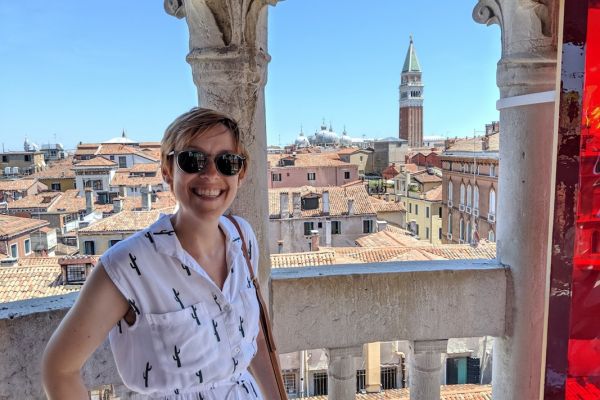
High Risk Breast Cancer program helped detect Elizabeth’s cancer in early stages and guide measures to prevent future cancers
As an educator, Elizabeth Kuttesch, 39, firmly believes that “knowledge is power. With knowledge, you can make educated decisions and take appropriate actions,” she says. Knowing that her mother and possibly her grandmother had cancers often caused by BRCA gene-mutations was indeed powerful for Elizabeth.
It motivated her to sign up for Roswell Park Comprehensive Cancer Center’s high risk breast cancer program and begin cancer screenings at age 25 — years before the recommended age of 40 for women at average risk. It helped Roswell Park doctors diagnose her triple negative breast cancer at a very early stage, and it helped guide many of her treatment decisions, including opting for a double mastectomy, breast reconstruction and a hysterectomy.
Three generations of cancer underscore value of genetic testing
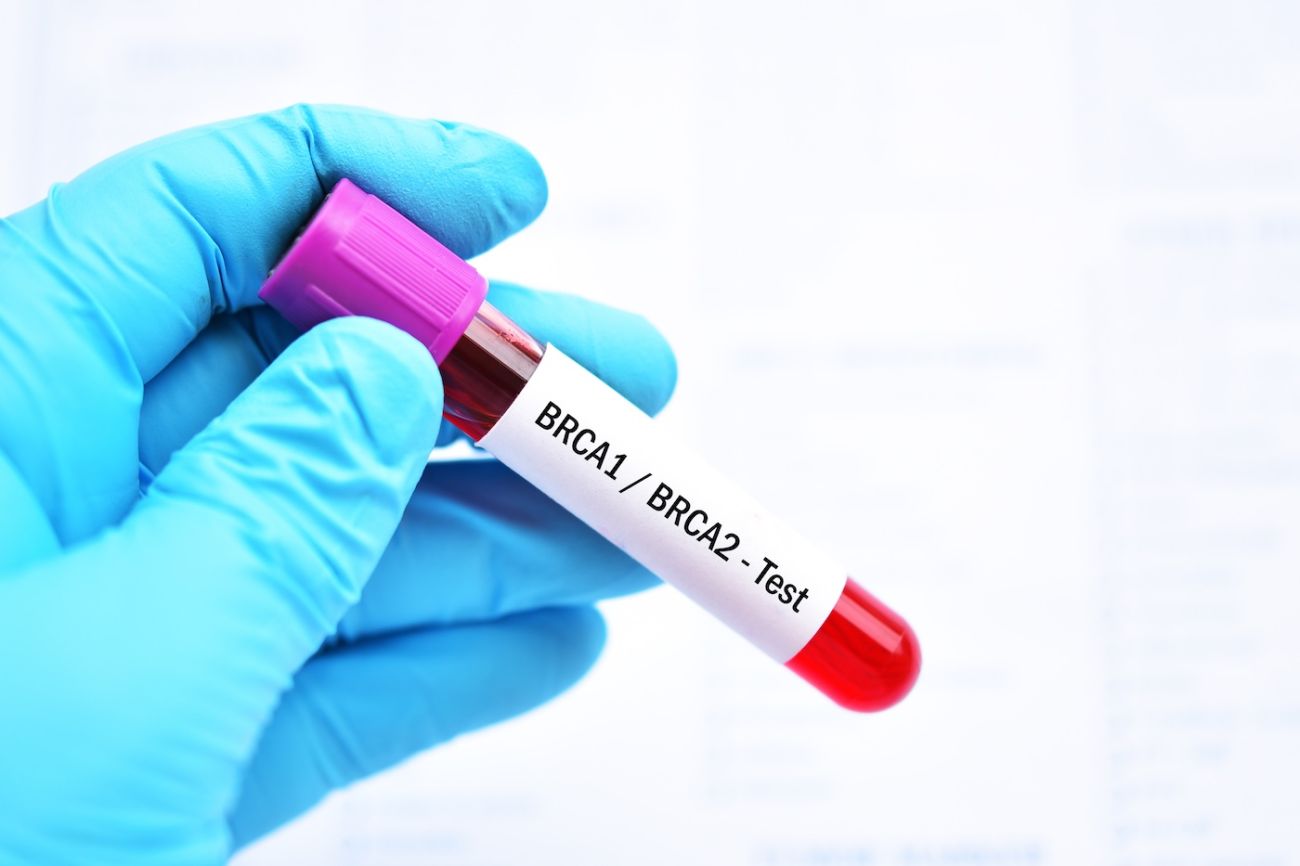
Elizabeth’s cancer story likely began before she was even born. In the 1960s, her maternal grandmother died from breast cancer in her 40s. When Elizabeth was 25, her mother was diagnosed with ovarian cancer in her early 50s and was successfully treated at Roswell Park. To help inform her treatment, her mother agreed to genetic testing and learned she was positive for the BRCA1 gene mutation which can increase the risk of developing certain types of cancer, particularly breast and ovarian cancer.
With a confirmed BRCA mutation in her family, Elizabeth and other members of her extended family also underwent genetic testing. “Three close relatives were BRCA negative, but two of us were BRCA positive. One relative was BRCA-positive and diagnosed with breast cancer two weeks before I was, in 2022, and another recently tested positive for the BRCA gene and is likely to undergo prophylactic (preventive) surgeries in the future.”
High risk program offers early screenings and preventive services
Given her family’s history of breast and ovarian cancer, and the BRCA confirmation, Elizabeth made an appointment with Roswell Park’s High Risk Breast Cancer program. This comprehensive program includes screenings, genetic counseling and testing, preventive options to reduce breast cancer risk, information about fertility preservation and breast reconstruction, and assessment and screening for related cancer types.
“For 11 years, I had screenings at Roswell Park, including breast exams, annual mammograms and MRI scans, all with normal results. In fact, my mammogram in February 2022 was clean,” Elizabeth recalls. “But six months later, my routine MRI revealed a small tumor in one of my breasts and I was diagnosed with stage 1 triple negative breast cancer.”
Get an assessment
If you think you may be at high risk for developing breast cancer, check your risk levels and request an appointment with our High Risk Breast Cancer Program.
Customized treatment options
Soon after her diagnosis, Elizabeth met with Jessica Young, MD, FACS, and now retired medical oncologist Amy Early, MD, FACP. “I was given many options for my treatment and my input was respected. I opted to forego fertility preservation, as I do not plan on having children. Dr. Early recommended starting my treatment with chemotherapy to see if it would shrink or completely eradicate the tumor before we decided what type of breast surgery I would have afterwards.” Dr. Young and plastic and reconstruction surgeon Cemile Nurdan Ozturk, MD, explained her options for breast surgery: a lumpectomy, single mastectomy, or double mastectomy, and possible breast reconstruction. “We also talked about the option to have a hysterectomy after my breast cancer treatment, as a preventive measure against ovarian cancer.”
After 16 chemotherapy sessions, scans showed that Elizabeth was cancer free and she and her team prepared for the next step of treatment.
The mastectomy and reconstruction experience
“While my decision to have a double mastectomy was emotional and somewhat sad, it was easily outweighed by my desire to avoid a recurrence of breast cancer, especially knowing that I have the BRCA mutation,” Elizabeth says. “I chose the double mastectomy and breast reconstruction because I felt it would help me maintain a positive self-image. It’s scary to think about such a drastic physical change but knowing that I would be able to benefit from reconstruction eased those fears.”
Six weeks after completing chemotherapy, Elizabeth underwent breast surgery. Dr. Young performed the mastectomy, immediately followed by Dr. Ozturk placing tissue expanders in Elizabeth’s chest to slowly stretch the skin in preparation for the implants. “The physical healing from this surgery was tough,” Elizabeth admits. “I was uncomfortable, but I knew it was temporary. Physically, my body was in shock for a few weeks after surgery. In addition to the healing mastectomy incisions, the expanders, or ‘intruders’ as I called them, were square shaped, hard and uncomfortable.” Over the next two months, Dr. Ozturk continued to stretch the expanders, filling them with saline.
Nine months later, after Elizabeth healed from the mastectomy surgery, Dr. Ozturk removed the “intruders,” replaced them with implants, and added fat taken from another part of Elizabeth’s body. “Fortunately, this recovery from the implant surgery was more rapid and less painful than the mastectomy surgery,” Elizabeth says. Later on, Elizabeth had nipples tattooed onto her reconstructed breasts. “I’m very happy with the way they look now.”
Moving forward after cancer
Three years after her treatment, Elizabeth remains cancer-free and has regular scans at the breast clinic every six months. Additionally, to decrease her risk for ovarian cancer, Elizabeth underwent surgery to remove her uterus, ovaries and fallopian tubes, performed by Roswell Park gynecologic oncologist Peter J. Frederick, MD, FACOG.
When asked for general advice, Elizabeth says, “If you know of a history of cancer in your family, don’t waste time on fear; instead, take action as soon as possible. One of the reasons I was able to get through this so well is that, due to rigorous early screening, my cancer was caught at such an early stage that I never feared that my life was in jeopardy. Throughout all of this, I’ve been able to travel, work and spend time with friends and family, and I am now more confident about my future. I don’t look back on this experience with grief or sorrow. Instead, I am grateful to be healthy and living my life.”
Editor’s Note: Cancer patient outcomes and experiences may vary, even for those with the same type of cancer. An individual patient’s story should not be used as a prediction of how another patient will respond to treatment. Roswell Park is transparent about the survival rates of our patients as compared to national standards, and provides this information, when available, within the cancer type sections of this website.