Extending Roswell Park expertise to treat non-cancer nerve injuries
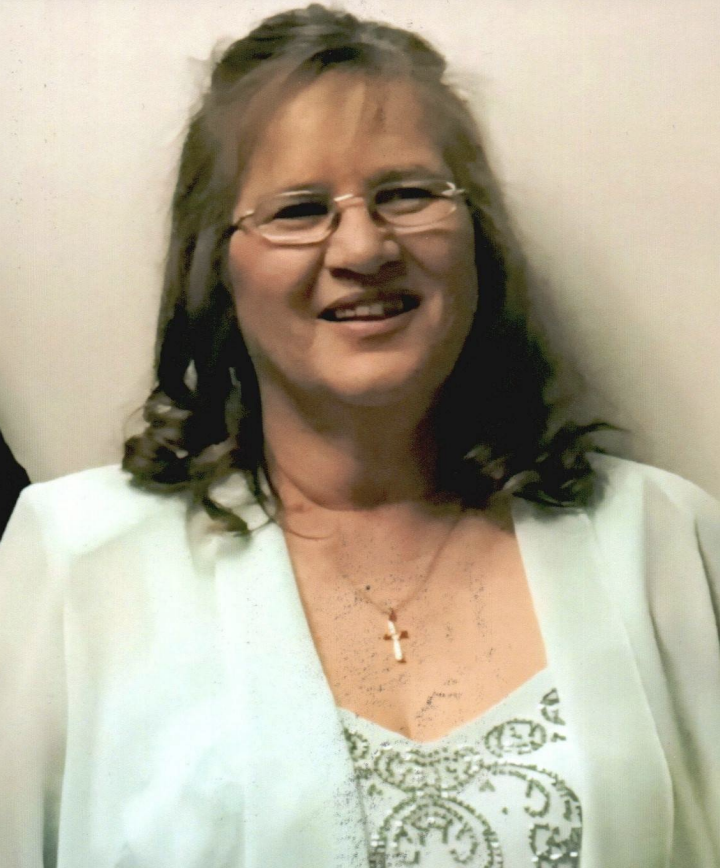
After Dotty Woollett had spinal surgery for neck pain and balance issues in 2024, she was unable to use her right arm or shoulder. “It was an experience,” she chuckles about learning to eat with her left hand.
To repair the damaged peripheral nerves that were forcing her to become ambidextrous, her doctor sent her to Roswell Park Comprehensive Cancer Center, even though she did not have cancer.
“They did a CT scan and said the nerves in my arms needed to be patched together,” the retired Westfield, NY native recalls of her first Roswell Park visit. “That’s what I had done and they were fantastic.”
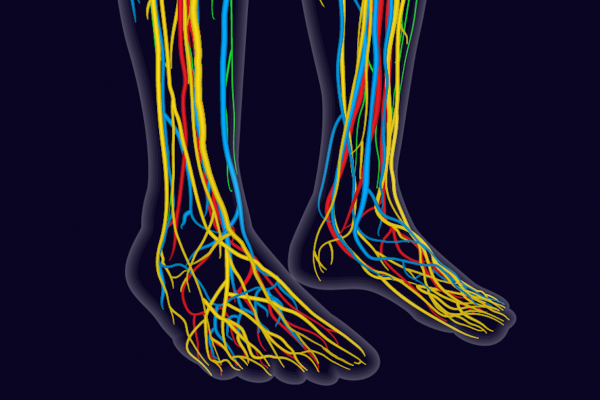
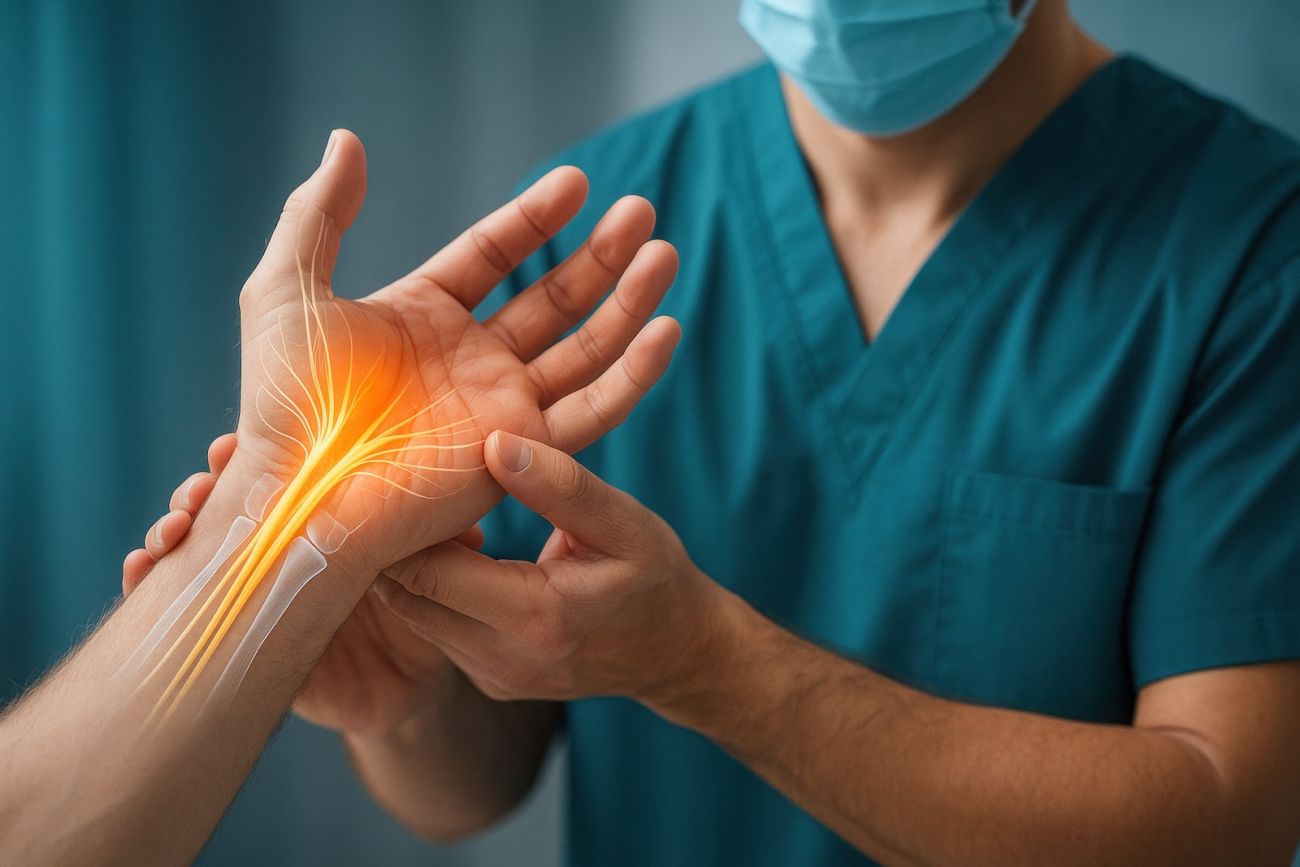
Peripheral nerves are tiny, fragile conduit nerves that exit the spinal cord and branch through your body all the way to the tips of your fingers and toes. They control the body’s internal environment — sensation, voluntary and involuntary movement, spinal muscles, as well as muscle and tendon memory and learning. Because of this, any injury or trauma to these delicate neuron bundles can impact quality of life and daily functioning.
After her initial scan, Dotty underwent comprehensive nerve testing – a series of pinpricks and electric shocks – to determine exactly which nerves needed to be repaired. “They don’t ‘snowball’ you,” she says of her doctors and care team, stressing that as critically important. “They tell you right up front what they are going to do.”
In two surgeries, about three weeks apart and only the first one requiring an overnight stay, Roswell Park nerve treatment experts were able to return full function to Dotty’s right shoulder, arm and hand.
“They were great,” she says. “I couldn’t ask for anything more.”
Extending expertise to treat non-cancer nerve injuries
Peripheral nerve repair is a rapidly evolving field that requires a lot of planning, a detailed physical exam, microscopic sutures and a multidisciplinary approach to recovery for each patient.
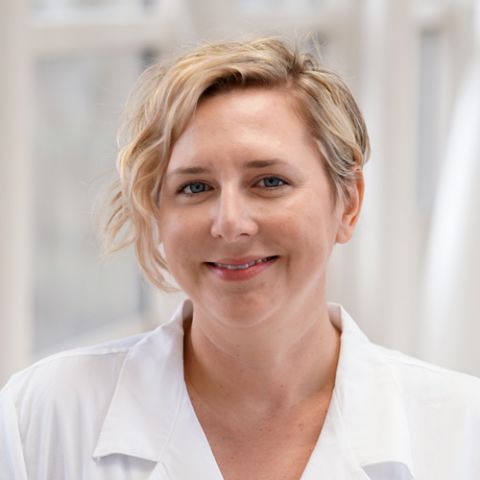
“Our expertise started with nerve tumor surgery, but then blossomed to include surgery for nerve injuries, for nerve trauma, grafting of nerves and for functional repair of nerves,” explains Roswell Park neurosurgeon Lindsay Lipinski, MD.
In addition to Dr. Lipinski, a neurosurgeon who also specializes in nerve surgery, the Roswell Park nerve surgery team includes a plastic surgeon who specializes in hand surgery, physical therapists and recovery specialists who work seamlessly to optimize the outcome for every patient.
Dotty’s treatment involved nerve transfer – using a small part of a functional nerve to connect to and salvage muscle function when a nerve is too damaged to be repaired.
“When you can’t do direct nerve repair, nerve transfer is the next option. If you can’t do a nerve transfer or the length of time since the trauma or injury has been too long, you look at tendon transfer,” Dr. Lipinski says.
Other surgical options available at Roswell Park to treat peripheral nerve damage include:
- Nerve grafting – taking a sensory nerve from another part of the body, or from a donor, and suturing it into the damaged nerve to help it to regenerate.
- Tendon transfer - using a tendon from another part of the body to mimic and restore mechanical function to a muscle that is in danger of dying due to extensive nerve trauma.
Seek treatment early for nerve trauma or injury
Any nerve injury or tumor can cause sensory changes such as numbness or tingling, or weakness in the muscle that the nerve supplies. Without adequate nerve supply, muscles can stop working completely within 12 to 18 months. For this reason, Dr. Lipinski advises people who experience nerve trauma or injury to seek treatment as soon as possible for the best outcomes.
“If a person is evaluated two years after an injury, we can’t fix the nerve directly because the muscles will no longer be functional,” she advises. “It’s worthwhile for patients to seek options as to what can be done to improve their function and quality of life.”
Why Roswell Park for peripheral nerve surgery?
Treatments for peripheral nerve tumors and nerve injuries have changed a lot over the last decade. As a comprehensive cancer center designated by the National Cancer Institute, among the nation’s elite, Roswell Park is the only regional location that specializes in multimodality treatment of nerve tumors.
“As the technology gets better, we’re seeing better and better outcomes,” Dr. Lipinski says.
She adds that Roswell Park’s treatment of nerve injuries not associated with cancerous or benign tumors falls, in some ways, outside of its primary cancer mission. “But it very much falls inside a unique set of capabilities we have here at Roswell Park,” she maintains.
“We can provide treatment for patients who don’t have access to this type of service anywhere else in the region because it is so specialized. We just happen to have the overlapping interest and skillset and expertise to serve those patients.”
Dotty is happy she doesn’t have to eat with her left hand anymore.
“If someone asks me, I recommend getting the surgery,” she says. “They’re awesome at Roswell Park. That’s the place to go. They were great. You couldn’t ask for a better hospital.”
Editor’s Note: Cancer patient outcomes and experiences may vary, even for those with the same type of cancer. An individual patient’s story should not be used as a prediction of how another patient will respond to treatment. Roswell Park is transparent about the survival rates of our patients as compared to national standards, and provides this information, when available, within the cancer type sections of this website.