Leading-edge radiation technology meant just five days of treatment
- AI-driven technology reduces radiation therapy to one to five sessions
- Consistent, vigilant PSA testing leads to early diagnosis, treatment
- ART/SBRT continuously pinpoints tumor, spares healthy tissue
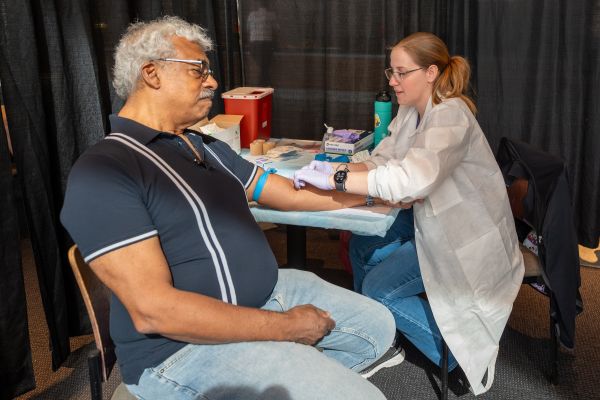
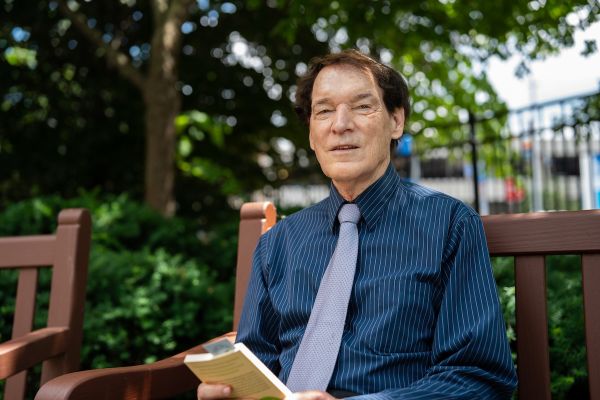
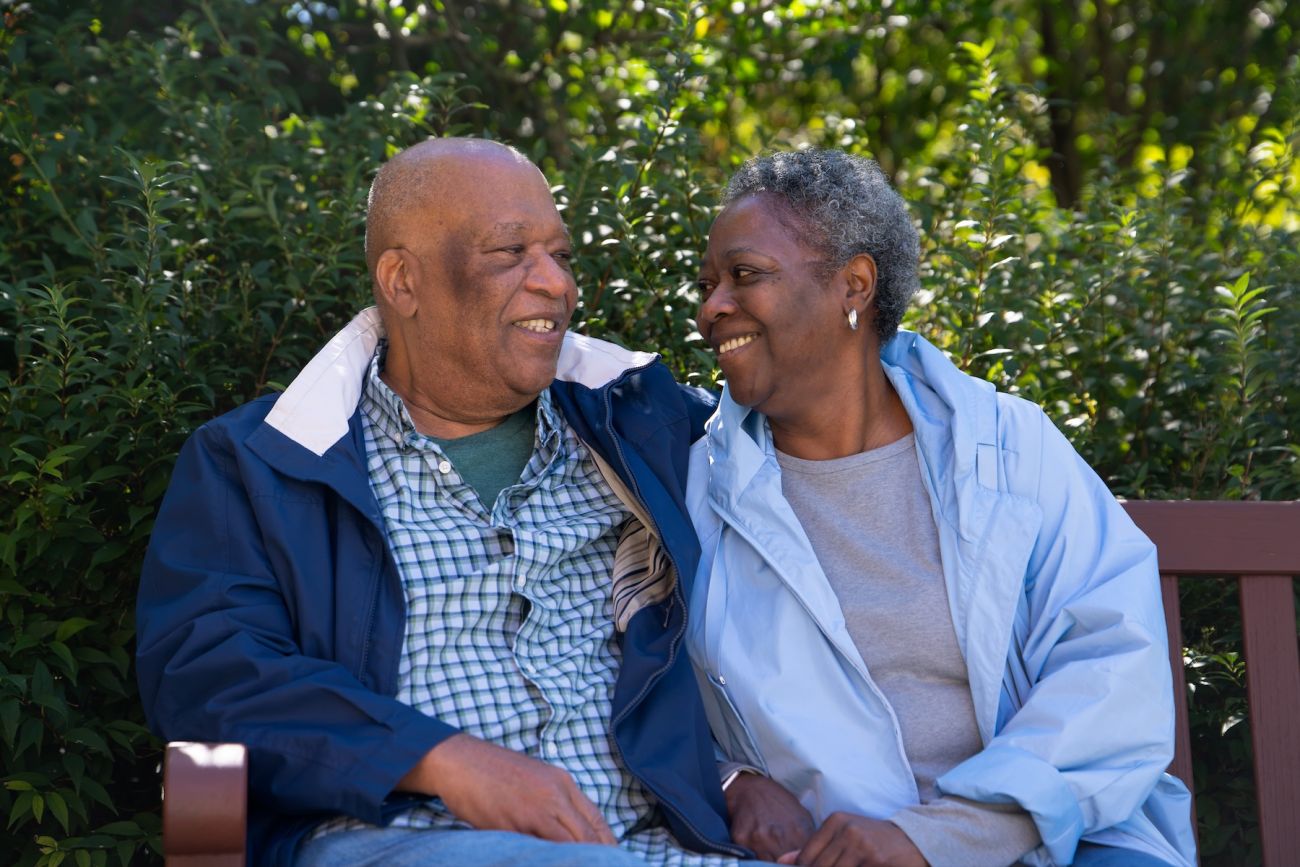
When Cecil Foster learned that his prostate cancer had recurred in a lymph node, he was hoping that his radiation therapy using new AI-driven technology at Roswell Park Comprehensive Cancer Center wouldn’t disrupt his very active life as tenured professor at University at Buffalo, internationally celebrated fiction writer and doting grandfather of 14.
He didn’t have to worry. Within a month after just five treatment sessions with the advanced form of radiotherapy – a combination of adaptive radiation therapy (ART) and stereotactic body radiation therapy (SBRT) – he was en route to Vancouver, then traveled to his homeland of Barbados, encountering only minor fatigue.
“I was able, indeed encouraged by the radiation oncologist, to travel right after treatment completion,” he says. “This is leading-edge technology which offers confidence to a patient like me that the outcomes of the treatment will be successful.”
Rising PSA served as warning sign
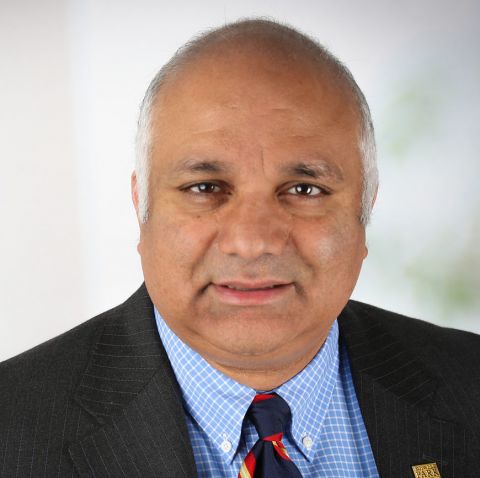
A native of Barbados, Canada and the United States, Cecil was diagnosed with prostate cancer in 2023 in Buffalo. He had been tracking his PSA levels for years when he recognized an unusual spike during a regular checkup with his personal urologist John DeBerry, MD — who has since become a member of Team Roswell — who ordered an MRI and biopsy. The results led to Cecil’s referral to Roswell Park under the care of Khurshid Guru, MD, chair of the Department of Urology.
“After consultation with Dr. Guru, he and his radiology team suggested it was best to get the prostate removed. I was relieved that mine was caught early, in stage one, and we all celebrated,” Cecil says. “There was always the concern that it could have spread, but after the surgery all the margins were clean.” For two years following the surgery, Cecil says his PSA level was “non-existent.” His Roswell Park care team advised him that, going forward, they believed he would only need to be monitored once a year — maybe not at all.
But a scheduled six-month check in 2025 found his PSA number had gone up. After waiting and watching for another six months, his team discovered it had risen again. A few months later a PET scan identified cancer cells in one of his lymph nodes.
Combining advanced radiotherapy technologies
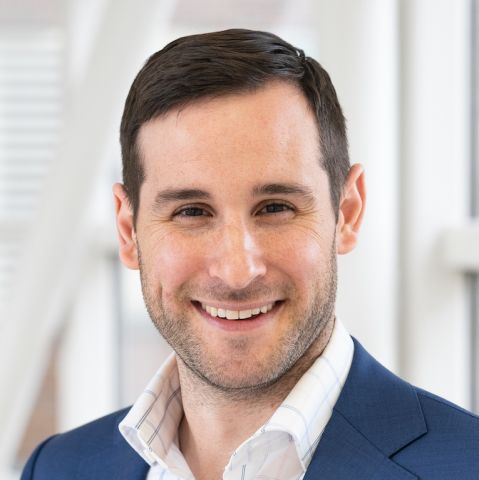
Cecil returned to see Dr. Guru, who recommended radiation treatment with Mark Farrugia, MD, PhD, Director of Adaptive Radiotherapy, and hormonal treatment with medical oncologist Saby George, MD, FACP. “Because of the PSA monitoring they were able to move quickly with the radiation,” Cecil says, adding that Dr. Guru told him then: “Oh, this is just a bump in the road. We have tools to take care of this; we’ll take care of this.”
“He put my wife at ease and put me at ease,” he credits Dr. Guru. “I found him to be a very human person. He sees the humanity in the patient. He treats the patient and not the disease and that is true of all the people I have met at Roswell. I sing their praises. They all made me feel very comfortable.”
The groundbreaking ART/SBRT treatment Cecil received at Roswell Park for the prostate cancer recurrence found in a lymph node offers a non-invasive alternative to surgery that minimizes complications and potential side effects:
- Adaptive radiation therapy (ART) is a recent technology that adapts the treatment plan in real time to account for natural daily shifts in a patient’s anatomy due to factors like bladder size or tumor shrinkage. Daily imaging before each treatment scans the targeted area to reveal the precise real-time position of the tumor and surrounding healthy organs. Then, using artificial intelligence software, oncology teams can quickly and efficiently adjust the target areas and safety margins that ensure daily radiation plans fit the patient on that treatment day.
- Stereotactic body radiation therapy (SBRT) integrates 3D imaging and custom immobilization devices to deliver high doses of radiation to the location of the tumor with pinpoint accuracy. This precision means we can treat in fewer sessions, without increasing side effects.
Five-day radiation for prostate cancer
Combining these AI-driven technologies provides a way to deliver intense, high-dose radiation to a tumor in just one to five sessions — compared to the 30 to 40 radiation sessions required for conventional radiation — while ensuring the radiation continuously pinpoints the tumor and spares surrounding healthy tissue. ART/SBRT also provides the convenience of fewer hospital visits and elimination of a surgical recovery period, which means patients can often return to their normal routines almost immediately.
Cecil had five sessions of radiation treatment, about one hour each, over two weeks. “Treatment was largely unremarkable, which is a very good thing. Besides some fatigue, I had no other side effects or pain,” he shares, and jokes about the experience.
“What I remember about was lying on this bed and about 40 minutes of listening to music. They would ask me what kind of music I want. It was kind of boring that way – just listening. There was no poking or anything like that. I listened to the machines changing and different things. Then ultimately they would say, ‘oh, you’re finished,’ and out I would walk.”
Get a second opinion
If your prostate cancer returns, you may be eligible for cutting-edge treatments not offered from other providers.
Roswell Park for ART/SBRT prostate cancer treatment
Cecil says he is feeling fine now: “In what I hope is a sign of good news, Dr. Farrugia has released me from the need for further monitoring by him.”
He credits Roswell Park for “pulling out all the stops” in scheduling his treatment, so that he would not have to postpone any planned travel before classes resumed in 2025. In addition to his international travel, he and his wife Sharon – who is also a professor at UB – make regular trips from Buffalo to Toronto to spend time there mainly with the kids and grandkids.
“I have had a wonderful experience with Roswell. Members of the radiation team were always very helpful, accommodating, understanding and personable. I give them a strong recommendation and many thanks to radiation oncologist Mark Farrugia and his PA, Teddy Steele,” Cecil says.
“They assembled a caring team of experts to assist me. I am impressed by the human qualities and caring by everyone that I came in contact with, or with whom I am still in contact. They all inspired confidence.” He credits consistent PSA monitoring for enabling his Roswell Park team to move quickly to treat his recurrence with ART/SBRT and stresses the need for vigilant PSA monitoring, especially among African American and Caribbean men, who are often more susceptible to a prostate cancer diagnosis.
“I know of people who, when I talk with them, are walking around with PSA numbers at 8 and 9 and 10 and haven’t had a cancer diagnosis,” Cecil says. “It was that sudden spike that made the difference in my case. Fortunately, through regular monitoring we caught it early.”
Editor’s Note: Cancer patient outcomes and experiences may vary, even for those with the same type of cancer. An individual patient’s story should not be used as a prediction of how another patient will respond to treatment. Roswell Park is transparent about the survival rates of our patients as compared to national standards, and provides this information, when available, within the cancer type sections of this website.