Driving eight hours from Virginia was worth the trip for complex esophagectomy and cancer care
- Robotic surgery typically results in faster recovery and fewer complications
- Roswell Park performs 60 to 70 robotic surgery esophagectomies a year
- Patient-savvy strategy optimizes outcomes, survivorship
Earnest pursuit of a second opinion after a cancer diagnosis is a great “patient-savvy” strategy for optimizing your treatment, recovery and survivorship options. Just ask William Strunk, who chose Roswell Park Comprehensive Cancer Center for his esophageal cancer surgery after getting opinions from doctors in three different states.
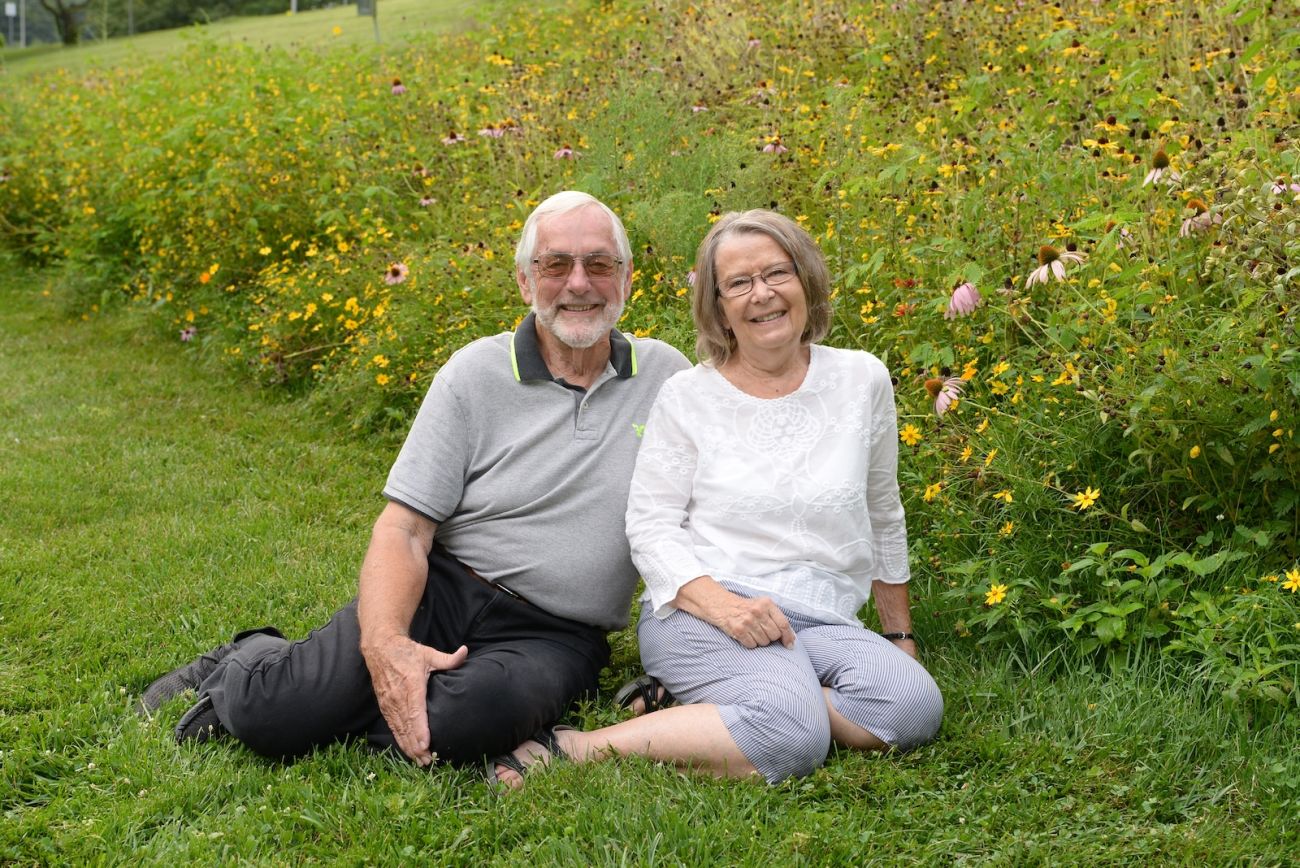
Originally from Philadelphia, Bill lived most of his adult life near Buffalo, in Alden, and attended college in Virginia where he met his wife Patricia. After he retired 19 years ago from M&T Bank, the couple moved to Harrisonburg, Virginia in 2020 to be close to their three grandsons.
Not long before leaving WNY, however, Bill experienced what he describes as “a couple of fainting spells” and was told then that he had a bleeding ulcer in his esophagus. After an endoscopy (an exam that uses a tiny camera to see inside the esophagus), he was diagnosed with Barrett’s esophagus, a condition where the normal lining of the esophagus gets damaged by stomach acid.
“The precaution with that is that every five or six years you’re supposed to have another endoscopy,” he says. “I did that in April of this year, here in Virginia, hoping it was just going to show that there wasn’t any cancer. But it showed there was cancer.”
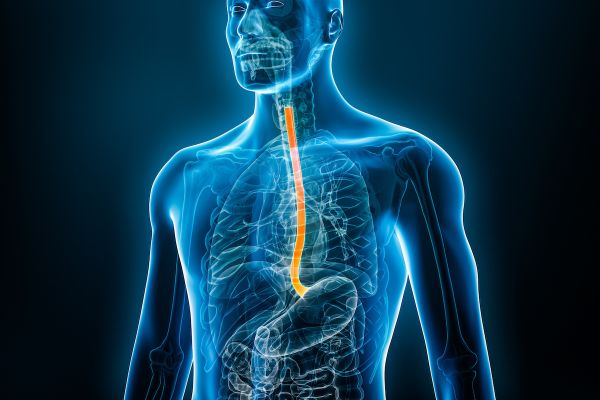
Bill was diagnosed with esophageal cancer at the small hospital in Harrisonburg where he now lives and was referred right away to the University of Virginia Medical Center an hour away in Charlottesville. He needed to be evaluated for an esophagectomy, a complex operation that involves surgical removal of the diseased portion of the esophagus and reconstruction of the remaining gastrointestinal tract.
“They would have been able to do the operation, but the surgeon that I was talking to didn’t specialize in, or didn’t focus on, this type of cancer treatment,” he says. “The surgeon there did maybe 10 or 12 of this type of surgery per year and we didn’t feel comfortable. We said, ‘ok, time for second opinions.’”
Better outcomes than national average
After online research, Bill and Patricia scheduled appointments with three out-of-state cancer centers and made the eight-hour drive back to New York State, first to Roswell Park where they met with Moshim Kukar, MD, Chair of Surgical Oncology.
“We liked him. He seemed very focused and does many, many more esophagectomies a year than just the 10 or 12,” says Bill. “He gave us a list of 100 or 110 cases where he’s done this operation in the past and the results of how the operations went. That was a lot of data, and it seemed like his averages were a lot better than the overall country’s averages were.”
Roswell Park performs about 60 to 70 esophagectomies a year using robotic surgical techniques that typically result in less blood loss and less pain, faster recovery and reduced risk for complications. Dr. Kukar and the Roswell Park team recently reported several years’ data documenting extraordinary outcomes and complication rates far below the national average.
But before deciding that Roswell Park could offer the best outcomes for his esophageal cancer treatment, Bill and Patricia also sought second opinions from other comprehensive cancer centers.
A big factor in the decision to have esophageal cancer surgery at Roswell Park — in addition to Dr. Kukar’s sterling data — was the capacity to perform it robotically.
“Not all doctors that perform this across the whole country do that,” he says, explaining that the University of Virginia surgeon would only have performed part of the esophagectomy robotically. “Dr. Kukar and Roswell Park have the skill and the experience and the equipment to do everything robotically.”
You have time for a second opinion
Esophageal cancers are serious and complex. You need a multi-specialty expert team that focuses on these challenging cancers every day,
Robotics expertise, high volume experience and reduced complications
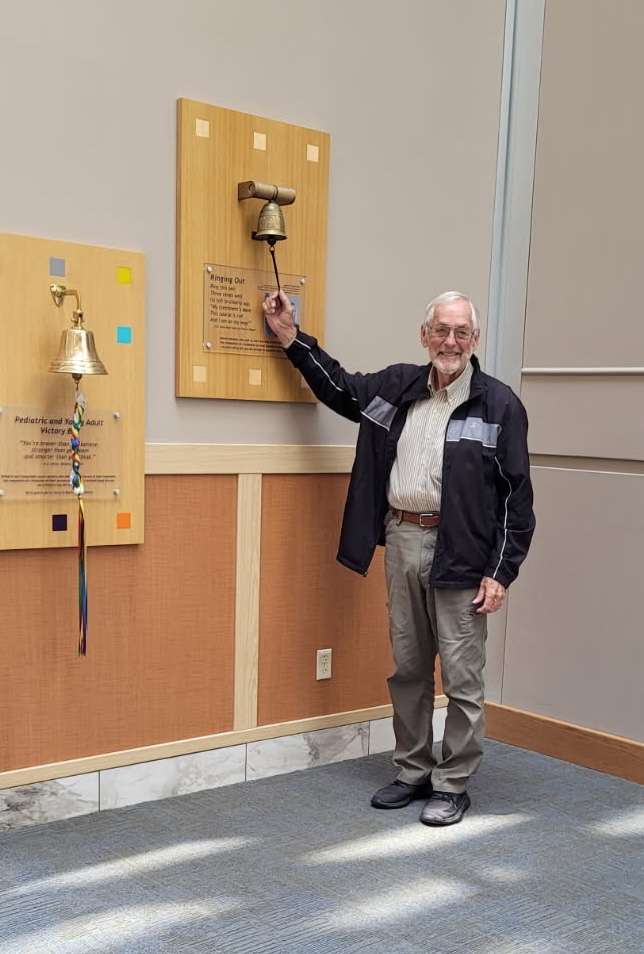
After another endoscopy — the third since his diagnosis in April — Bill underwent esophagectomy surgery at Roswell Park on June 11. Dr. Kukar and his team performed the intricate surgery with robot assistance to remove about five inches from the bottom of his esophagus, then stretched his stomach to reconnect it with the shortened length.
“I had six small incisions on my chest, in the front, and I had four on my side. They’re just teeny, little incisions. I don’t know how they do it, but they go in with a light and a camera,” Bill says with amused amazement. “Dr. Kukar, he’s over at a control panel somewhere. He doesn’t even have to have sterile gloves on.”
Before the seven-hour operation, Dr. Kukar explained possible complications of the process – including pneumonia, kidney consequences and heart complications, among others. “Luckily for me, I have none of these negative side effects,” Bill shares. “He explained that the biggest long-lasting effect would be that you can’t eat a full meal. Rather than eating three meals a day you should eat, maybe, six meals a day, smaller ones, spread out.”
He spent six days post-surgery with Roswell Park, graduating slowly from complete intravenous nourishment (laughing that he got tangled up in the many tubes), to a clear liquid diet. He wasn’t required to have a feeding tube, which is common with many with many esophagectomies.
To follow up in person with Dr. Kukar about 10 days after the surgery, Bill and Patricia booked a room at the nearby Kevin Guest House, about a block away from the hospital. “I actually walked to Kevin House after my discharge,” he says, grateful for the accommodation information provided when they first arrived at Roswell Park. “That’s a long drive back and forth to Virginia.”
The day after the follow up appointment, the couple drove back home to Virginia for the first time after the surgery – and the two-month quest for second opinions. Bill is scheduled to continue under Dr. Kukar’s care from Harrisonburg, sending back PET and/or CT scans for evaluation every six months for the next two years.
He says he has felt stronger every week since the major surgery: “I can do anything I want to do, with only two differences. One is that my eating habits are drastically changed,” he explains, joking that he now orders from the children’s menu when eating out. And because the surgery removed the valve that regulates the flow of gastric juices from his stomach to his shortened esophagus, he makes sure his head and shoulders are raised when he sleeps. “Other than that, my daily schedule and routines are completely normal.”
When asked what he wants people to know about his decision for treatment at Roswell Park, he says just that they’re good, “phenomenal.”
“Dr. Kukar himself called personally two times, one time when I was at the Kevin Guest House, and another time when I was back here in Virginia, just to double check on me.”
Patricia, steadfast at Bill’s side through the esophageal cancer diagnosis, driving, decisions, surgery and recovery, wants people to know that everybody at Roswell Park is friendly, kind, welcoming and ready to help: “They were always ready to volunteer, ready to say, ‘can we help you?’,” she says. “That’s something you don’t really get in a lot of other hospitals.”
Editor’s Note: Cancer patient outcomes and experiences may vary, even for those with the same type of cancer. An individual patient’s story should not be used as a prediction of how another patient will respond to treatment. Roswell Park is transparent about the survival rates of our patients as compared to national standards, and provides this information, when available, within the cancer type sections of this website.