When treatment is done, you'll need a 'road map' for your life ahead
- A Survivorship Care Plan helps you navigate life after your cancer treatment
- Documenting your treatment is important to identify and manage late effects
- Survivorship Care focuses on your overall wellness — more than cancer follow-up
For many cancer patients, the end of treatment is a time to celebrate. But cutting loose from a routine schedule of care and close monitoring can also bring fear, anxiety and uncertainty about what happens next: How often should I see my primary care doctor? What are the potential long-term side effects of the treatments I received? Should I still get mammograms or PSA tests or colonoscopies?
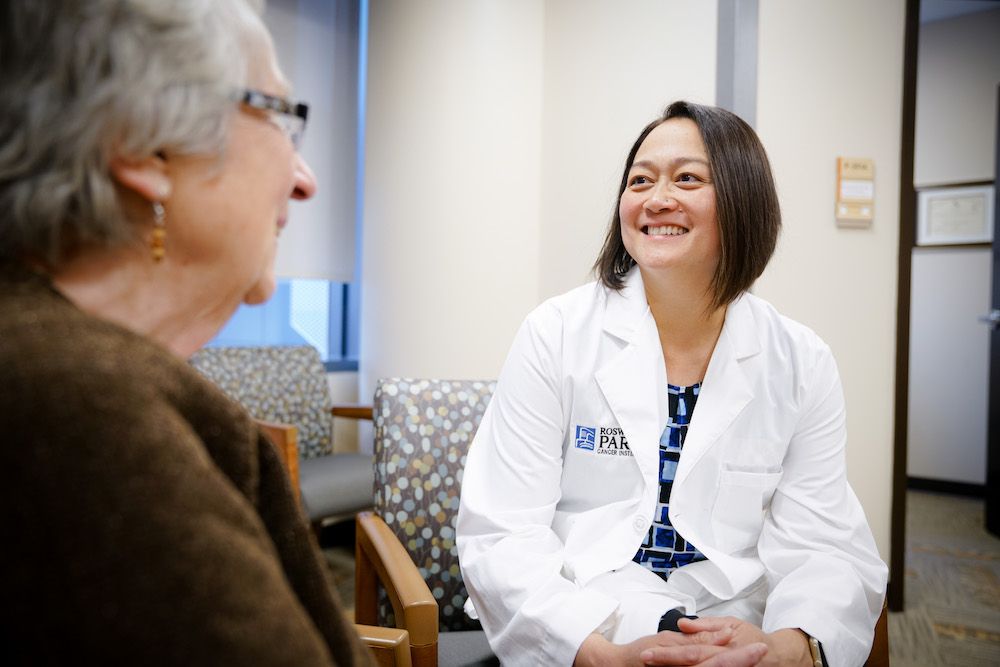
A Survivorship Care Plan helps answer those questions, serving as guide for staying healthy as you begin your new life as a survivor. “We think of it as a road map,” says Tessa Faye Flores, MD, Roswell Park Comprehensive Cancer Center’s Medical Director of Cancer Survivorship and Screening. “When people are done with their treatment, I ask them to see us at least one time in the Survivorship and Supportive Care Center so we can create a plan for them.”
A Survivorship Care Plan provides details about your diagnosis and treatment — for example, the total amount of radiation and the specific chemotherapy drugs you received. That information will be very important when your medical care shifts from your oncology team back to your primary care provider. It can alert your doctor to the side effects that may occur down the road, making it easier to identify and address those problems or even help you avoid some of them completely.
“For example, the chemotherapy drugs Adriamycin® and cyclophosphamide can increase the risk of developing acute myeloid leukemia (AML) later on,” explains Dr. Flores. “If a patient received those drugs, we would recommend that her primary care physician monitor her for AML. If she had fatigue and bruising, we’d want her doctor to add AML to the list of possible causes.” Some drugs can have long-term effects on the heart and lungs and having heart and lung function tests going forward will be important.
What is a Survivorship Care Plan?
Your personalized plan will include:
- Specific information about your diagnosis
- A list of your treatments — including surgery, radiation and all medications — and their potential side effects
- The results of any genetic testing you had
- The names of your Roswell Park doctors
- Recommendations for future tests (such as blood work, bone density tests, mammograms and colonoscopies) and how often they should be done, plus a list of the physicians outside Roswell Park who should receive this information
- A schedule for your annual follow-up visits at Roswell Park
Roswell Park's Survivorship Program
Our Survivorship Program brings together many of our clinical and supportive services, as you face forward and learn to embrace a new normal.
Survivorship Care takes long-term care a step further
Survivorship care is more than ongoing cancer follow-up. It aims to get you to a higher level of wellness. For example, survivors who have smoked may be eligible for lung cancer screenings. The program also offers services to:
- Address ongoing physical side effects such as fatigue, neuropathy, pain or lymphedema
- Provide lifestyle advice such as help with nutrition or an exercise program
- Get help with financial and legal matters related to your cancer diagnosis
- Restore wellness such as massage or acupuncture
- Provide support for anxiety or depression
After-cancer care at five convenient locations
Roswell Park providers offer Survivorship Care at our downtown campus, plus locations in Jamestown, Williamsville and Lockport. You can set up an appointment for a consultation by calling 716-845-4800.