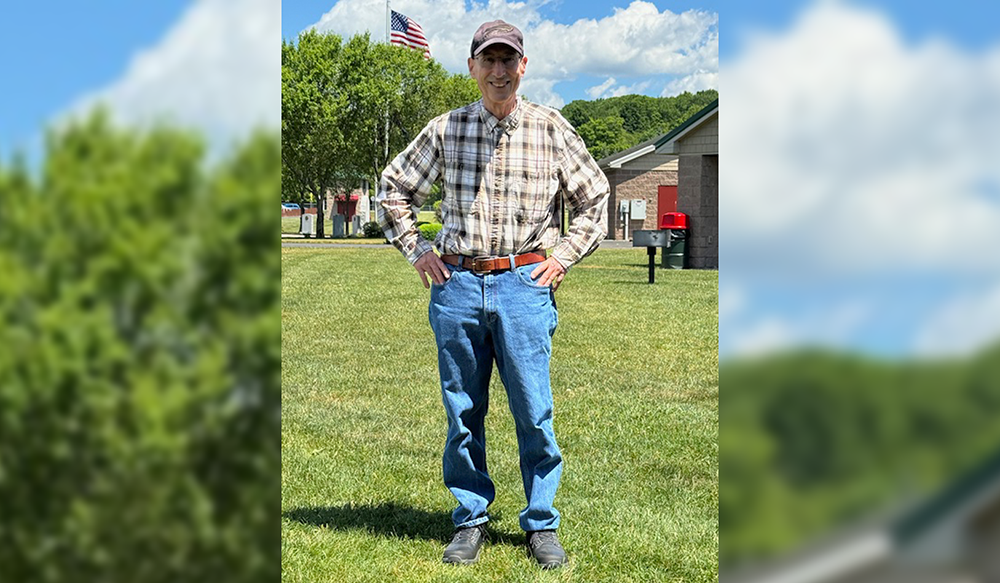
An initial prognosis gave him only months to live. Six years later, Lewis is still cancer free.
- Clinical trials offer new options for patients with pancreatic cancer
- Prolonged response to treatment eventually made surgery possible
- Family members can pursue monitoring through Pancreatic Cancer Screening Program
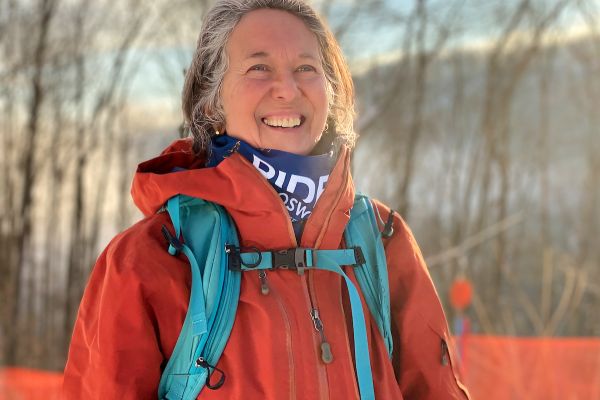
Around the sixth anniversary of his cancer diagnosis, Lewis Aronson, age 74, bought a lottery ticket to see if he could beat the odds twice in life. While he didn’t win the jackpot that day, Lewis knew he’d already won the ultimate prize.
With help from Roswell Park Comprehensive Cancer Center, he is alive and thriving, with no evidence of disease more than six years after learning he had inoperable stage 4 pancreatic cancer and might only survive for a few months.
Vague symptoms, lack of screening tests make early diagnosis challenging
In late 2019, after experiencing fatigue and some abdominal discomfort for several months, Lewis made an appointment with his primary care physician who ordered an MRI. “After viewing the MRI report, my doctor said he was uncomfortable with what he saw and referred me to Roswell Park,” Lewis recalls.
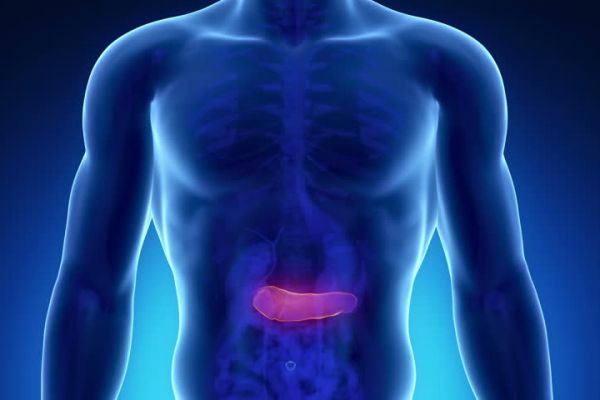
“When Roswell Park received my referral and MRI, they immediately called and scheduled an appointment for me.” After a robotic minimally-invasive laparoscopy to view and obtain abdominal tissue samples, Lewis heard the words that “were like a kick in the head. I had stage 4 inoperable pancreatic cancer, which generally responds poorly to chemotherapy — and I might only have months to live.” Although he had type 2 diabetes and a family history of pancreatic cancer, the news came as a total shock.
Clinical trials play important role in pancreatic cancer care
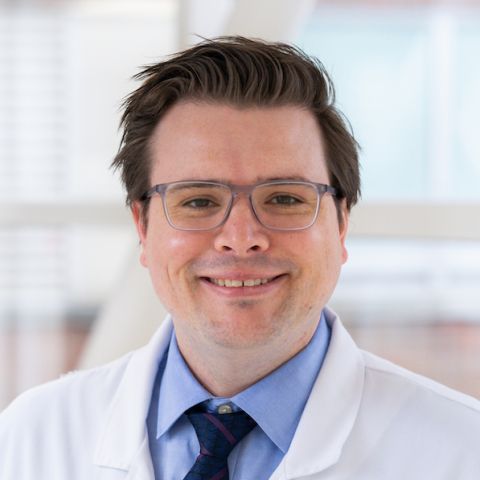
While devastated by his diagnosis, Lewis wasn’t ready to give up without a fight, and he’d come to the right place. “Since standard-of-care therapies usually cannot cure advanced stage pancreatic cancer, I encourage all patients with pancreatic cancer to look for clinical trial options before making any treatment decision,” says Christos Fountzilas, MD, co-leader of Roswell Park’s gastrointestinal clinical disease team and a specialist in early phase clinical trials.
That is exactly what Lewis did, under the guidance of Dr. Fountzilas and clinical research coordinator Cathy Grande. “Dr. Fountzilas and Cathy were amazing,” says Lewis. “They clearly had a sense of urgency and compassion in answering all my questions, making sure that I met all the criteria, and preparing and enrolling me in the trial as soon as possible.”
“Every two weeks, I traveled 70 miles from my home in Jamestown to Roswell Park where I received treatment infusions through my port. Then I would go home and a visiting nurse would come to and hook me up to a pump that delivered more chemotherapy drugs to me at home for the next 46 hours.” After four months on this regimen, Lewis received some surprising and happy news at Roswell Park. “An MRI showed that my tumor had shrunk by 35% and within six months my cancer antigen level decreased from 11,000 to less than 34, proving that the therapy was working.” This cancer antigen, known as CA 19-9, can be used as a biomarker to indicate pancreatic cancer in some people, including Lewis.
After two years of traveling to Roswell Park’s Buffalo campus every two weeks for treatment, the clinical trial ended and it was suggested that Lewis could continue receiving chemotherapy closer to his home in Jamestown. For the next two years, Lewis received his treatments and his disease did not progress. “At that point my local oncologist suggested I be re-evaluated for surgery, given my prolonged stable response to treatment, and she referred me back to Roswell Park.”
Why Roswell Park for pancreatic cancer?
A precise and accurate diagnosis and staging, and a treatment plan delivered by a multidisciplinary team of experts who focus on pancreatic cancer every day, is essential.
A return to Roswell Park and no evidence of disease
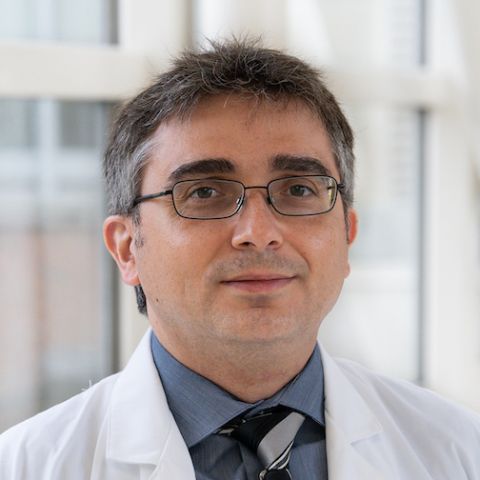
Five years after being told he might only have months to live, Lewis returned to Roswell Park where he underwent another laparoscopy, under the care of surgical oncologist Zachary Stiles, DO, MS. “After finding no cancerous cells in my abdomen, Dr. Stiles surgically removed my spleen and part of my pancreas and found only a benign cyst where the tumor had once been.”
Lewis was able to stop chemotherapy. He is now monitored by Dr. Fountzilas, Dr. Stiles, and the staff of the endocrinology clinic to monitor his CA 19-9 level and adjust his diabetes medicines as needed, and he undergoes a CT scan periodically to ensure that he has no new tumors.
Dr. Stiles is also quick to acknowledge Lewis’ great attitude and strong will to continue fighting his cancer, along with the insight of his medical oncologist in Jamestown. “Without her insight, his good response and our decision to attempt surgery, Lewis would have likely stayed on chemotherapy indefinitely,” says Dr. Stiles.
Comprehensive services and caring staff make a difference at Roswell Park
While Lewis credits his wife, four children and nine grandchildren as his chief motivation to keep fighting, he also acknowledges the staff and comprehensive services he received at Roswell Park as factors that made a difficult prognosis and treatment regimen easier to bear. “My medical team was experienced and willing to accommodate me to make my treatment more convenient, try different approaches and communicate with and respect the input of my oncologist in Jamestown.”
Additionally, once it was discovered that CA 19-9 was a good indicator of pancreatic cancer for Lewis, other members of his family were tested for the presence of this antigen. “My brother now travels to Buffalo from out of state every two years to be monitored and tested at Roswell Park’s Pancreas Cancer Screening program." This specialized program is for people at highest risk for developing pancreatic cancer due to family history, genetic syndromes and other disorders.
Lewis has also participated in a survivorship workshop held at Roswell Park’s Care Network practice in Jamestown. “At Roswell Park, you’re working with the varsity team,” Lewis says. “Literally every member of the staff I’ve met there – including the lab techs, the finance and insurance counselors, the radiology clinic, the phlebotomists, the doctors and nurses, the cafeteria staff – they’ve all been professional, transparent, friendly and compassionate and every other superlative I can think of, and I am forever grateful to all of them.”
Editor’s Note: Cancer patient outcomes and experiences may vary, even for those with the same type of cancer. An individual patient’s story should not be used as a prediction of how another patient will respond to treatment. Roswell Park is transparent about the survival rates of our patients as compared to national standards, and provides this information, when available, within the cancer type sections of this website.