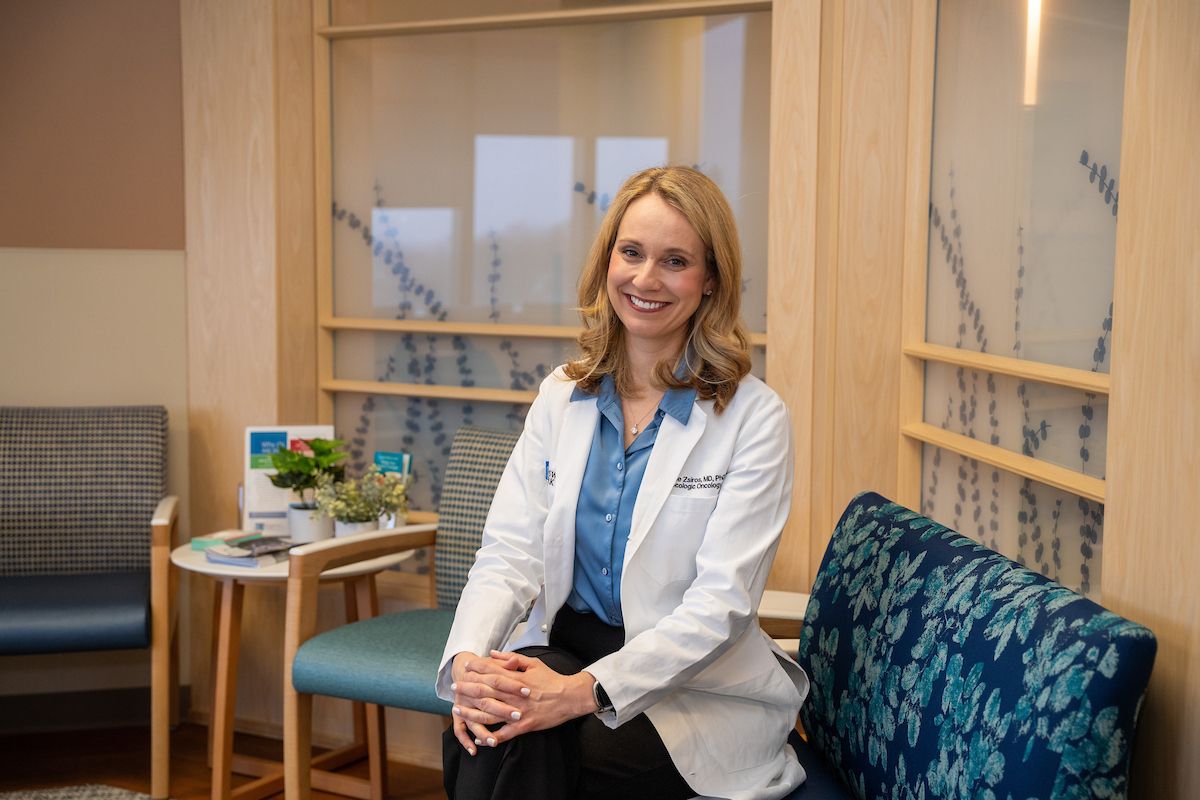
Roswell Park expert explains the importance of clinical trials in ovarian cancer care
- Clinical trials are an important option at any stage — not just a last resort
- Trials offer access to promising new therapies while advancing cancer research
- Roswell Park leads research into next-generation ovarian cancer treatments
Ovarian cancer treatment has come a long way in the past 10 years. New drugs and immune-based therapies have helped many patients. Still, ovarian cancer can be hard to treat. Many patients see their cancer return, and over time it can stop responding to chemotherapy.
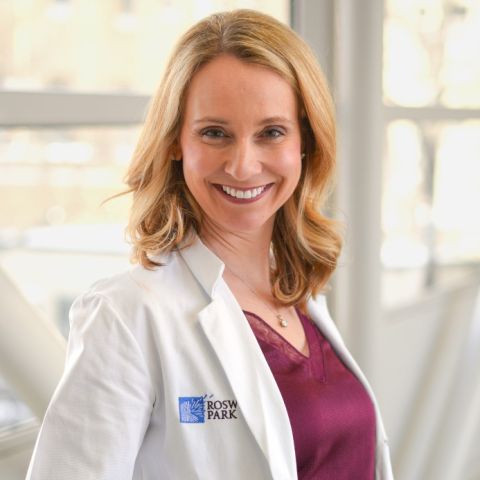
“We need better options,” explains gynecologic oncologist Emese Zsiros, MD, PhD, FACOG, of Roswell Park Comprehensive Cancer Center. “Clinical trials are how we move the field forward and find better treatments for patients.” Joining a clinical trial can give patients access to new and potentially promising therapies that are not yet widely available.” Every treatment used today was once only available through a clinical trial.
Clinical trials are available at every stage of ovarian cancer
Roswell Park is a National Cancer Institute-designated comprehensive cancer center and the only one in the state outside of New York City. Because of this, patients have access to many clinical trials for ovarian cancer — at all stages of treatment. “Clinical trials are not only for patients who have tried every other option,” says Dr. Zsiros. “Some of the most important clinical trials are offered early in care, even at the time of diagnosis. These trials test new ways to make standard treatments work better.”
One current trial at Roswell Park asks patients to wear a fitness tracker. Researchers are studying whether increased physical activity can affect the gut microbiome (the healthy bacteria in the body) and immune function during ovarian cancer treatment. “When we meet with a patient, we review all appropriate treatment options, including both standard therapies and any clinical trials that may be a good fit for their situation. Our goal is to make sure patients understand every available option so they can make informed decisions about their care,” says Dr. Zsiros.
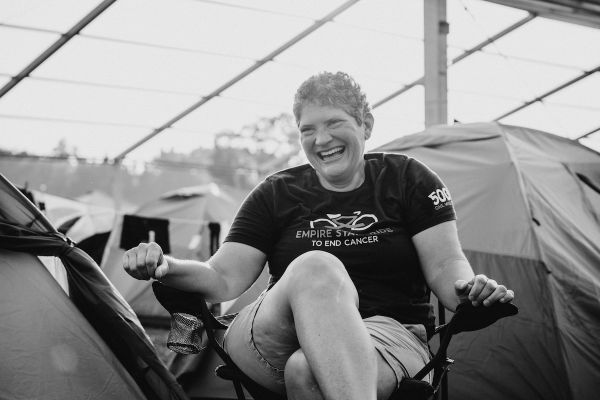
Orsolina Sepe enrolled in a clinical trial after undergoing surgery and chemotherapy for her ovarian cancer. While the standard treatments seemed to work initially, within months her bloodwork showed that a key biomarker was increasing, a sign of recurrence. “The clinical trial gave me future-oriented hope amidst the scientific reality of what was going on. I knew ovarian cancer was notoriously difficult and that many women do experience a recurrence. Of course, I was terrified and anxious, but it brought me to the point of wanting to do something about it.”
The trial that she joined involved an existing immunotherapy, already FDA-approved for other cancer types, to assess how well it may work in patients with ovarian cancer. The drug was approved for use in ovarian patients earlier this year.
As a now-retired psychiatrist, Orsolina understood the importance of research. “I believed in the medical team and the research study nurses, and I asked lots of questions. Still, it required a leap of faith and I had to trust.”
New ovarian treatments being studied at Roswell Park
Cancer research has led to many new types of treatments in recent years. Some of the clinical trials currently offered at Roswell Park include:
- CAR T-cell therapy for ovarian cancer. This treatment uses a patient’s own immune cells, which are changed in a lab to better fight cancer. CAR T-cell therapy has worked well in some blood cancers. Roswell Park is now studying a new version for ovarian cancer.
- Next-generation antibody drug conjugates. These treatments act like “smart missiles.” They attach to cancer cells and deliver medicine directly into the tumor, which may help limit damage to healthy cells.
- New PARP inhibitors. PARP inhibitors block a process cancer cells use to repair themselves. This can slow or stop cancer growth and may help other treatments work better.
“Clinical trials are an important part of modern cancer care,” says Dr. Zsiros. “Patients should feel comfortable asking their physicians about them at any time. Clinical trials are not a last resort — they are often the pathway to the next generation of cancer treatments.”
“For me, this research was everything," says Orsolina. “It matters so much for me and for other patients with ovarian cancer.”
Clinical trials at Roswell Park
New clinical trials open every day. Talk to your doctor about which trials might be right for you.
Editor’s Note: Cancer patient outcomes and experiences may vary, even for those with the same type of cancer. An individual patient’s story should not be used as a prediction of how another patient will respond to treatment. Roswell Park is transparent about the survival rates of our patients as compared to national standards, and provides this information, when available, within the cancer type sections of this website.