
Preclinical study finds suppressing MCT1 transporter significantly reduces bone metastases
- Promising new target found for treating incurable, survival-limiting condition
- Findings fill critical gaps in understanding bone metastasis and metabolism
- Study results appear in Nature Communications
BUFFALO, N.Y. — When prostate cancer metastasizes, or spreads to other parts of the body, most commonly it moves to the bone, where it hijacks bone-building cells called osteoblasts. These osteoblasts in turn contribute to skeletal-related events and facilitate the progression of cancer cells, ultimately compromising patients’ quality of life and dramatically reducing survival. Bone metastasis in prostate cancer is incurable and difficult to control, and until now little was known about the process that drives it.
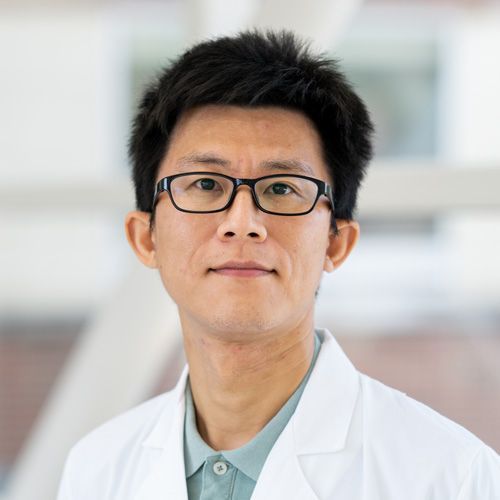
But a preclinical study led by Hai Wang, PhD, Associate Professor of Oncology in the Department of Molecular and Cellular Biology at Roswell Park Comprehensive Cancer Center, has identified a key factor that enables prostate cancer cells to thrive and multiply in the bone microenvironment. Published in Nature Communications, the study focuses on monocarboxylate transporter 1 (MCT1), which is overexpressed by bone-colonizing cancer cells. MCT1 pulls lactate from bone tissue into the cancer cells so they can use it for fatty acid synthesis (FAS), which helps them survive and proliferate. The FAS process results in the secretion of a lipid called oleic acid, which in turn feeds the defective osteoblasts, establishing a metabolic feedback loop that further drives tumor growth and bone remodeling.
Utilizing both in vivo and in vitro preclinical models, the research team found that prostate cancer cells in the bone preferentially use lactate for fatty acid synthesis, enabling them to adapt to the metabolic stress in the bone environment. MCT1 makes that possible.
“Our work shows that suppressing MCT1, either by genetic deletion or with targeted drugs such as the MCT1 inhibitor AZD3965, significantly decreases the growth of prostate tumor cells in the bone,” says Dr. Wang. “This is a promising therapeutic strategy with the potential to impact both survival and quality of life in prostate cancer patients with advanced disease.”
Prostate cancer is the most common cause of cancer-related mortality in men in the U.S., and bone metastases occur in 60-90% of patients with advanced disease. A study out of Denmark revealed that while 56% of patients who did not have bone metastases survived at least five years, the survival rate plummeted to just 3% in patients who did.

Renuka Dahiya, PhD, Senior Research Specialist in Roswell Park’s Department of Molecular and Cellular Biology, is first author of the study, and Subhamoy Dasgupta, PhD, Co-Leader of the Cancer Stress Biology Program, Department of Cell Stress Biology, was an important collaborator. Other members of the research team represented Baylor College of Medicine and the Medical Branch of the University of Texas.
This work was supported by grants from the Department of Defense Prostate Cancer Research Program (HT-9425-23-1-0417), the National Cancer Institute (1R01CA292730) and National Institutes of Health (1DP2CA260421 and 1R01CA252092); core facility resources supported by National Cancer Institute Cancer Center Support grant NCIP30CA016056; and generous contributions to the Roswell Park Alliance Foundation.
###
From the world’s first chemotherapy research to the PSA prostate cancer biomarker, Roswell Park Comprehensive Cancer Center generates innovations that shape how cancer is detected, treated and prevented worldwide. The Roswell Park team of 4,000+ makes compassionate, patient-centered cancer care and services accessible across New York State and beyond. Rated “Exceptional” by the National Cancer Institute, Roswell Park, founded in 1898, was one of the first NCI-designated comprehensive cancer centers in the country and remains the only one in Upstate New York. To learn more about Roswell Park Comprehensive Cancer Center and the Roswell Park Care Network, visit www.roswellpark.org, call 1-800-ROSWELL (1-800-767-9355) or email ASKRoswell@RoswellPark.org.
Jane Rose, Media Relations Specialist
716-845-4919; jane.rose@roswellpark.org