Changes focused on standardization of care, donor selection contribute to 1-year overall survival rate of 92.6%
- Extraordinary results accompanied by shorter hospital stays, far lower costs
- New operating plan could serve as blueprint for other centers to follow
- Results show BMT, stem cell transplant can be highly safe and effective
BUFFALO, N.Y. — A focus on standardizing processes and workflows around blood and marrow transplant (BMT) at Roswell Park Comprehensive Cancer Center has led to exceptionally high one-year overall survival for patients undergoing a first-time stem cell transplant involving a donor, as documented in a new study published in the journal Transplantation and Cellular Therapy. These one-year outcomes greatly surpass historical benchmarks for allogeneic hematopoietic cell transplant (alloHCT), and suggest that structured, center‑level approaches may meaningfully improve outcomes for patients receiving this complex but potentially curative therapy.
Brian Betts, MD, Vice Chair of Strategic Initiatives for Roswell Park’s Transplant & Cellular Therapy Program and senior author of the study, led the initiative in collaboration with Shernan Holtan, MD, Chief of Blood and Marrow Transplant, and Megan Herr, PhD, Associate Member of the Department of Medicine.
“The approaches we’ve put into place helped us get to a remarkably high success rate for donor transplants, illustrating that alloHCT can be an attractive, effective treatment option for many people,” says Dr. Betts. “We are in a new era for transplant now, and that means more people will be good candidates for this potentially curative treatment option for leukemias, other blood disorders, and even some non-cancer indications.”
The data reflect the care of patients who received a first-time alloHCT at Roswell Park in 2024 for any indication — blood cancers like various forms of leukemia, myelodysplastic syndromes, myeloproliferative neoplasms or lymphoma as well as noncancerous conditions like aplastic anemia or other marrow-failure syndromes.
The results documented in the new publication show that the program achieved an overall survival rate of 92.6% for patients one year out from a donor transplant.
While individual patient and center-wide transplant outcomes can vary widely and depend on many factors, a newly published 10-year analysis from The Center for International Blood and Marrow Transplant Research (CIBMTR) documents a steady improvement in survival rates for people undergoing allogeneic stem cell transplants, with 1-year overall survival at 80% nationally for the most recently reported period of 2017 to 2022.
The Roswell Park Approach to alloHCT: Less is More
Roswell Park’s approach focuses on adherence to standard operating procedures linked to the best patient outcomes, plus regular reviews and audits to identify and correct potential problems before they occur.
Innovations Roswell Park implemented in 2024 include:
- A shortened menu of less toxic treatment regimens
- Standardized patient-donor matching that prioritizes younger donor age, blood type compatibility and donor readiness
- For all adult patients, use of post-transplantation cyclophosphamide to reduce incidence of graft-versus-host disease (GvHD), a potentially fatal side effect
- Broader access to transplant for patients who historically were not considered good candidates for alloHCT, including those over age 60; people of mixed-race heritage; and patients without a related donor
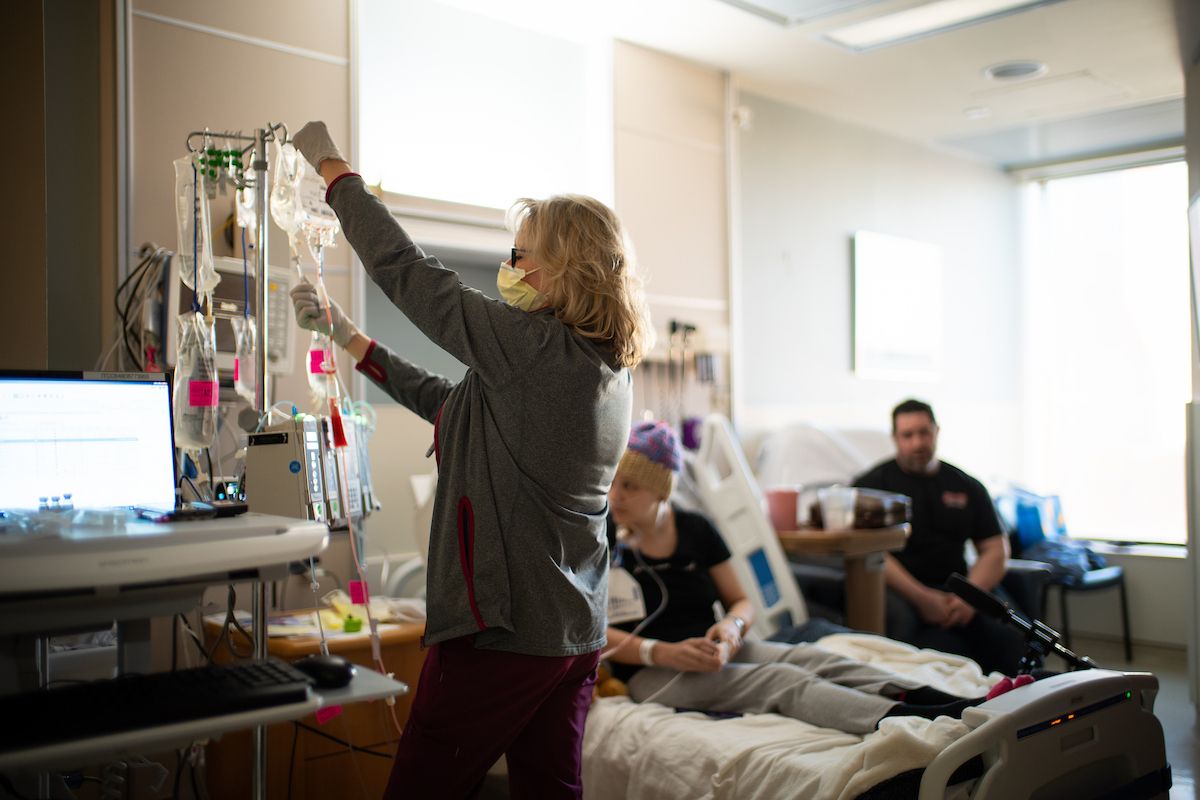
- An early-discharge outpatient care model
“The lesson is clear. Allogeneic transplant is one of the most complex medical procedures done today. However, despite that complexity, less — done well — beats more,” says Dr. Holtan, co-first author of the new study. “Less toxic regimens, modern donor selection, and the right use of cyclophosphamide gave our patients something extraordinary — a 90%‑plus chance of being alive and well a year out.”
Used mostly for the treatment of high-risk blood cancers, alloHCT replaces the patient’s immune system with that of a healthy donor. It is associated with several potentially serious side effects, including increased risk of infection, rejection of the donor cells and graft-versus-host disease (GvHD), which occurs when the donor cells identify the patient’s body as foreign and attack it.
All Roswell Park groups that provide treatment and supportive care for these patients played a role in redesigning the program, including physicians, nurses, advanced practice providers, patient educators, medical social workers, physical therapists, dietitians, dentists and pharmacists.
###
From the world’s first chemotherapy research to the PSA prostate cancer biomarker, Roswell Park Comprehensive Cancer Center generates innovations that shape how cancer is detected, treated and prevented worldwide. The Roswell Park team of 4,000+ makes compassionate, patient-centered cancer care and services accessible across New York State and beyond. Rated “Exceptional” by the National Cancer Institute, Roswell Park, founded in 1898, was one of the first NCI-designated comprehensive cancer centers in the country and remains the only one in Upstate New York. To learn more about Roswell Park Comprehensive Cancer Center and the Roswell Park Care Network, visit www.roswellpark.org, call 1-800-ROSWELL (1-800-767-9355) or email ASKRoswell@RoswellPark.org.
Annie Deck-Miller, Director of Public Relations
716-845-8593; ann.deck-miller@roswellpark.org