Latest developments reported in Nature Reviews Drug Discovery
- Drugs designed to stop cancer cells from multiplying out of control
- Focus on overcoming eventual treatment resistance
- Search for new CDK inhibitors to treat more tumor types
BUFFALO, N.Y. — Worldwide, more than a million breast cancer patients have been treated with cyclin-dependent kinase 4/6 (CDK4/6) inhibitors, which slow or stop the uncontrolled multiplication of cancer cells. Researchers see untapped potential in those targeted therapies, which can dramatically extend progression-free survival — the time before the disease grows worse — and overall survival, even in metastatic disease. Could those benefits be extended to patients with other types of cancer?
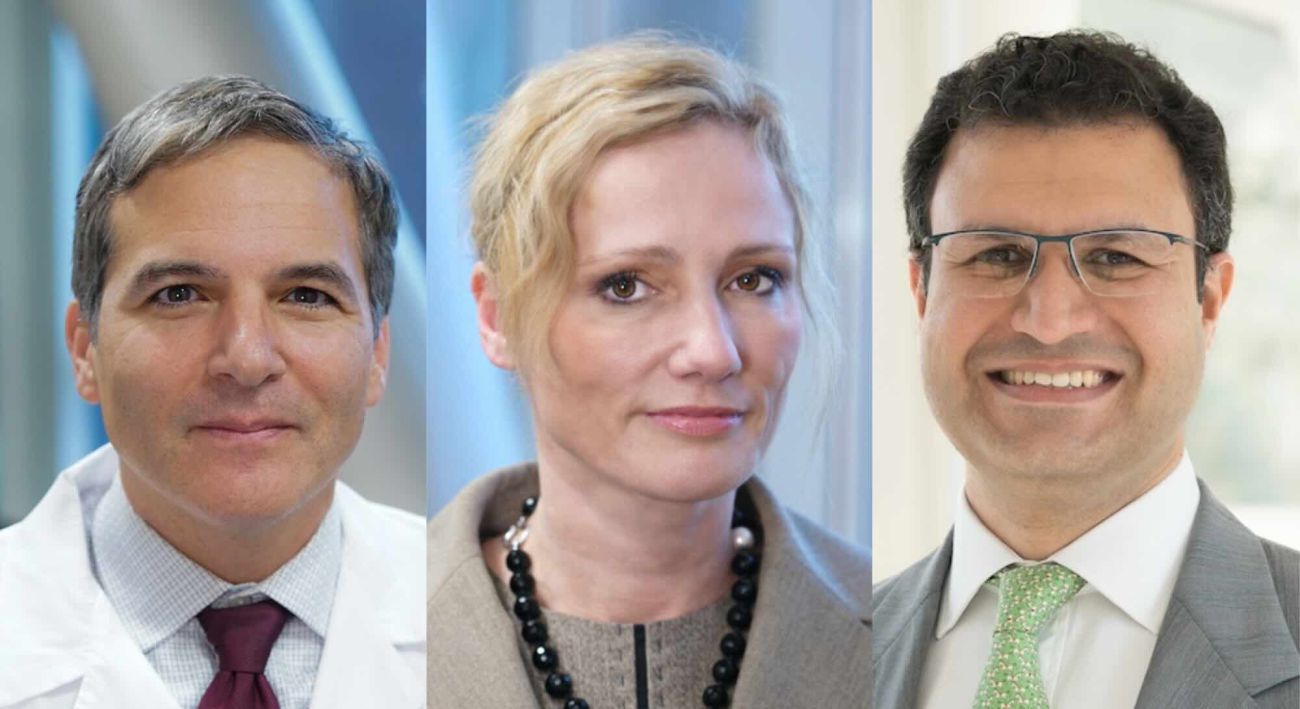
The latest advances in the rapidly evolving field of CDK inhibitors are newly reported in a research review in Nature Reviews Drug Discovery, co-authored by three investigators from Roswell Park Comprehensive Cancer Center whose collective expertise spans both the laboratory and clinic: Erik Knudsen, PhD, Chair of Molecular and Cellular Biology and Senior Vice President and Associate Director for Basic Science; Agnieszka Witkiewicz, MD, Professor of Oncology and Personalized Medicine; and Sheheryar Kabraji, BMBCh, Chief of Breast Medicine.
Marketed under the brand names Ibrance, Kisqali and Verzenio, CDK4/6 inhibitors were first approved by the FDA more than a decade ago for the treatment of the most common breast cancer subtype, HR+ and HER2-. They interfere with the overactive CDK proteins that enable cancer cells to multiply rapidly.
“Since unrestrained proliferation is a defining hallmark of cancer, there is hope that new CDK inhibitors and related therapeutic strategies could have a broad impact on the treatment of other cancers moving forward,” says Dr. Knudsen. But despite extensive research, these drugs are FDA-approved only as treatment for certain forms of breast cancer.
The authors present an overview of the progress made toward realizing the full potential of these drugs.
“Ten years after the first approvals of drugs in this category, CDK inhibition continues to provide new therapeutic options for patients with advanced cancer,” says Dr. Kabraji. “However, drug resistance and toxicity are ongoing challenges. Novel drug combinations guided by dynamic biomarkers will help us achieve more precise and effective CDK inhibition.”
The review cites recent developments contributing to that progress:
- Because most tumors will eventually stop responding to CDK inhibitors, new treatments are in development that combine them with drugs targeting other treatment pathways, creating multiple roadblocks to prevent or postpone treatment resistance.
- Investigators are also working to identify and evaluate new biomarkers that could better explain how tumors become treatment-resistant. This could also open the door to personalized treatment by making it possible to match a patient’s specific tumor characteristics with the most promising CDK therapies.
- New CDK inhibitors are being created with the goal of improving patient outcomes. These include more-selective CDK4 inhibitors to reduce the side effects of treatment, such as low white blood cell counts, infections and gastrointestinal upsets, and CDK2 inhibitors to both reduce treatment resistance and successfully treat patients with a wider range of tumor types.
“By aligning therapeutic intervention with evolving tumor biology, the field can move beyond static treatment strategies toward a more responsive and durable model of precision oncology,” says Dr. Witkiewicz, highlighting further opportunities for progress in developing and employing these targeted treatments.
###
From the world’s first chemotherapy research to the PSA prostate cancer biomarker, Roswell Park Comprehensive Cancer Center generates innovations that shape how cancer is detected, treated and prevented worldwide. The Roswell Park team of 4,000+ makes compassionate, patient-centered cancer care and services accessible across New York State and beyond. Rated “Exceptional” by the National Cancer Institute, Roswell Park, founded in 1898, was one of the first NCI-designated comprehensive cancer centers in the country and remains the only one in Upstate New York. To learn more about Roswell Park Comprehensive Cancer Center and the Roswell Park Care Network, visit www.roswellpark.org, call 1-800-ROSWELL (1-800-767-9355) or email ASKRoswell@RoswellPark.org.
Jane Rose, Media Relations Specialist
716-845-4919; jane.rose@roswellpark.org