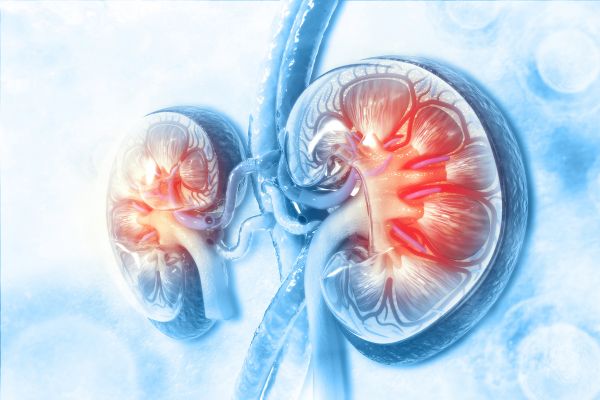
Finding a mass on your kidney does not always mean cancer, but you do need expert assessment
- Many kidney masses are benign cysts, noncancerous tumors or normal kidney tissue
- Getting an accurate diagnosis is the most important step
- Not all kidney tumors require immediate treatment, but expert monitoring is key
It’s common to have a CT scan or other routine imaging and the radiologist discovers a mass or lesion on one of your kidneys. You probably didn’t even have any symptoms that would point to the kidneys, often referred to as the “silent” organs. Now what?
Can a kidney mass be cancer?
A renal (kidney) mass or lesion can be many different things. It could be a non-cancerous tumor, a fluid-filled cyst or sometimes even just a normal part of the kidney. A mass or lesion on the kidney does not automatically mean cancer, but because it could be cancer, you’ll need to follow up with a specialist for further evaluation and testing, and an accurate diagnosis.
What is the next step?
You’ll need to see a urologist to investigate the mass with additional testing that may include:
- Imaging scans to focus on the kidney, such as CT or MRI scans with contrast dye
- Blood and urine tests to evaluate your kidney function
Your doctor will use the results of these tests to characterize the mass and measure its size and tissue features. Is it a fluid-filled simple cyst? Is it a solid mass? Or is it something called a complex cystic mass that’s part fluid-filled and part solid?
Solid masses are more likely to be tumors, but not all tumors are cancerous. When they are cancerous, this does not mean they are necessarily dangerous. That may be surprising, as it is a newer understanding. We now know that most kidney cancers have no ability to spread at the time they are found. For very small kidney cancers, they may be unlikely to gain the ability to spread in a patient’s lifetime.
Will I need a biopsy?
That depends on whether the mass is a cyst or a tumor. With a fluid-filled cyst or a blood-filled cyst, a biopsy is not usually needed.
But if the mass is determined to be a tumor based on a CT or MRI scan, that scan can’t usually tell us if it’s benign. In this case, a biopsy is needed to tell us whether the tumor is cancerous.
Kidney tumors are unique in that a biopsy can usually — but not always — determine conclusively whether the tumor is cancerous or benign. To be on the safe side, many doctors recommend surgery to remove the tumor and sometimes the whole kidney, even before a biopsy, since they believe it cannot reliably prove the tumor is benign.
However, physicians at Roswell Park Comprehensive Cancer Center have developed a new approach to determine whether a tumor is cancerous or benign, sparing patients with benign tumors from unnecessary surgery.
Roswell Park’s innovative — and accurate — method determining cancerous tumors from benign ones
We developed an algorithm that combines biopsy results with a protein biomarker associated with kidney cancer and measurements obtained from a CT scan. In our studies, this approach demonstrated 100% accuracy in distinguishing benign tumors from kidney cancers. This has allowed accurate diagnosis of benign kidney tumors and allowed many patients to safely avoid unnecessary treatment.
What to do about a benign tumor
If a kidney tumor is benign, this means it has no spreading ability, and that will not change in future. Furthermore, benign renal tumors don’t cause any other problems, don’t hurt kidney function and don’t cause symptoms such as pain or bleeding. They don’t require treatment.
Patients can simply be monitored by a urologist with expertise in active surveillance. Monitoring typically involves a scan one or two times per year, and less often over time.
What to do about a cancerous tumor
If a kidney tumor is cancerous, it still may not need treatment. If the kidney cancer is small, then active surveillance may be the best option, especially if the patient has other medical problems or is older.
Small kidney cancers are very non-aggressive. For instance, they grow very slowly and frequently stop growing on their own, even occasionally shrinking on their own. When they are very small, it is so uncommon for them to spread that it is actually more likely for the patient to die from surgery (as unlikely as that is) than it is for the tumor to spread. If a patient elects to undergo active surveillance under the physician’s recommendation, the patient can always change to undergo treatment later on if the cancer grows.
Our team at Roswell Park has published a study including the largest group of patients on active surveillance specifically with small kidney cancers. In this study, all patients who underwent active surveillance remained without cancer spread after five years, and most were able to remain treatment-free over time, avoiding unnecessary treatment side effects.
Come to where the experts are
Get an expert opinion on your kidney mass. We are here to help.
Avoiding unnecessary treatment preserves kidney function
Preserving kidney function is tied to your overall health. Your kidneys filter waste from the body, help regulate blood pressure, support the production of red blood cells, and help maintain healthy blood pH which in turn supports bone strength. Kidney function also is closely linked to healthy heart function.
Kidney function also naturally declines with age. That makes preserving healthy kidney tissue whenever possible an important part of your long-term health.
Your most important decision
Finding a surprise mass or tumor in your kidney can be frightening, but it’s not necessarily cancer. Sometimes, even when it is cancer, it doesn’t always require any treatment.
The most important decision you can make is getting an accurate diagnosis and understanding all your options. Come to where the experts are and see us at Roswell Park where our expertise in diagnosis and treatment can make a world of difference for you.