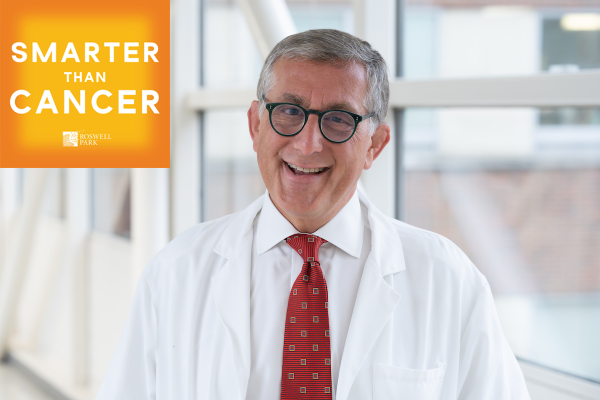
Hajar: Do you remember when we first started working on this podcast? I was a little nervous to be working on a show all
about cancer.
David: Well, totally. I was too. I mean, it's quite a thing tocommit yourself to spend so much time with something so heavy.
Hajar: Yeah. It's interesting, because after almost a year of doing this, I feel like I understand cancer so much better now. And because of that, I think I'm actually a lot less afraid of it.
David: Well, that's great.
Hajar: Yeah. I mean, it's still a really serious disease, but I used to think that if you had cancer, it was kind of over. Like, survival was so, so rare, almost impossible, really.
David: Well, I think a lot of people probably think that, but you're right. The more we've talked to people, the more you realize that that's not the whole story. There's a lot of people who get a diagnosis, get treated, recover, and live a long life after that.
Hajar: And there's a whole system built around that. It's called survivorship, and there's actually an entire program at Roswell Park dedicated to it. But the area I'm most interested in for today is what happens when you survive cancer, when you become
cancer-free.
David: Are you ever really cancer-free?
Hajar: Ugh. That's a good question. We're gonna answer that today. By the way, this is Smarter Than Cancer. I'm Hajar Eldaas.
David: And I'm David Hoffman.
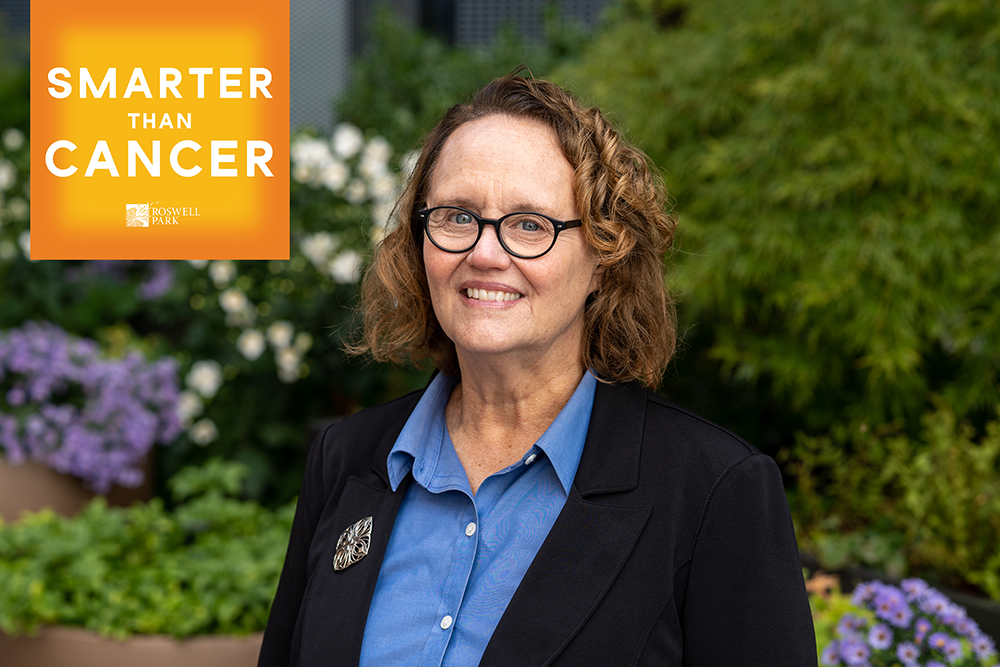
Hajar: So, in this episode, I spoke with Dr. Mary Reid. She's the Chief of Cancer Screening, Survivorship, and Mentorship at Roswell Park, and she walked me through what patients' lives look like after treatment ends—physically, emotionally, mentally—and why that after-cancer phase can be really complicated and confusing.
David: Great. Let's go.
[Theme Music]
Hajar: What does it actually mean to be, quote, "in survivorship"?
Reid: Technically, when you're diagnosed, you're a survivor. But people who are diagnosed and active don't really see themselves that way. They're not sure they're gonna survive. When you've stopped treatment and you've essentially been cured, or you stop treatment where you're on a maintenance therapy, even if you have some residual cancer, you're starting to recover from the experience. Your body is starting to recover. And I think for us, that's when we really think people are survivors. They start to recover from this experience.
Hajar: We were speaking to one of your colleagues. She mentioned that often it's immediately after someone becomes cancer-free that their anxiety spikes. You would think it would be celebratory and everything's great, but that's actually when they're feeling the most anxious.
Reid: When you're in treatment, oftentimes you're followed very, very closely. As you're getting farther away from cancer treatment finishing, you see your oncologist a little bit less, and you don't have the same connection with these people who saved your life. And also, now what happens? It's a period of anxiety because you had a goal and you treated that cancer, and now what happens? You're sort of on your own, and that's why having a survivorship program, as opposed to just sending someone back to their primary care doctor and back into the community, is really important as the transition. It is a hard transition period. And psychologically, it could be five years before someone actually thinks that they beat it, and that's a five-year period of not feeling so great.
Reid: In that stage, the residual effects of being treated are, for some people, profound, and for other patients, they have residual side effects that don't really affect their daily life, but may go on for 50 years, depending on when they were diagnosed.
If you were treated as a kid for leukemia or lymphoma, or you had a transplant, and those treatments are much more successful than they were, pediatric cancer survivorship is really at its best. You may live for 50 years. It may affect your fertility. It could affect your likelihood of getting a second cancer or developing another hematologic cancer. Or if you had GI surgery where they kind of rearrange your
colon, you may have chronic diarrhea or chronic constipation, or you may have nutritional deficiencies. If you've had part of your breast taken out and you've had reconstructive surgery, you have a mammogram every year or every six months. And so every six months you think, "Is it gonna come back?" We call it scanxiety. It's very common, but it's elevating that because your worst nightmare would be that you get your cancer again. And those are the things that people who survive, fantastic, but
that it changes their life. I mean, there's gonna be 24 million survivors in the US in the next few years, so it's a large group, and we really need to pay attention to what is gonna happen to them and what is happening to them and what they're at risk for.
Hajar: Can you paint me a picture of what... So you go to the doctor, you get your scan, and you now have zero cancer cells in your—you're cancer-free. What does life look like? What is the timeline after that? Are you coming in weekly or monthly? Like, just a general picture of what someone's life would look like after that.
Reid: Well, it really depends on the cancer you had. Initially, you have more scans. You may have one every three months, or you may have one every six months for a year or two years, and then you progress to once a year. There are guidelines that we follow. Some of our clinicians are more conservative and require more scans. We also know that with certain cancers, there's sort of a peak period where they may have a recurrence, and we scan more during that. And once they're past—for instance, with GYN cancers, in the first three years after you've been successfully treated is when we know your risk of recurrence is higher. And once you're past that three years, then your scans decrease, and you're less likely, based on the epidemiology of recurrence, to have that. Now, we're gonna scan you probably forever once a year just to make sure it didn't come back or that you don't have another cancer that has formed. That schedule is set by guidelines, and it means that every year you're reminded again that you're at risk.
Hajar: Yeah, that part, as someone who has a lot of anxiety with doctors, the mental toll feels so unimaginable. Like, are you facing any resistance getting people to come in for those scans? What kind of conversations are you having around that?
Reid: So I don't think—there is some resistance that I'll tell you about, but I don't think the resistance comes from coming back in because you don't want to have this cancer come back. And if it does come back, you want to get it treated. And so there's almost an addiction to those scans because once you've had it and it's normal, you're like, "Oh, thank goodness, I don't have anything." The next day you start that year again. It's anxiety-producing, but once you've had a normal scan, then you know that everything is okay, has been okay for that year. And it's really important to get people to stick to their schedule. Now, at 10 years out, I have an example where they said, "Don't come back for any more CTs." That was difficult for that patient because now they're out on their own with no one monitoring if their cancer's coming back. But the likelihood that it would
recur 10 years out is very low—not impossible. The part that is hard is that if you have someone who's survived a GYN cancer, which is fantastic, and then you say, "Okay, well
now you're through treatment. Now you have to have a mammogram. You have to have a Pap smear. You have to have a colonoscopy. You have to have lung cancer screening," that is hard because that implies—and it's true—that now we're gonna screen you for
other cancers that you may have. And once you've gotten over one, you do not want another one. We would fail if we did not really pressure patients to get into regular screening because I don't want to see someone survive a complicated cancer only to succumb to something that we could have picked up early through screening.
So getting people back on that screening regimen is difficult
because cancer stinks.
Hajar: Yeah.
Reid: And no one wants to go through it again. What we do know is that 20% of all new cancer diagnoses are in people who already had a cancer. So the second cancer rate is the result of genetics, and it's a result of having cytotoxic drugs systemically that cause damage, and also from radiation treatment. And, you know, those are the things that save their lives, but they also induce a risk, a potential risk of a second cancer that's not related to the first.
Hajar: The whole experience of going through cancer is s- so all-consuming. You know, you get this news that you have cancer, and then your entire life gets wrapped into it. And I imagine you're learning everything you can about the type of cancer you have and the treatments available to you, and then your life probably feels on hold while you're going through the treatment. And then once you're done with that, and hopefully the results are positive, and you feel like you can get your head above water for a bit, you now have to think about how you're susceptible to another cancer now. That must be so difficult for people to take in.
Reid: And, and for those folks, they get cured of one cancer, but they already showed that they can grow a cancer. Then they get treated with very intense systemic therapy, which, you know, affects all the normal cells as well as the cancer cells. And it's, uh... If you've had radiation, radiation damages normal cells in addition to damaging tumors. And while we're trying to decrease the exposure to normal cells, we can't do it completely. And the, you know, you know, the, the long-term toxicity from treatments, for instance, with immunotherapy, we're just starting to look at five years after finishing, are
people at an increased risk of any of those things like heart problems or thyroid problems? We're really starting to look at that because it's a highly effective treatment, but it may carry some residual long-term symptoms related to that treatment, especially for systemic therapy. If you have done any damage to multiple organ systems, kidney, liver, heart, thyroid, you know, endocrine, as you watch people and as they age, 'cause as we age, all of our systems are a lot less efficient, people may develop some heart problems down the line. There's some drugs that we already know you can be treated for
with, um, you know, in breast cancer, anthracyclines and whatnot, that we know we have to do heart monitoring long-term because they may develop something 10 years out that's not really, uh, related to their normal risk factors, but may be enhanced or their risk may be increased for a heart problem 10 years later. And so it's understanding that, that that's really important. That's the, the, the role of survivorship in really monitoring those long-term toxicities or toxicities that emerge as people live, um, is really, you know, part of our job.
Hajar: What other things other than a s- developing a secondary disease are you monitoring for or tracking with someone in survivorship?
Reid: Aside from, um, helping them to manage any symptoms. Like peripheral neuropathy is pretty common. It's related to a lot of the drugs that we commonly use. And certain people will have peripheral neuropathy for 10 and 20 years. Some people don't have any. But if they're complaining of peripheral neuropathy, are there drugs? Is there physical therapy? Is there acupuncture? You know, what are the things we know that can help
to resolve that? 'Cause you don't wanna walk around not being able to feel your toes or the bottom of your foot for the rest of your life. And so we really focus in on, um, working on those particular symptoms. Stress and emotional, uh, disruption, family disruption is very common among cancer survivors, especially in those first few years. And so we do an assessment of quality of life. We have now built into our program access to
a social worker who can do online counseling. In our clinic, we can refer to psychology to get people started.
We also know your family gets disrupted. Your kids, uh, don't fully understand what happened. And so a lot of times we engage the family and caregivers in some emotional or social support. Uh, we have support groups, for example. We also know that if
you have your colon rearranged, how you eat is different, that you may have deficiencies. You may have-- be on drugs after breast cancer treatment that cause weight gain, and you wanna get back to your more normal weight, uh, because you can be on those drugs for 10 years. And so how do we do that? Well, we provide really targeted exercise therapy, targeted nutrition therapy, as well as continue to do a full physical assessment.
Um, the one thing I'll say is that we wanna do it. We wanna work with people's primary care doctors who support blood pressure maintenance and do the things, the problems that they've always addressed. But, but very specific to cancer treatment, we are
now specialists in doing that long term.
Hajar: Is this a new way of thinking about survivorship? Like, was this always the standard of care?
Reid: No. It's, it's still relatively new. I think bec- one, because we see more survivors who've had complicated treatment regimens. We understand that primary care doctors are hesitant to take over the surveillance of survivors because they haven't read the literature. They need information. Um, and we also know that a lot of the problems that emerge during survivorship are medical. They're not oncology. It's not about a tumor. It's
really about these other systems, this whole person, and it's not w- oncologists are really good at what they do, but addressing this complicated mix of the whole person, including
the family dynamic, really needs to be done by a specialized program to get the patient...You know, everyone is different, and we need to personalize and individualize that follow-up, but it, it's a result of success, right? Because people are living,
and they wanna get back to pickleball or whatever it was they were doing before, and we want them to get there, and we want them to change their, to, to help to recapture their sense of wellness, whatever that means, and it's a process. And so we've built our program and k- and programs around the country to really start to address this separately from oncology, but not disconnected from oncology.
Hajar: Do you think people go back to normal? Like, does d- do you think there's a certain amount of time that passes where someone can stop thinking about having cancer?
Reid: That I'm not sure about because, one, you know, getting back to normal, it's a different normal. Mm-hmm. You know, you can You can shake having had a heart attack, but you will always be a cancer survivor, partly in your mind and partly 'cause of your medical history. In that way, it's, it's hard to shake it. Some people have kind of a, a PTSD from that time because they felt so bad, but we're all resilient. You know, we recover from things that happen in our lives that are really painful, and I, I think what we've see in our survivors is an incredible resilience and optimism about the life forward. Now, we want them to change certain things that help to bring on that cancer, quitting smoking, changing their diet, getting more exercise. We want them to do all these really positive things, and when they're really ready to embrace the fact that the treatment's
over, sometimes it takes a while, then they can start to really be proactive, so they can reduce their risk of other cancers, and they can start to feel better. But they're, they're not gonna go back to exactly the way they were, and I think that's a hard thing to accept. But it, it offers so many opportunities because you face something as serious as cancer, and you get through it, and then you have your life ahead of you. I think one of the most important things that you see in cancer survivors is that they have a great appreciation for being alive. And so you see differences in family dynamics and, and how they're managing and how they approach work, things like that. You know, the value of
life is really apparent in people who are survivors.
[Credits Music]
Thanks for listening to Smarter Than Cancer, a production of
Roswell Park Comprehensive Cancer Center.
The show is written and produced by your hosts, Hajar Eldaas and
David Hoffman.
Production Oversight by Peter Soscia.
Additional logistics and support from Michelle Eisenstein.
Our production partner for the series is CitizenRacecar.
Post-production by Gregory Schweitzer for DCP Entertainment.
Publication and Promotion supervised by Candice Chantalou.
If you or your loved one has been diagnosed with cancer and
would like to schedule an appointment with Roswell Park, please
call 1-800-ROSWELL. That's 1-800-R-O-S-W-E-L-L, or visit us at
roswellpark.org.
If you're enjoying this series, we would love to hear from you.
Please reach out and tell us about your cancer story and let us
know what topics you'd like us to cover in future episodes by
filling out the form at roswellpark.org/smarterthancancer.
And if you know someone else who might find value in what we're
doing, please tell them about it. You can listen and subscribe
wherever you get your podcasts.