Hajar: So, David....
David: Yes...
Hajar: Think about firefighters.
David: Okay.
Hajar: When you think about the risk they face, what comes to mind first?
David: I mean, fire, getting burned.
Hajar: Right. Okay. That's the obvious one, but go on.
David: I would think smoke inhalation, and danger from collapsing buildings, and stress. How am I doing?
Hajar: Exactly. Those are the immediate dangers, but there's also a long-term risk, and I don't think most of us outside the fire department ever really think about it. By the way, this is Smarter Than Cancer, and I'm Hajar Eldaas.
David: And I'm David Hoffman.
Hajar: So that risk is cancer risk, and today we're gonna talk about it because it's now the leading cause of death in retired firefighters.
David: Which I, I mean, I guess makes sense when you think about how much smoke and particulates they're breathing in over the course of a, of a career. A lot of that has to be carcinogenic, right?
Hajar: Yeah. And in doing this episode, I learned that it's not just what they're breathing in, it's also what gets absorbed through their skin and the contaminated materials that they're surrounded by during and after fires. You know, things most of us really never think about. And so in this episode, I tried to understand more about what that exposure actually looks like over the course of a career in the fire department, why it's so
closely linked to cancer risk, and what's being done about it.
David: All right. I wanna hear about it.
[Theme Music]
Mark: So in June 2008, in the city of Buffalo at Niagara and Ferry, there was a pool supply place that caught fire. It burned for a couple of days. It was a hazardous materials incident with a fire. There were 250 people from Buffalo Fire that filled out exposure forms. Sadly, there were a number of members that became sick and were disabled from that fire and no longer could work as firefighters. There were another set of members that actually, tragically, passed away. Four in particular had
glioblastomas. To have one person have that sort of condition is pretty rare, from what I'm being told, but four really just kind of drives home the point that, unfortunately, that was an incident that really made our members sick. My name is Mark Mindola, and I've been retired now three years from Buffalo Fire Department. I served there for 27 years, but
today I'm the Western New York ambassador for the National Firefighter Registry for Cancer.
Hajar: Was there anything that made it apparent right away that
this fire was going to be different than other big fires?
Mark: The company that I was with was Ladder Six. We had just gotten a brand-new ladder truck maybe six months or a year before. That truck went to that fire and operated there over the period of two days, and when it came back, all the brass fittings on the truck were green. So there was physical damage to the actual engines and ladders that went there, so that right away had told us that something was wrong. Luckily, the commissioner at the time, Mike Lombardo, did fill out a, I think it's called, like, a global exposure report, where the members, every single member that operated there, was written up for a general exposure of all the chemicals that were in the facility.
Hajar: Is that what got you to care more about this—
Mark: I was at that fire. So I ended up there at midnight on that first day, and I worked there till 8:00 the next morning. Fast-forward to the first bunch of CT scans, and unfortunately, they find two nodules in my one lung and one nodule in another lung. Thankfully, I'm getting scanned. Nothing has changed, but that even further drove home the point for me to try and get involved, especially now that I'm retired, after seeing when a classmate of mine was on the first-in engine. He was a pump operator. He ended up having a lung issue and a disability. And so from that, that's why I've kind of, like, been trying to spearhead the Western New York part of this National Firefighter Registry for Cancer.
Hajar: Yeah, so let's talk about that. What is the National Firefighter Registry?
Mark: So in 2018, there was a Cancer Act through Congress, and in April of 2023, they opened up the National Firefighter Registry for Cancer. It's a free program. It's open to any active or retired career or volunteer firefighter. You do not have to have cancer to register for it. In fact, it's probably beneficial that you register very early in your career, so
unfortunately, if you do develop it... The main goals are, like, cancer awareness, prevention, and they're really looking to study data over time to see any of these trends that go on. It just looks for a yearly average
response to structure fires, car fires, rubbish, wildland, hazardous materials, any airport or things like that. From that, they're just gonna take the data and try and utilize it or find out why firefighters are getting sick, certain kinds of cancers that they're getting, the timeframes in their career, the level of exposures. According to the National Firefighter Registry for Cancer's website, the most common self-reported cancers are skin melanoma, prostate, thyroid, kidney, testicular, colorectal, non-Hodgkin's lymphoma, bladder, and breast.
Dr. Reid: We want our hands on all the responders from those fires because we know risk of cancer is really elevated in that group.
Hajar (Narration): Mary Reid is the chief of cancer screening and survivorship at Roswell Park.
Dr. Reid: The scientific evidence that being a firefighter is related to cancer, it is not a question. It is an occupation where people who are professional firefighters especially, who have more exposures, have increased risk of cancer, solid tumors, some lymphoma, myeloma, over the general population. And we don't need to prove that. It's proven. And just the awareness of cancer susceptibility in the Buffalo Fire Department has really encouraged them to get better care earlier for melanoma, which is from the skin contamination. We offer screenings with lung cancer screening. It's really to get them mobilized so that they don't put off, you know... The hardest statistic among firefighters for me is that the main cause of death among retired firefighters is cancer. It's not heart attacks. It used to be, but now it's cancer. So you do your career, you do all this public service, you get exposed, and then you retire and you get cancer. And so screening among that group is super important. One of the issues is getting the guidelines that we follow to be
adapted to people with occupational exposures, like firefighting.
Hajar (Narration): Even now, there still aren't super clear or standardized national or international guidelines for cancer screening in firefighters. The research into their unique cancer risks is relatively new, and many screening recommendations aren't that different from those for the general public, despite the fact that firefighters have repeated exposure to carcinogens on the job.
Ashley: Yeah. Generally, right now where we stand, there's not a lot of regulations outside of what NCI and NCCN, the National Comprehensive Cancer Network guidelines, are for firefighters, which is a huge reason we try to do some of this research. Because what we'd like to say is that firefighters really should be screened at a younger age, maybe a different frequency. But it's hard to change a national guideline around that without some scientific evidence.
Hajar (Narration): Ashley Snowden is the executive director of physician and external partner engagement at Roswell Park. A big part of her work focuses on helping first responders better understand the research being done about their cancer risk and implementing some of the best practices being recommended.
Ashley: I know for women, there was a study out of San Francisco. Female firefighters are about 44% higher risk of getting breast cancer than the general population. So should they be getting mammograms earlier? Definitely. But, you know, we need to put that science to work so that we can start changing the guidelines. This research is really only about 10 years old, which in the world of cancer research is very young, not a lot of time. So we're learning still as we go, kind of what the contributing factors are.
Hajar (Narration): The link between firefighting and cancer was always there, but it wasn't really until 9/11 that research funding and resources were directed toward understanding the risks more clearly and figuring out what could be done about them.
Ashley: You know, 9/11 was this giant, really big, caustic event. It really is similar to that of the exposures of a 20-year career firefighter, because you're looking at a really concentrated group of people that responded and a concentrated group of people with these specific cancer diagnoses. So I think that research and that event really kind of pushed...
I know it pushed national firefighter cancer research ahead. But I think that created the awareness because that happened in kind of a vacuum, you know, where there's so many cases among these specific people that it was really hard not to correlate that. Like, people around the pile were getting thyroid cancer, but people that were on the pile were getting this type of cancer, and they were really able to kind of pinpoint those types of diagnoses to what their exposures were. And I think that really
helped move all of first responder research in the right direction.
Mark: The sad thing is, of 50 states, there's 50 different sets of what they call presumptive laws. So there's limitations involved to that. So when you have good studies like they're doing here at Roswell, things through the National Firefighter Registry for Cancer, trying to prove that this is a noble calling, but it can make you sick.
Hajar: What do you miss the most about it?
Mark: The kitchen table. So every firehouse has a kitchen table. Everyone has equal playing... it's a level playing field, is a good way of putting it, meaning that there is a certain amount of busting chops in there. But the camaraderie between the men and women and the dedication that they have, there's nothing more intimate than sitting down and sharing a meal together, going over things, solving the world's problems, leaning on each other.
Ashley: I can confidently say, as an outsider, sort of a quasi-insider now, it's a family. I mean, the fire service is truly a family. I've worked in healthcare for 20 years now in a corporate setting, academic hospital setting, and until I really worked within the fire service, I didn't understand kind of the culture. It really truly is a family, and it's very unique to other patients.
Mark: Any kind of a call that you train and prepare for and you go to that has a successful outcome, whether it's a medical run or a fire or a car accident, or anytime you can truly save somebody's life, you're making a difference. You're showing up on the worst day and, you know, nobody's looking for a pat on the back or any of this other stuff, but just to know that you had such a positive impact on somebody's life, it's very
rewarding.
Hajar: So does the research show that cancer in this population is rising, or is it just that the awareness is higher so we're catching it more? And if it is rising, why? Has that been studied?
Ashley: It has, in small pockets. I can't really quote what those numbers are, but 9% higher risk for all firefighters for cancer. Different cancers are higher. 9% overall is the number for all firefighters. But if you think about what houses are made of now versus what houses were made of, you know, in the '70s, it was more straight wood. There was a lot of lead, though, back then, and heavy metals. The composition has changed, and I think that's definitely led to different types of cancer diagnoses.
Mark: And also the things that are inside people's homes. So they talk about legacy materials. So couches or chairs were made out of real wood and probably cotton or natural fabrics. Now you've flipped a switch. There's a lot more electronics. Those are all plastics and polycarbs, leather, you know, the way that couches and chairs are made of non-natural materials. So again, those things catch fire, and they're off-gassing multiple carcinogens.
Hajar: It's interesting to think that, you know, a lot of people
were getting sick back then, but no one really thought, "Okay, it seems cancer is higher in this population, so let's try to make some changes."
Mark: So I think it was just an accepted practice. Like now, with a lot of the research and our partnership, maybe they didn't think it was related to the job, or it was just accepted risk of the job. You know, you're a firefighter, you're gonna breathe in smoke and you're gonna get sick and you're gonna, you know, develop cancer. I mean, the sad thing is there's people that I served with that their fathers were on the job. There was one house in particular on the Upper West Side. It used to go to a lot of garbage dump fires. I think there was, like, a garbage incinerator at Unity Island, and they were exposed to any myriad number of unknown chemicals and things, and there was a handful of firefighters from there that then ended up getting sick. Sadly, they kind of connect the dots
later on.
Hajar (Narration): Because of the nature of the job, firefighting has always carried a risk of cancer, and it likely always will. But with the increase in research after 9/11, Roswell Park and other programs around the country are now focused on educating both first responders and policymakers in two key areas. The first is making sure every firefighter is screened for, at the very least, melanoma and lung cancer.
Ashley: That's kind of how we started working on this program. We really wanted to get members of the fire department to start thinking about preventative health and screening more so than just being reactive after a symptom presents or a diagnosis. So back then, it was just me and one of the union members going around to all the firehouses and waking them up from naps at lunchtime. It was a really tough sell in the beginning, but once we started to get some traction with the Buffalo Fire
Department, they were our very first and, you know, our strongest partner. It really started to kind of grow, and we were able to screen the entire department.
Hajar: So you said that it was a tough sell at first. I'm wondering, why do you think it was a tough sell? What is the resistance?
Ashley: Have you ever met a firefighter?
Hajar: Yes.
Ashley: I think it was really, and Mark can speak to this as well, I think it's a very difficult population. I mean, you're thinking about these men and women who are risking their lives every day and running into burning buildings and saving people, and really, to think about going to the doctor wasn't on the top of the priority list. So it was a really tough sell, meaning to try to get them to think about themselves and their own health when their mindset is really community-focused.
Mark: I think the fire service in general, or any first responder, does a good job at taking care of other people, especially civilians. And then to have the focus on yourself, unfortunately, we don't take good care of ourselves as much as we should.
Hajar: Is there also, like, a culture of... I used to work at a construction company, and they would do the rigs of HVAC machines and get them in really tough spots, and a lot of our riggers refused to wear the harness, and we would get fined for it, and it became an issue. But it was like,
"Ah, everything's gonna be fine." And it's like, it's not gonna be fine if you're not wearing your harness. So is there, like, a culture of a little bit of machoness around—
Mark: Sure. I think—
Ashley: Salty.
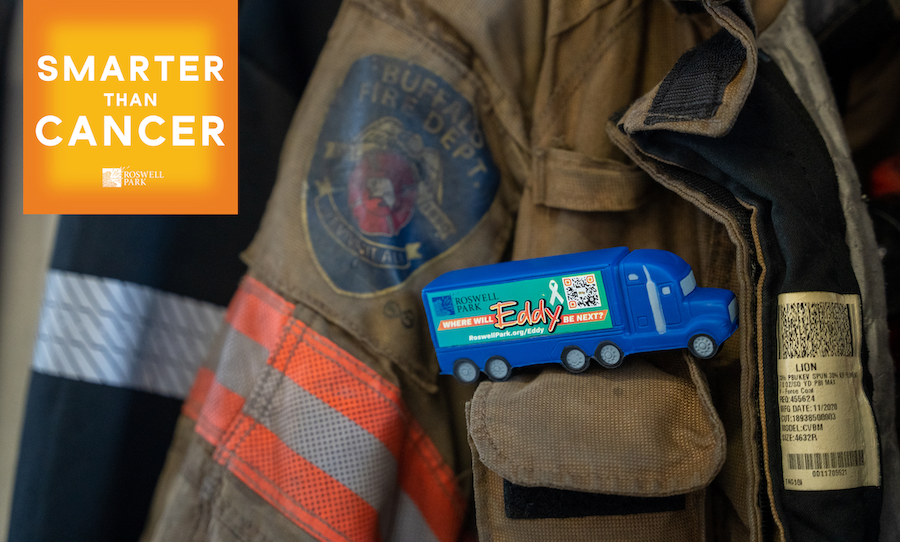
Mark: Yeah. Yes. And so another change that's occurred, when I got hired in the mid-'90s, the old badge of honor was what they called salty or dirty gear. So the dirtier your helmet was, the dirtier your gear was, that made you a better—it was perceived that you were a better, aggressive firefighter. So now the culture has changed, thankfully. You can still be just as aggressive, just as professional, just as much of a hard charger with clean gear. So all that gear that people were wearing all those years, unfortunately, it's off-gassing carcinogens and byproducts of combustion. And, you know, we're driving down the street, and the wind is blowing, and there's all this stuff coming off of the gear inside the rig as you're going to a call. You're breathing all that stuff in. Your skin is absorbing all these carcinogens. So thankfully, the tide is changing. A lot of that misguided view of things back then is now changing.
Hajar (Narration): And that's the other major area this research
is pushing to change: firefighter gear. What does firefighter gear look like? Can you, like, break it down?
Mark: Sure. The gear itself weighs anywhere from 60 to 80 pounds, including the air tank that you're given. You're gonna have steel-toed rubber boots. You're gonna have a set of turnout pants that have two liners with suspenders, a coat that also has two liners. You're gonna have a Nomex hood that gets put on. That's to protect around your face that's left exposed from your air mask, your ears, your neck. You'll wear an air mask. So the self-contained breathing apparatus weighs 35 to 40 pounds. We bring the air in to fight the fire. In addition, you're gonna wear a helmet and gloves. So between that 60 to 80 pounds, then we'll bring another 10 to 20 pounds of equipment that we carry and use.
Hajar (Narration): So the gear is doing a lot. It has to be relatively lightweight, and "relatively" is doing a lot of work here. But it has to also be protective and durable and sturdy enough to withstand extreme conditions over and over. And any major overhaul of the gear or the standards around it would be expensive and would require strong evidence to justify that kind of large-scale change.
Mark: Better data drives better legislation, which drives better funding, which comes into real changes, like you mentioned about gear. So one of the main goals of the National Firefighter Registry for Cancer is to improve firefighter gear. In 2028, I think there's legislation that it's gonna be law that firefighters' gear has to be PFAS-free. I know that's another known carcinogen. That's another step in the right direction.
Ashley: That's the irony of the gear, is it's full of forever chemicals that are carcinogens, but it's built to protect them from fire. But at the same time, there are a few studies and groups in Australia that are piloting gear with no PFAS in it, but it hasn't made it this far yet. But hopefully by 2028 we'll have some new technology.
Mark: And I was at a health and wellness conference a few weeks ago from New York State. There was a gentleman that presented that talked about PFAS-free gear, and the downside to it is it doesn't last as long. So this is another cost, unfortunately, that municipalities or departments are gonna have to incur or plan for or budget for. But the good side of that is hopefully it's not gonna make their members sick.
Hajar (Narration): So making changes to the gear is a part of it. Another part of it is making changes to how the gear is taken care of during and after fires, decontamination.
Mark: So decontamination could involve a number of processes. Most would be to brush off the gear, use soap and water if it's—as long as it's not water reactive. They have wipes now for your neck and face area, uh, areas that are susceptible when your pores are open and you're sweating. So they have wipes to decontaminate that way. There's a shower within the hour. So you go back to the fire station, you take a shower. The gear gets decontaminated. It should be washed whenever necessary. At a minimum, I believe it's six weeks, don't quote me. But there is a time period involved, or if you went to some type of an incident that required decontamination.
Hajar: This might be so ignorant, but, like, do they take it home and just throw it in the washing machine? Or, like, what's the—
Mark: No, so there's, um... it's a special process. There's special machines, there's special soaps that are used, there's special ways to dry it. So that's another good culture change that's occurred in the last, you know, 20 or 30 years. They're trying, even larger municipalities with more money, they're talking about, like, a clean/dirty concept or, you know, a hot, warm, and cold zones in firehouses. So where you park the
apparatus or the firetrucks, engines or ladders, that's like the dirty area, and your gear would stay out there. But then you go ahead and make sure that it's decontaminated on the scene before you even bring it back to the firehouse, or reduce the amount of contaminants. And then from that, there's a way to doff it, take it off, and go ahead and change out your uniform and things of that nature, get a shower. When you take your gear, and if you're assigned at one station, you might have to go work at
another station, there's gear bags that you can actually put it in so that, again, you're not putting your family or yourself at undue risk.
Hajar: Is there a time spent fighting fires, like after a certain amount of years, do the studies show that there's a spike anywhere in the timeline?
Dr. Reid: So there's a few things in terms of their exposure on the work. The number of years that they're in service, the number of fires that they respond to, the number of household fires versus industrial fires that they respond to, and then there's certain fires that are designated to have had more contamination. You know, so the longer they're responding to
fires, the more their exposure. And that kind—the cancers that arise from these types of exposure are really about the dose of exposure and the duration of exposure. 'Cause, you know, firefighters are getting older, too, and their ability to repair the cells that are damaged from those exposures and things like that change over time. And usually, you know, if you've worked 23 years, and you did hazmat, and you did all these big, bad fires, uh, it obviously increases your risk.
Mark: Yeah, and I think the sad thing is that you could have a 20- or 30-year career and maybe not have a great amount of exposures, and you could be new on the job in your first fire—mm-hmm—and go to something that's just very harmful or, or have, you know, some kind of an acute exposure, and you could get sick or, you know, you could pass away.
Hajar: Do firefighters amongst each other, or even in their own mind, think about cancer risk often? Like, what are people saying? How are they talking about it? Are they thinking about it, or is it just a thing that happens in the—
Mark: Last—it's definitely in the forefront. Yeah. And, and unfortunately, when you have a cancer death, that kind of brings it to the forefront. They should be thinking about it. I mean, again, it's a culture change. I think it's, there's a lot better practices now than there ever was. Mm. So it's definitely trending in the right direction. But I think that because it is
such a calling and a passion for people of taking care of others, so the flip side to that is, uh, with the registry, that's a way for us to start taking care of ourselves. It might be longer term, but again, the only way that we're gonna affect necessary change is through data, which drives legislation, which drives funding, which is like actual boots-on-the-ground money for troops and people that are out there.
[Credits Music]
Thanks for listening to Smarter Than Cancer, a production of
Roswell Park Comprehensive Cancer Center.
The show is written and produced by your hosts, Hajar Eldaas and
David Hoffman.
Production Oversight by Peter Soscia.
Additional logistics and support from Michelle Eisenstein.
Our production partner for the series is CitizenRacecar.
Post-production by Gregory Schweitzer for DCP Entertainment.
Publication and Promotion supervised by Candice Chantalou.
If you or your loved one has been diagnosed with cancer and
would like to schedule an appointment with Roswell Park, please
call 1-800-ROSWELL. That's 1-800-R-O-S-W-E-L-L, or visit us at
roswellpark.org.
If you're enjoying this series, we would love to hear from you.
Please reach out and tell us about your cancer story and let us
know what topics you'd like us to cover in future episodes by
filling out the form at roswellpark.org/smarterthancancer.
And if you know someone else who might find value in what we're
doing, please tell them about it. You can listen and subscribe
wherever you get your podcasts.