- The concept of “cure” in multiple myeloma is emerging
- Advances in treatment have dramatically improved outcomes
- Using the word “cure” has profound emotional and clinical impact
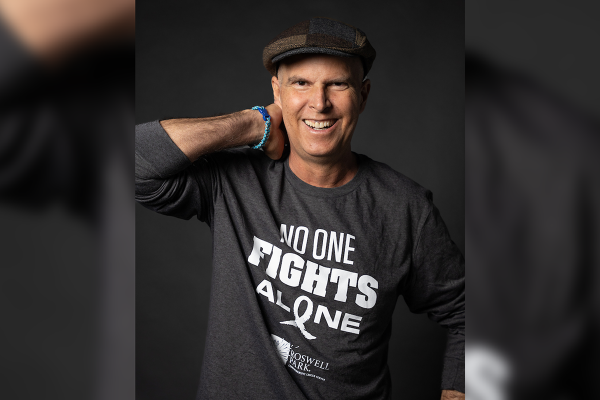
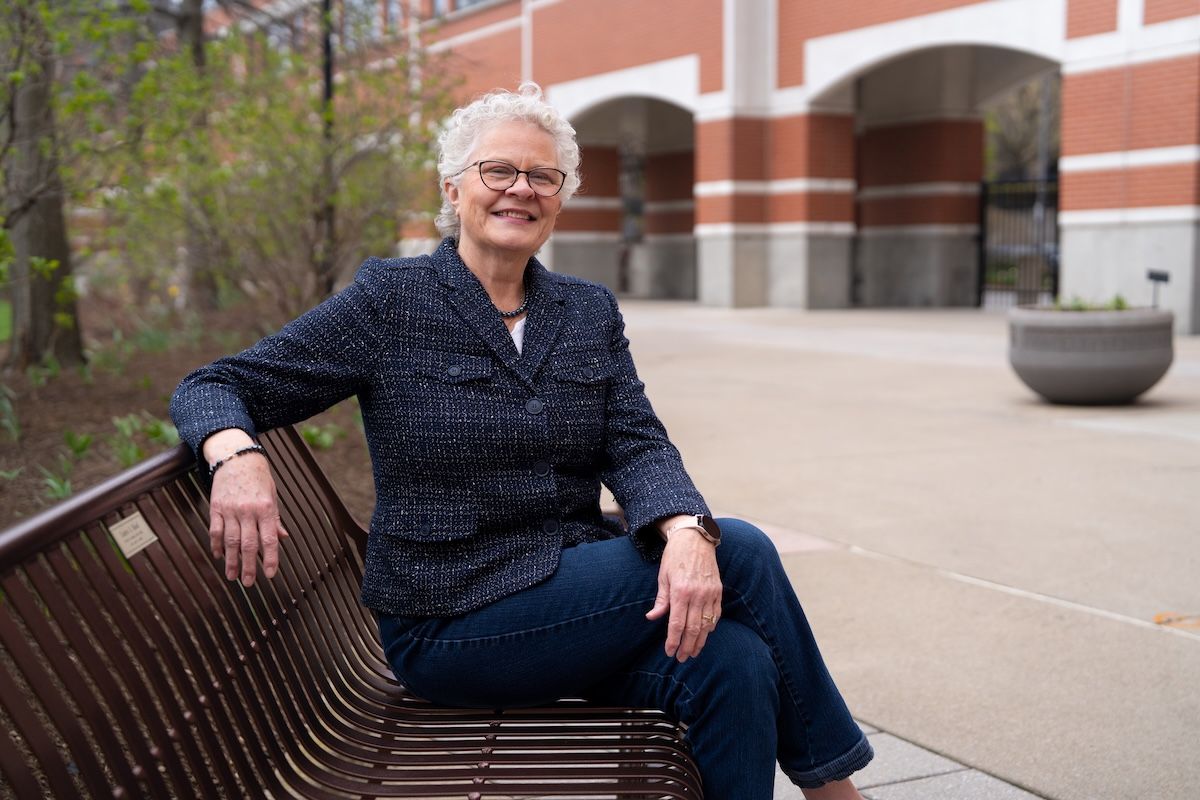
At a recent follow-up visit to Roswell Park Comprehensive Cancer Center, Lu Anna Olson of Lewiston, NY, heard a word she never expected to hear in the 10-plus years since receiving her diagnosis of multiple myeloma — cure.
“With other cancers, having no evidence of disease for five years, you’re considered cured. But with myeloma, that was never a statement that could be said,” she says. Historically, multiple myeloma has been deemed incurable. But that is starting to change.
Survival rates for multiple myeloma have been climbing steadily over the last two decades. In 1999, the five-year survival rate was 31%. By 2018, it had more than doubled to 65%. People are living longer, however most still need ongoing treatment. While that’s encouraging, it’s not the same as a cure.
Multiple myeloma survival is increasing
Then in March of this year, the International Myeloma Society convened clinicians, researchers, industry partners, patients and other myeloma experts from around the world to discuss for the first time how to define “cure” in multiple myeloma. They were specifically discussing patients like Lu Anna, who represent a small but growing number of long-term survivors, explains Roswell Park’s hematologic oncologist Jens Hillengass, MD, PhD, who attended the conference.
“Patients who are in ongoing complete remission with no evidence of disease, based on a bone marrow minimal/measurable residual disease test repeated several times; have been off cancer treatment for five years; and have not experienced any relapse would be considered cured,” says Dr. Hillengass. “Daring to stop treatment is a first important step and the availability of more sensitive tests to assess residual disease is essential.”
“What amazing, wonderful news this was for me,” Lu Anna says.
It’s created a pivotal moment for physicians who treat patients with myeloma, too. “It still makes me nervous to talk about cure in myeloma, but my excitement about what we discussed at the conference motivated me to start thinking differently about the disease,” says Dr. Hillengass. “Even for patients who are in long-term remission, there is still a small risk that the disease comes back, and we have to be honest about that. But patient advocates said being told that their treatment was with ‘curative intent’ made all the difference for them despite the remaining risk of relapse. That is why I have started to discuss this with my patients.”
Cancer research led to new treatments
Relentless cancer research has led to several new treatment developments in recent years, says Dr. Hillengass. "We now have new induction therapies that use a combination of four different drugs, and new types of immunotherapy such as CAR T-cell therapies and bispecific antibody therapies." Even stem cell transplant, a therapy offered by Roswell Park since the 1970s, has improved significantly to be safer and more effective than ever.
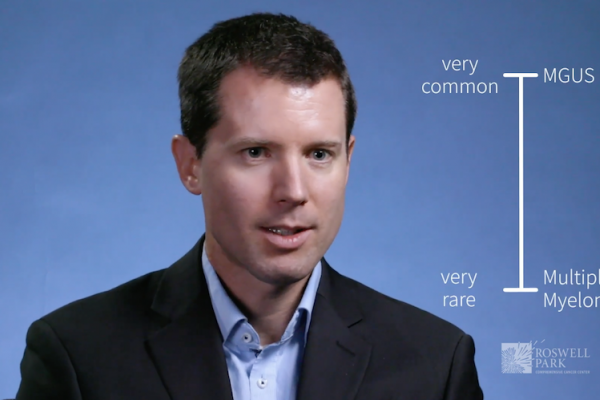
Lu Anna’s cancer story started in 2015 when her daughter, who was 34 at the time, was found to have a condition called MGUS, or monoclonal gammopathy of undetermined significance, which means the clonal plasma cells multiply and produce unnecessary antibodies. Very rarely, it can progress to multiple myeloma. “It also can have familial tendencies, so my daughter wanted me to get tested. I didn’t think I had symptoms. I had some aches and pains and fatigue. Who doesn’t have fatigue?”
After a bone marrow biopsy on her first visit, her local hematologist Haider Khadim, MD, now with Roswell Park Care Network affiliate St. Joseph’s Health in Syracuse, NY, said she’d probably need a transplant eventually and recommended she go to Roswell Park. Lu Anna did undergo autologous stem cell transplant and continued maintenance therapy for a year afterwards. She remained in deep remission.
Cure was not a word that was used with multiple myeloma when Lu Anna started her treatment at Roswell Park, but she might have seen a glimpse of the future. “When I first went to the transplant clinic, there was a guy there who had multiple myeloma for 20 years and he was still living. That was positive to see but my diagnosis was moderate risk which meant usually five to 10 years’ survival. I was glad to see someone who had survived that long, and I was going to work as hard as I could to make that happen.”
Roswell Park became as familiar as home
Over the years, Lu Anna has made many visits to Roswell Park, at least every three months. “I did have another cancer, too, a squamous cell on my nose after my transplant and needed a Mohs procedure. It really is one-stop shopping and I’ve received such excellent care.” During her inpatient weeks for the transplant, she participated in physical and occupational therapy as well as art and music therapy. She got wigs from the New Era Cap Foundation Elevate Salon and enjoyed oncology massage at the 11 Day Power Play Cancer Resource Center. “Because I’ve gone to Roswell so much, I feel like I’m home,” she says. “Believe it or not, one of my favorite places to go is the phlebotomy lab. They’re so good to me there. They’re kind, quick and on top of things.”
After hearing the good news from Dr. Hillengass, Lu Anna says she felt shocked. “I stopped into the Resource Center because I needed to tell someone. And when I said I was essentially cured, they said I should go ring the Victory bell, and then I started crying. I never thought about it. I didn’t think I’d ever get to ring the bell.”
Get a second opinion at Roswell Park
If you have been diagnosed with multiple myeloma, or your disease has recurred — you need a second opinion. We will ensure you get it without delay.
For now, Lu Anna’s follow-up plan will continue. She’ll see Dr. Hillengass and have blood work every six months and PET and CT scans every five years. Although the International Myeloma Society has not made the cure criteria official yet, the fact it was discussed was good enough for Lu Anna.
She has been in remission for nine years, with no relapse or need to restart treatment, and no evidence of disease. Still, being able to use the word “cure” hits differently. “I feel like a weight has lifted. I felt the need to tell people. Everybody needs to hear this."
Maybe she’ll start by ringing a bell.
Editor's note: All patients may ring the Victory Bell to celebrate any victory, big or small. Whether it’s completing treatment or just getting through another day.
Editor’s Note: Cancer patient outcomes and experiences may vary, even for those with the same type of cancer. An individual patient’s story should not be used as a prediction of how another patient will respond to treatment. Roswell Park is transparent about the survival rates of our patients as compared to national standards, and provides this information, when available, within the cancer type sections of this website.