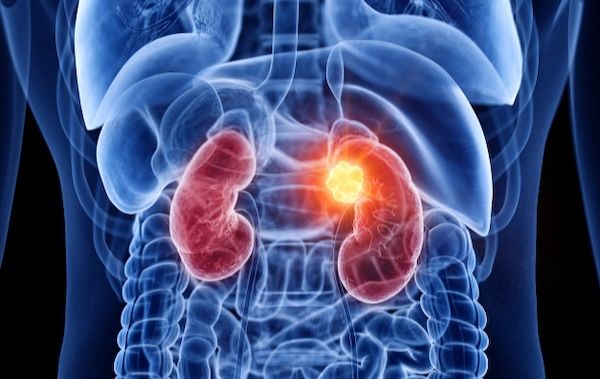
Clinical trial assessing bevacizumab–pazopanib combination focused on patients with untreated metastatic disease
- Landmark study extended both progression-free and overall survival
- Regimen found to be safe and effective, especially in favorable-risk patients
- Results published today in The Lancet Oncology
BUFFALO, N.Y. — Results of a phase 1/2 trial led by Roswell Park Comprehensive Cancer Center show that combining the targeted therapies bevacizumab (Avastin) and pazopanib (Votrient) significantly extends both progression-free and overall survival in patients with the most common type of kidney cancer. Saby George, MD, FACP, Professor of Oncology in the Department of Medicine, is principal investigator of the trial and first author of the study, newly published in The Lancet Oncology.
The strongest benefit was seen in favorable-risk patients, who made up the majority of the 51 patients enrolled in the nationwide clinical trial, NCT01684397, conducted at five academic cancer centers.
“This novel regimen of pazopanib alternating with bevacizumab was found to be safe and efficacious in untreated patients with advanced clear cell kidney cancer,” says Dr. George. “The regimen was also reasonably well-tolerated by patients, and delayed development of treatment resistance leading to prolonged progression-free survival.”

When pazopanib, a tyrosine kinase inhibitor (TKI), is given alone as the firstline treatment for patients with previously untreated metastatic clear cell renal cell carcinoma (mccRCC), median progression-free survival is just 9.2 months, and overall survival ranges from 28.4 to 29.3 months. After treatment with both bevacizumab and pazopanib, 51 patients in the phase 2 portion of the clinical trial had a median progression-free survival (PFS) of 24.8 months and median overall survival (OS) of 63.2 months after a median follow-up of 63.7 months.
But 33 of the 51 patients — categorized as at “favorable risk” according to the guidelines ofthe International Metastatic RCC Database Consortium (IMDC) — fared even better, with a PFS of 28.5 months and OS of 76.9 months. This improvement is noteworthy because while patients with advanced renal cell carcinoma are typically treated with immunotherapy/TKI combination therapies, which can improve both progression-free and overall survival, these combinations fail to show significant improvement in overall survival in favorable-risk patients.
“The benefit from this novel regimen of pazopanib and bevacizumab was comparable to or better than that of the contemporary immunotherapy combinations in the favorable-risk patients,” notes Dr. George. “This is significant due to the lower cost of this regimen compared to the immunotherapy combinations.”
The researchers believe this is the first clinical trial in kidney cancer to demonstrate both safety and efficacy using a combination of two drugs that both block vascular endothelial growth factor (VEGF), a protein that promotes the growth of new blood vessels that can “feed” the tumor with oxygen and nutrients. When multi-targeted TKIs like pazopanib are used alone, drug resistance increases with every treatment cycle, due partly to rising VEGF ligand levels. But bevacizumab, a targeted monoclonal antibody, binds to VEGF and actually removes it from circulation.
Phase 1 of the two-part clinical trial determined the optimal doses for both drugs — 800 mg of pazopanib daily on days 1-28, plus 10 mg/kg of bevacizumab on days 36 and 50 of a 10-week cycle. Phase 2 enrolled 51 treatment-naïve patients who received the recommended phase 2 dose established in the phase 1 portion.
High blood pressure and elevated liver enzymes were the most common serious side effects.
Dr. George and his colleagues note that this novel combination may also benefit patients who are unable to receive immunotherapy agents, patients whose disease progresses with adjuvant pembrolizumab, and patients in resource-limited countries.
Rahul Parikh, MD, PhD, of the University of Kansas is senior author of the study. Sponsored by Roswell Park in collaboration with Novartis, the investigator-initiated clinical trial enrolled patients at Roswell Park, the University of Kansas Cancer Center, Karmanos Cancer Center in Michigan, the University of Pittsburgh Cancer Center and the Medical College of Wisconsin. The research team represented those institutions as well as the Jacobs School of Medicine at the University at Buffalo.
Funding for the study was provided by Roswell Park, by the National Cancer Institute through P30CA016056, the NCI’s Cancer Center Support Grant to Roswell Park, and Novartis.
###
From the world’s first chemotherapy research to the PSA prostate cancer biomarker, Roswell Park Comprehensive Cancer Center generates innovations that shape how cancer is detected, treated and prevented worldwide. The Roswell Park team of 4,000+ makes compassionate, patient-centered cancer care and services accessible across New York State and beyond. Rated “Exceptional” by the National Cancer Institute, Roswell Park, founded in 1898, was one of the first NCI-designated comprehensive cancer centers in the country and remains the only one in Upstate New York. To learn more about Roswell Park Comprehensive Cancer Center and the Roswell Park Care Network, visit www.roswellpark.org, call 1-800-ROSWELL (1-800-767-9355) or email ASKRoswell@RoswellPark.org.
Jane Rose, Media Relations Specialist
716-845-4919; jane.rose@roswellpark.org