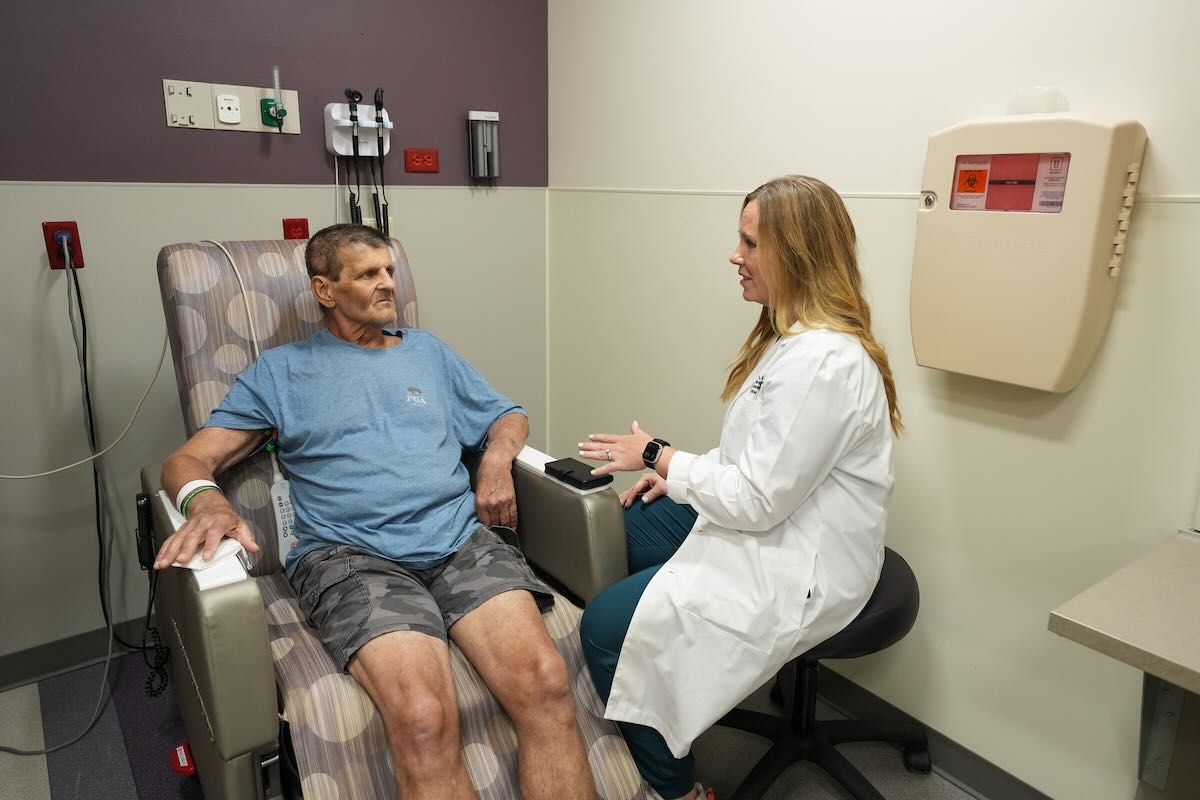
Roswell Park’s Dr. Shernan Holtan leads multi-institutional pilot study
- 10-week exercise program erased signs of chronic inflammation, immune aging
- Promise seen for correcting rapid aging caused by chemotherapy, radiation
- Findings from pilot study published in a peer-reviewed journal
BUFFALO, N.Y. — Cancer survivors significantly improved their strength and immune health after completing a 10-week resistance training program as part of a pilot study led by Shernan Holtan, MD, Chief of Blood and Marrow Transplantation at Roswell Park Comprehensive Cancer Center. Published in the journal Cancers, the study results suggest that this type of exercise has the potential to overcome some of the effects of chemotherapy and radiation treatments, which can cause rapid aging of both the immune and musculoskeletal systems.
“This study shows that a structured strength-training program may help cancer survivors regain strength and improve their immune health after treatment,” says Dr. Holtan.
The study enrolled eight long-term cancer survivors classified as either frail or at risk of becoming frail — exhibiting low energy or self-reporting that they were exhausted — plus eight caregivers who served as healthy controls. From research blood and stool samples taken at the start of the study, the cancer survivors were found to have evidence of inflammation, lower immune function and gut biomes that differed from those of the healthy controls.
All participants then completed a median of 25 personalized resistance training sessions. Follow-up research tests at the end of the program revealed that the differences in blood and gut biomes were no longer distinguishable between patients and their healthy counterparts. Dr. Holtan and her research team hypothesize that strength training may do more for cancer survivors than just adding muscle mass.
“The pilot study results are encouraging, and they raise an intriguing question: Could muscle itself help protect against cancer recurrence and other treatment complications?” notes Dr. Holtan.
Dr. Holtan’s co-investigators included collaborators from Oregon Health & Science University, the University of Minnesota and Brook Army Medical Center at Fort Sam Houston.
###
From the world’s first chemotherapy research to the PSA prostate cancer biomarker, Roswell Park Comprehensive Cancer Center generates innovations that shape how cancer is detected, treated and prevented worldwide. The Roswell Park team of 4,000+ makes compassionate, patient-centered cancer care and services accessible across New York State and beyond. Rated “Exceptional” by the National Cancer Institute, Roswell Park, founded in 1898, was one of the first NCI-designated comprehensive cancer centers in the country and remains the only one in Upstate New York. To learn more about Roswell Park Comprehensive Cancer Center and the Roswell Park Care Network, visit www.roswellpark.org, call 1-800-ROSWELL (1-800-767-9355) or email ASKRoswell@RoswellPark.org.
Jane Rose, Media Relations Specialist
716-845-4919; jane.rose@roswellpark.org