- Naval career spanned 17.5 years, including 8 months at Ground Zero
- A benign "web" of potentially cancerous cells led to thoracic surgery in June
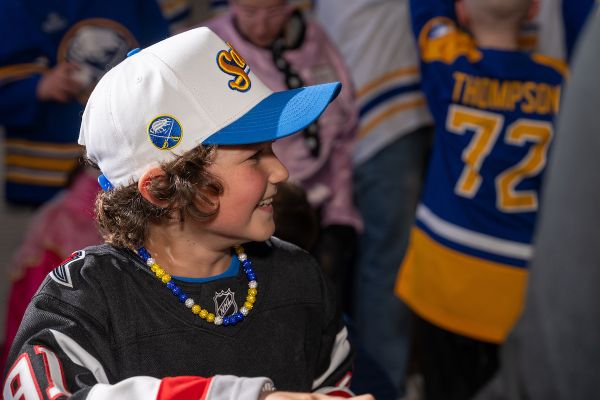
- Honored by the Sabres during Hockey Fights Cancer game with video tribute
For the better part of two decades, Michael Schrenk served his country in the United States Navy, spending years on battleships as a gunnery mate.
“I went into the Navy in 1990. Right after boot camp I got my first set of orders, to the USS Nitro. From there I went into Operation Desert Shield and then Operation Desert Storm,” he says, referring to two different tactical deployments in the Persian Gulf, a tense time between the United States, Kuwait and Saudi Arabia.
Michael returned safely from those conflicts and received his second set of orders, sending him for the first time to a base in New Jersey, very near New York City. He would return to The Big Apple several years later, in September 2001.
Cleaning up Ground Zero
“We were four minutes away by water,” he recalls, about an hour by land to arrive in the port. Following the September 11 terrorist attacks, he was assigned to a barge in the harbor, reporting to the New York City Port Authority, on a clean-up mission.
“My job there was basically sweep and clear and keep the looters out,” he says. This assignment meant a lot of time spent breathing in the air that is now known to have been filled with toxic chemicals as well as other dangerous airborne debris, some particles too small to see. They would also sort through the truckloads of wreckage removed from Ground Zero, looking for anything that might help identify any of the more than 2,700 victims from the Twin Towers.
The barge slept about 60 people, each one on an individual cot. He remembers seeing debris and soot on the beds and the vague taste of gasoline in the water used for cooking, drinking and bathing, but in a time of crisis, no one raised too many questions. “We didn’t have a choice but we didn’t make anything of it.”
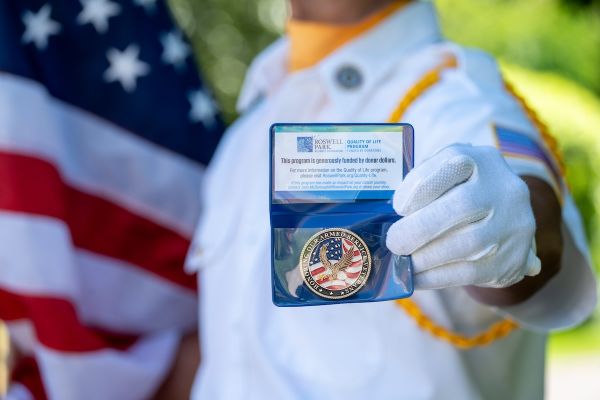
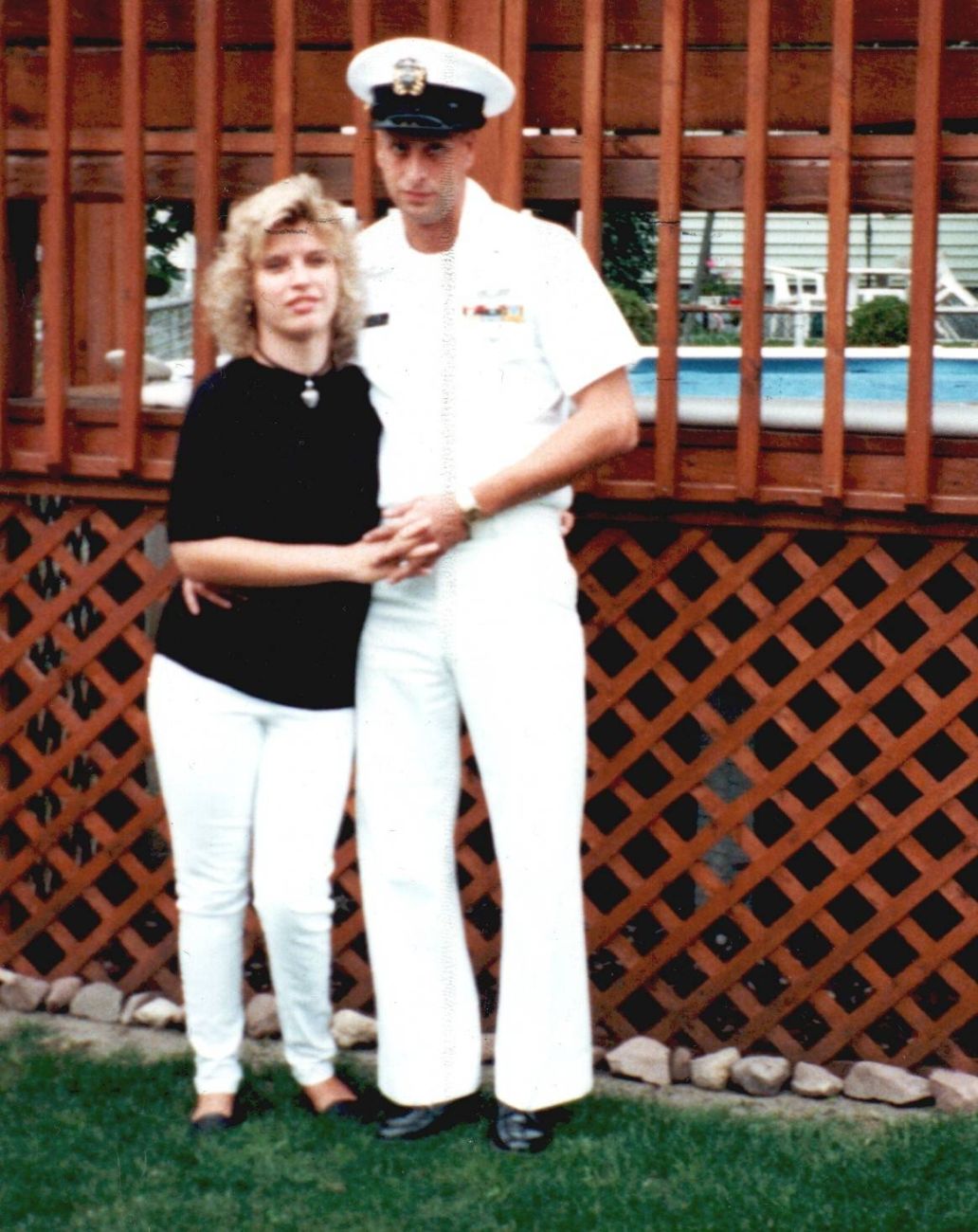
In all, Michael served 17.5 years in the Navy, supported by his wife Charlene, his high school sweetheart. He received recognition from the Navy for his marksmanship, good conduct and service at sea, and for safely moving ammunition without incident. He received four combat service stars and many “Bravo Zulu” awards indicating his exemplary service. He retired as a Petty Officer 2nd Class.
A second career of service
When he left the Navy, he started working at Roswell Park Comprehensive Cancer Center as a distribution clerk, delivering mail and packages throughout the hospital and becoming a familiar face to employees and patients alike.
During a routine medical check earlier in 2026, Michael had a CAT scan to check a valve in his heart. The technician was concerned about what he saw on Michael’s lungs, and told him to go to Roswell Park for additional tests. With support from his first doctors at Buffalo General Medical Center and the nursing staff at Roswell Park, he had surgery in June, performed by Chair of Thoracic Surgery Mark Hennon, MD, to remove the upper lobe of his right lung for a benign but concerning growth that could prove to be cancerous if left untreated. He rang the Victory Bell, surrounded by his wife Charlene, friends, family and members of his care team, in August.
In addition to Dr. Hennon and the thoracic team, Michael credits nurses Nicole Smith, Karen Williams and Ashley Kerns for their dedicated care and attention while he was recovering from surgery. “My team players,” he calls them, relaying how they worked together to get Mike the care he needed and checked on him routinely to make sure he was comfortable. During one tough night after his surgery, one of his nurses tended to him during a particularly stressful night and left a night light on in his room, for the rest of his stay, to make him feel more at home.
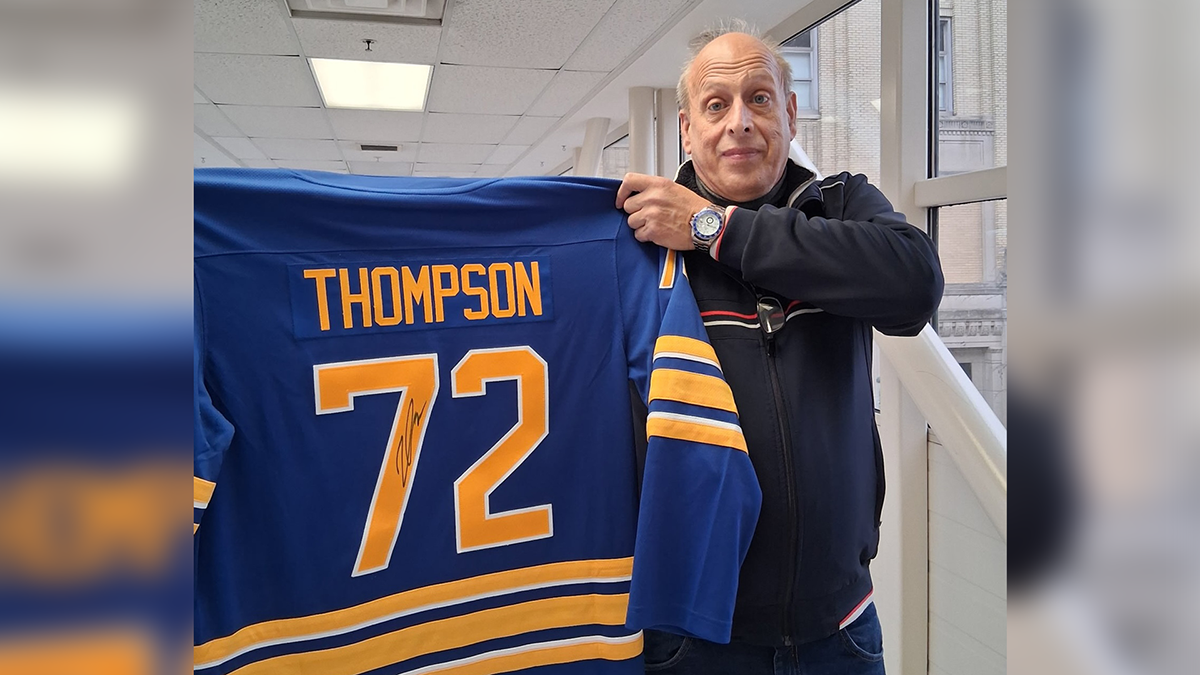
Recently, Michael was selected by the Buffalo Sabres to be honored for his service during the Hockey Fights Cancer game, reflecting both his time in the Navy and his work at Roswell Park. His story was told on the large television screen during the second period of the game, part of the “Tickets for Troops” program, and he received an autographed Sabres jersey in a show of thanks.
Back at work at Roswell Park, Michael is doing well, though still feeling some soreness from his surgery in June. “I’m back at work. I love my job. I love the people I work with.”
Why choose Roswell Park for lung cancer?
If you have a suspicion of lung cancer, you need clinicians with knowledge and experience to offer treatments at the forefront of cancer care.
Editor’s Note: Cancer patient outcomes and experiences may vary, even for those with the same type of cancer. An individual patient’s story should not be used as a prediction of how another patient will respond to treatment. Roswell Park is transparent about the survival rates of our patients as compared to national standards, and provides this information, when available, within the cancer type sections of this website.