Survivorship program combines after-cancer care and surveillance with services to help patients thrive
- Cancer survivorship program extends expert care beyond treatment
- Personalized survivorship plans help patients stay healthy and informed
- Comprehensive support services help survivor thrive
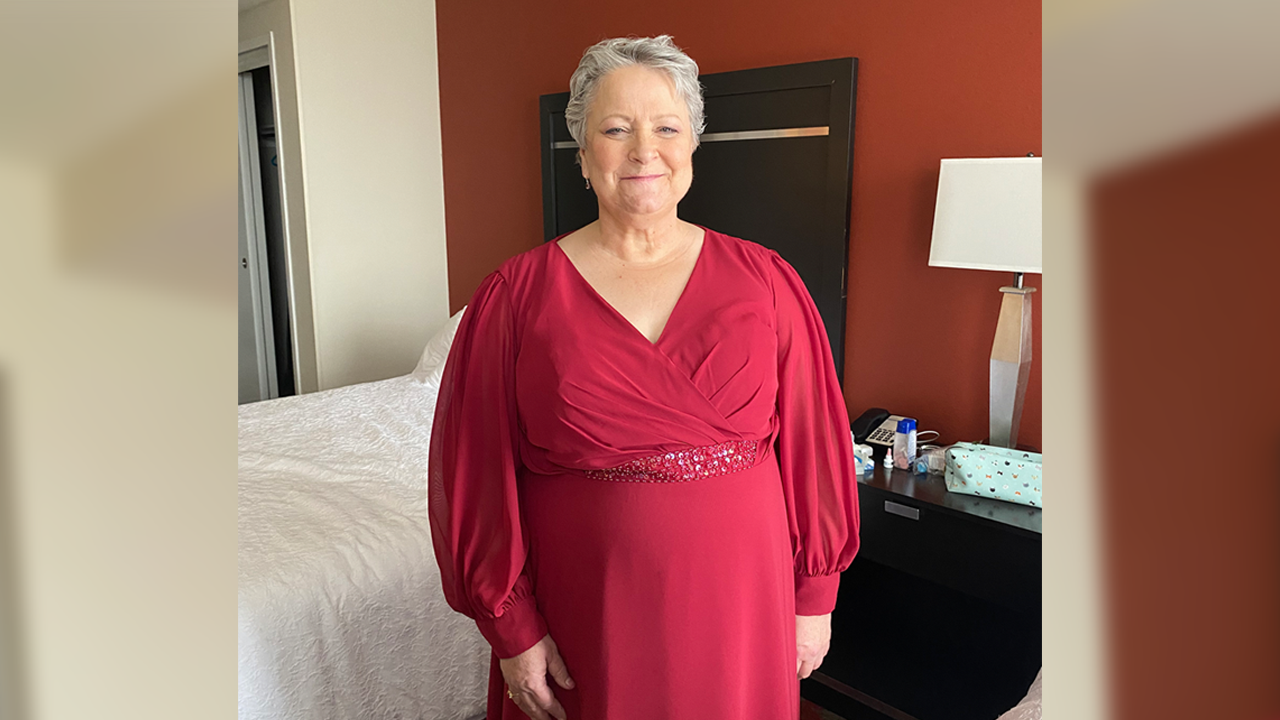
When Cindy Mantai learned she had breast cancer 10 years ago, she was immediately flooded with memories of her own mother’s breast cancer experience.
“My mother died of breast cancer at the age of 63, which is the age I am now,” says Cindy, a proposal manager for a Buffalo, NY engineering firm. “When Mom was 50, a tumor the size of a popcorn kernel was found through a routine mammogram. She had a lumpectomy, radiation, spent five years on Tamoxifen (an oral medication used to treat and prevent hormone receptor-positive breast cancer), and was good to go.”
Ten years later, when Cindy’s mother turned 60, unexplained back pain led to a CT scan that revealed her breast cancer had returned and had metastasized to her bones. “She went back on chemo but the cancer kept spreading,” Cindy recalls. “Mom was in so much pain that she made the difficult decision to stop chemo treatments and died on June 3, 2007.”
Fast forward to 2016, when ductal carcinoma, a common type of breast cancer, was found during Cindy’s routine mammogram.
“It felt almost identical to my mother’s experience,” says Cindy. “I had a lumpectomy and learned that the cancer had not spread.” However, following radiation therapy, Cindy’s cancer treatment provider recommended she have her ovaries removed. Unsure, Cindy talked to her gynecologist, who recommended a second opinion from Adam Kotowski, MD, a medical oncologist/hematologist at Roswell Park’s Care Network locations in Williamsville and Orchard Park. “Even though Dr. Kotowski was scheduled to begin his vacation the next day, he opened an evening appointment for me. After reviewing my file and history, he didn’t think that I should have my ovaries removed. I was so relieved.”
Under Dr. Kotowski’s care, Cindy spent five years taking Tamoxifen and continued with mammograms every six months. In November 2025, she was declared cancer-free. "I burst into tears at the news, not from happiness but with fear. My mom’s cancer had come back 10 years after her first diagnosis and I was scared that would happen to me. Even though Dr. Kotowski assured me the chance of recurrence was extremely low, I felt lost.”
Survivorship services help ease fear of recurrence
In response, Cindy was referred to Michael Maher, LCSW, a clinical social worker with Roswell Park’s Survivorship program. In addition to meeting with a nurse practitioner to develop her personal surveillance, medical and wellness care plan, Cindy began meeting with Maher for counseling. “I didn't know that I needed to talk to someone, but I had just turned the same age my mother had been when she passed away, and it shook me up. Talking with Michael has helped me develop positive coping strategies and address the fears I have about cancer coming back.”
Roswell Park’s Survivorship program is dedicated to supporting people who have completed active cancer treatment. The program is for any cancer survivor, regardless of where they received their cancer treatment. The program extends beyond the main Buffalo campus to five locations around Western New York and also provides support to patients' families and caregivers.
“Cindy’s experience is one shared by many survivors,” says Maher. “It’s not unusual for people to experience grief, loss, anger, depression or survivors’ remorse,” he says. “Even though they’ve gone through treatment and are in remission, many survivors worry, asking, ‘Is this going to happen again? Am I going to get a different diagnosis?'”
Maher notes that for people who pride themselves on being in control, or are used to being primary caregivers, administering self-care or asking for help can be challenging. “The Survivorship support Roswell Park offers helps people prepare if things become more complicated or stressful in their future. We work on mindfulness and develop coping and grounding skills to reduce anxiety. We help people work on self-care, and make sure they’re not isolating, or relying on older, maladaptive skills that might have worked in the past.”
Survivorship at Roswell Park
You can seek Survivorship care at Roswell Park no matter where you had your cancer treatment.
Survivorship care plans are developed for every individual’s specific diagnosis and treatment history. Such a plan may include:
- Annual clinic visit and physical exams
- Surveillance scans
- Vaccinations
- Cancer screenings such as full body skin check, colonoscopy, mammogram, lung CT scans, PSA test and cervical cancer testing
- Bone density scan, heart and lung function tests, as needed
In addition to one-on-one counseling, Survivorship offers support groups, spiritual care and emotional well-being programs.
To enhance well-being and self-care, Survivorship services may also include:
- Rehabilitation therapy and lymphedema care
- Nutrition counseling and guidance
- Acupuncture
- Smoking cessation services
- Creative arts activities
- Exercise programs
- Survivor workshops
- Yoga, reiki, qi gong and more
For Cindy, Roswell Park’s Survivorship program has helped her come full circle in how she remembers and honors her mother’s cancer experience.
“Recently, I was getting ready to participate in a choral festival and was feeling anxious because it was my 63rd birthday and I was thinking about my mom, who was 63 when she died. Michael helped me frame the experience, reminding me to stay intentional,” says Cindy. “I went with the flow and as I was singing, I felt grateful that I had this opportunity and that I had my mom in my life. She was such a great person.”
Continuation of care and wellness
As she looks towards retirement, Cindy is grateful to know she’ll have access to continuing support services as well as guidance with upcoming changes to her health insurance. She will maintain annual visits with her primary care provider, attend counseling sessions as needed and have scheduled mammograms. “Health-wise, work-wise and insurance-wise, I feel this program is going to support me as I continue to age,” says Cindy. “Regardless of what might be in the future, I know I'm already connected. So how great is that?”
Editor’s Note: Cancer patient outcomes and experiences may vary, even for those with the same type of cancer. An individual patient’s story should not be used as a prediction of how another patient will respond to treatment. Roswell Park is transparent about the survival rates of our patients as compared to national standards, and provides this information, when available, within the cancer type sections of this website.