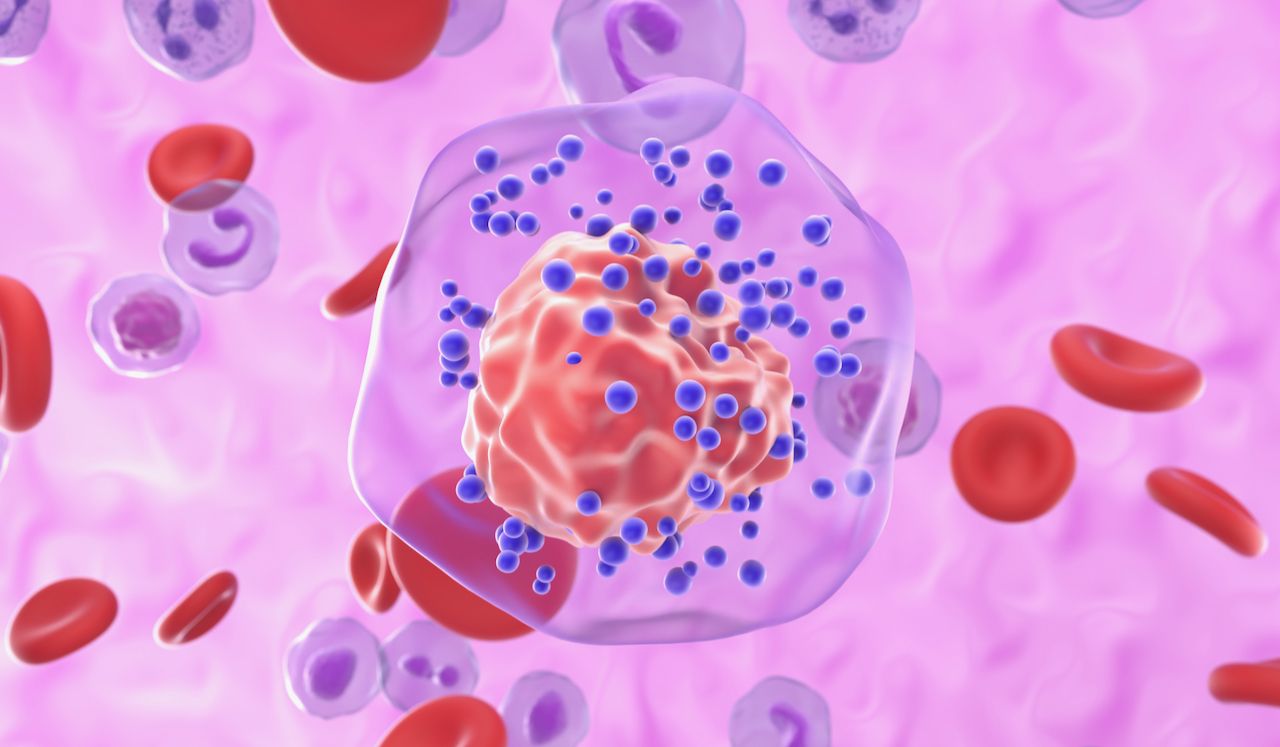
Insights from laboratory study point to new way to combat most-aggressive breast cancer subtype
- Discovery focused on role of MPP8 protein
- Suppressing MPP8 has potential to improve treatment effectiveness
- Study led by Roswell Park’s Jia Fang, PhD, published in Advanced Science
BUFFALO, N.Y. — A protein called MPP8 helps drive chemotherapy resistance in the most-aggressive subtype of breast cancer, and suppressing its expression has the potential to improve treatment outcomes. That’s the key takeaway of a preclinical study out of Roswell Park Comprehensive Cancer Center, with the results newly reported in Advanced Science.
While chemotherapy is the main systemic treatment for triple-negative breast cancer (TNBC), about half of all patients have tumors that don’t respond or later become treatment-resistant — a major reason that TNBC has the worst prognosis of any breast cancer. But this study, led by Jia Fang, PhD, Associate Professor of Oncology in Roswell Park’s Department of Pharmacology & Therapeutics, provides critical insights for making treatment more effective in those patients.
Present in the nucleus of cells, MPP8 plays important roles in the functioning of DNA. Using breast cancer cell lines, preclinical models and patient data, Dr. Fang and team found that when chemotherapy attempts to kill cancer cells by causing double-strand breaks in their DNA, MPP8 can promote the repair process of those breaks. They discovered that higher levels of MPP8 expression in breast cancer cells increase that ability, leading to chemotherapy resistance, but suppressing MPP8 expression resensitizes breast cancer cells to make them more vulnerable to treatment.

The team also identified a new mechanism by which MPP8 promotes DNA repair using the most dominant DNA double-strand break repair pathway in human cells to promote chemotherapy resistance in breast cancer — a finding of high clinical importance, as it suggests that people whose tumors are marked by high MPP8 levels might respond better to drugs other than those commonly used for treating TNBC.
“We believe that identifying patients based on the MPP8 levels in their tumors will help us in the near future to better match treatments to the biology of each person’s cancer and improve how well standard therapies work,” says Dr. Fang.
In 2010, Dr. Fang and colleagues published the first evidence that MPP8 “silences” genes that normally suppress tumor growth and promotes the metastasis, or spread, of breast cancer cells in a process called epithelial-to-mesenchymal transition. Since then, this research team has reported the discovery of multiple ways in which MPP8 promotes the growth of cancer.
Rupa Kumari, PhD, Senior Research Associate with the Department of Gynecologic Oncology at Roswell Park, is first author of the newly published study.
The research was supported in part by grants from the Roswell Park Alliance Foundation and the National Cancer Institute (project numbers R01CA273231 and P30CA016056, Roswell Park’s Cancer Center Support Grant from the NCI).
###
From the world’s first chemotherapy research to the PSA prostate cancer biomarker, Roswell Park Comprehensive Cancer Center generates innovations that shape how cancer is detected, treated and prevented worldwide. The Roswell Park team of 4,000+ makes compassionate, patient-centered cancer care and services accessible across New York State and beyond. Rated “Exceptional” by the National Cancer Institute, Roswell Park, founded in 1898, was one of the first NCI-designated comprehensive cancer centers in the country and remains the only one in Upstate New York. To learn more about Roswell Park Comprehensive Cancer Center and the Roswell Park Care Network, visit www.roswellpark.org, call 1-800-ROSWELL (1-800-767-9355) or email ASKRoswell@RoswellPark.org.
Jane Rose, Media Relations Specialist
716-845-4919; jane.rose@roswellpark.org