Careful monitoring of low-risk prostate cancer allows many to avoid life-altering side effects without risking their health
- Innovative approach helps many prostate cancer patients avoid unnecessary surg
- Nearly 60% of prostate cancer patients at Roswell Park are on ‘active surveill
- Top urologist and surgeon recommends every patient seek a second opinion
BUFFALO, N.Y. — One in eight men will be diagnosed with prostate cancer during their lifetime, and it’s no longer a one-size-fits-all treatment involving a direct line to the operating room.
At Roswell Park Comprehensive Cancer Center, specialists are finding “active surveillance” is the best initial step for many patients. By evaluating the characteristics and biology of each tumor, they can avoid or delay unnecessary treatment while aggressively going after the disease.
“Fifteen, 20 years back, almost the majority of the people used to get surgery. Now, almost 60% of the patients who come and see us go on active surveillance,” says Khurshid A. Guru, MD, Chair of Urology and Director of Robotic Surgery at Roswell Park Comprehensive Cancer Center. “It’s a very good thing for our patients because they pull in a lot of years without any treatment, they have no side effects, and they can be monitored. So it’s a big shift that has happened in prostate cancer.”
What is active surveillance of prostate cancer?
Active surveillance involves regularly testing patients with the prostate-specific antigen (PSA) blood test, first developed at Roswell Park, that detects warning signs of prostate cancer before symptoms develop. Dr. Guru and his team also use digital rectal exams, Magnetic Resonance Imaging (MRI) scans and biopsies to determine whether the cancer is progressing.
What is the importance of a second opinion?
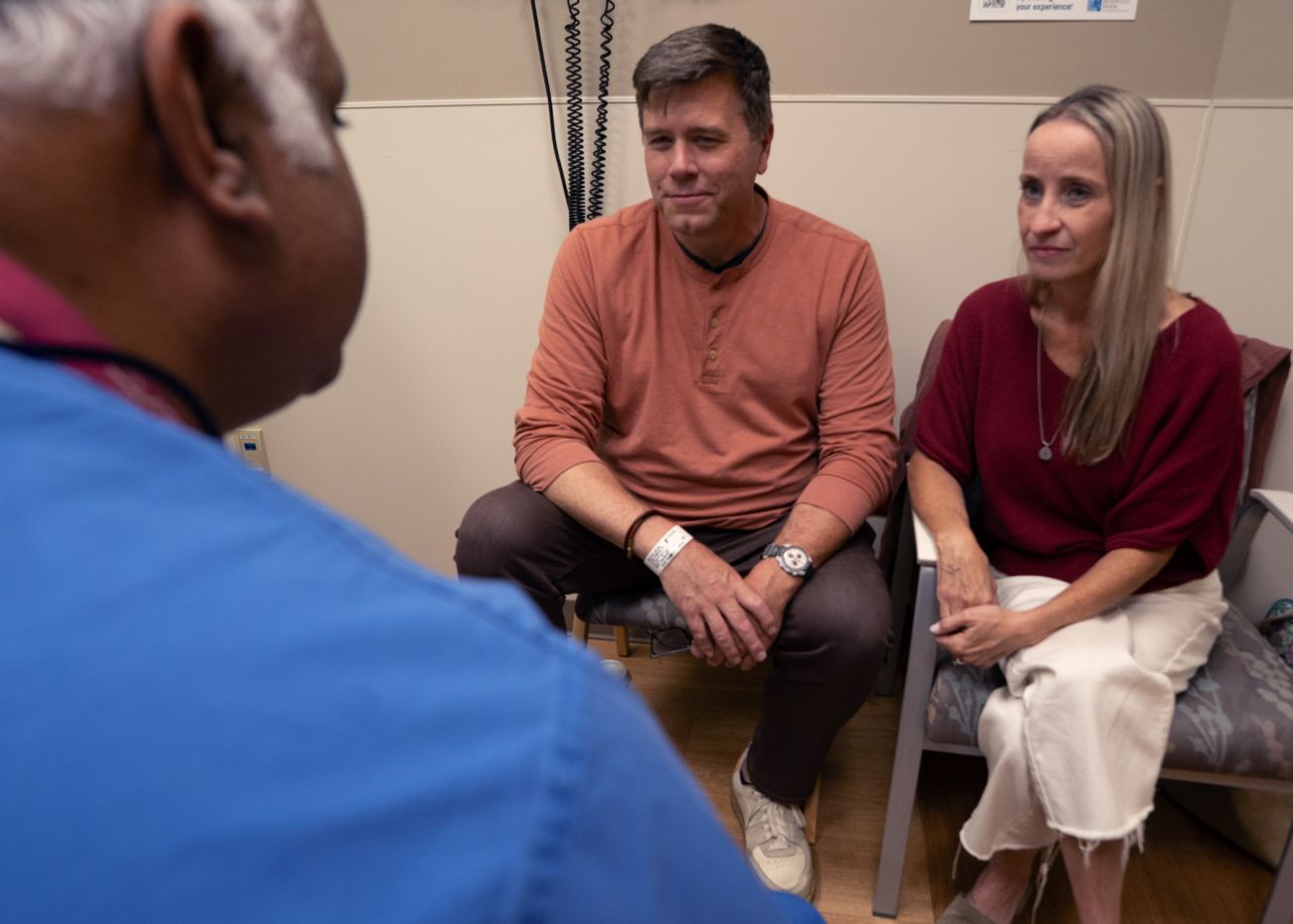
No matter the patient or prognosis, Dr. Guru urges all men to seek a second opinion if diagnosed with prostate cancer. Tim O’Shei learned he had prostate cancer at 47 years old. He credits Dr. Guru for changing his perspective on what it means to live with cancer. O’Shei has been managing the disease for nearly three years with active surveillance.
“I want to help more men do this right,” O’Shei says. “It took me a little bit of time to completely grasp the idea that I didn’t have to jump to surgery, that I could just live with this for as long as I can.”
What are the options if cancer progresses?
If and when the cancer does progress, Dr. Guru helps patients with localized and low-to-intermediate-risk cases first pursue nonsurgical options, including a new minimally invasive treatment, high-intensity focused ultrasound (HIFU), that allows patients to go home the same day.
“You use a very specialized kind of ultrasound to kill the cancer cells or kind of contain them and treat them without disturbing the whole prostate architecture, hopefully not leading to any side effects,” Dr. Guru says. “Every patient is different so every patient needs the right fit.”
If the prostate cancer progresses to reach an aggressive stage, Dr. Guru then recommends radiation and/or surgery. Studies show that up to 95% of men with low-risk prostate cancer can safely avoid surgery or radiation treatment for 10 years or longer while being closely monitored through an active surveillance program.
What are side effects of prostate cancer treatment?
The most common side effects of prostate removal include erectile dysfunction and incontinence. Roswell Park uses a robotic technique during surgery to shield nerves around the prostate, which results in 77% of patients regaining urinary control within three months, compared to 32% with a standard surgery.
Roughly half of low-risk patients in the U.S. can avoid a more invasive procedure and remain on active surveillance after five years.
“No matter what news I get about prostate cancer in the future, I will be eternally grateful to Roswell Park and Dr. Guru,” O’Shei says. “In the world of cancer patients, I’m as fortunate as can be.”
For more information about Roswell Park’s treatment options for prostate cancer, visit the comprehensive cancer center’s Prostate Cancer page, call 1-800-ROSWELL (1-800-767-9355) or send an e-mail to AskRoswell@RoswellPark.org.
###
From the world’s first chemotherapy research to the PSA prostate cancer biomarker, Roswell Park Comprehensive Cancer Center generates innovations that shape how cancer is detected, treated and prevented worldwide. The Roswell Park team of 4,000+ makes compassionate, patient-centered cancer care and services accessible across New York State and beyond. Rated “Exceptional” by the National Cancer Institute, Roswell Park, founded in 1898, was one of the first NCI-designated comprehensive cancer centers in the country and remains the only one in Upstate New York. To learn more about Roswell Park Comprehensive Cancer Center and the Roswell Park Care Network, visit www.roswellpark.org, call 1-800-ROSWELL (1-800-767-9355) or email ASKRoswell@RoswellPark.org.
Jane Rose, Media Relations Specialist
716-845-4919; jane.rose@roswellpark.org