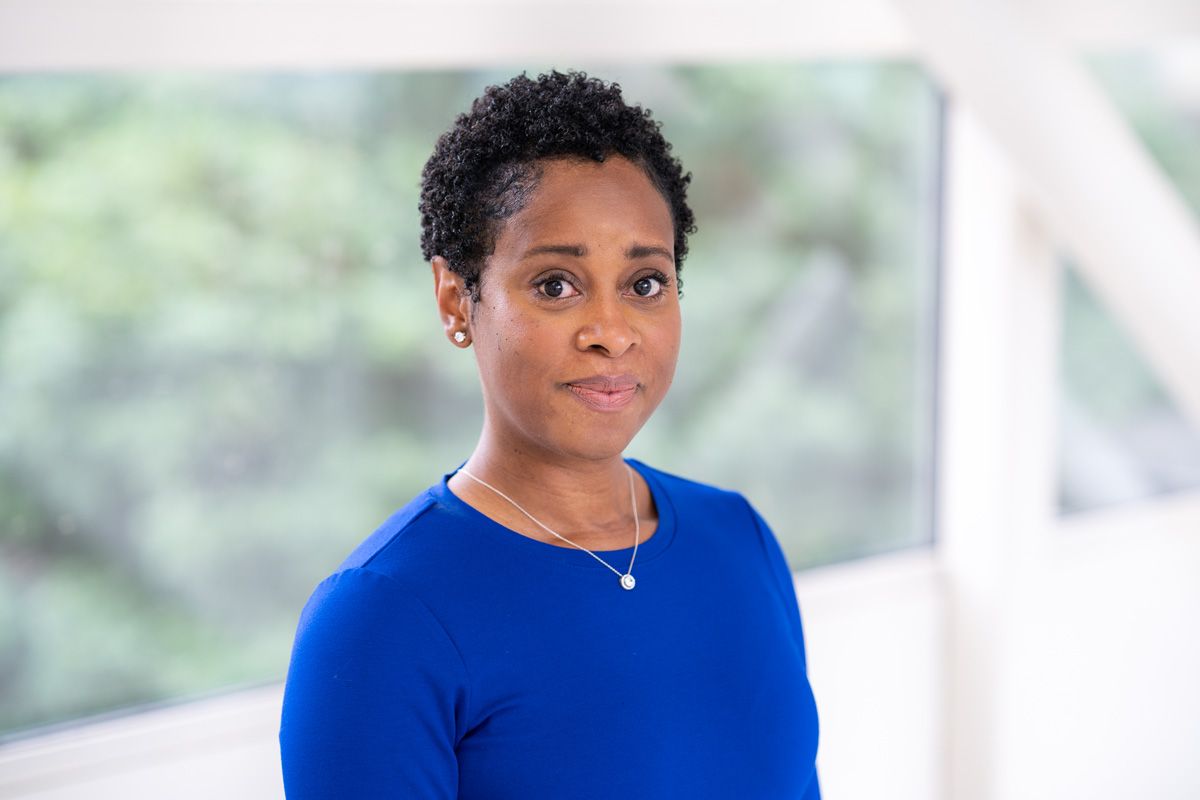
In another life, Nikia Clark Robinson might have been a teacher, following in her mother’s footsteps. Instead, with a degree in social sciences from the State University of New York at Buffalo, she used her drive to educate and a passion for outreach to become a Director of Community Outreach and Engagement at Roswell Park Comprehensive Cancer Center.
“I always loved that outreach space,” she says. “I liked to be in the area of teaching and training, doing workshops, so initially I thought I would be a teacher, but I quickly learned I didn’t have the patience to do it every day. I wanted more variety, being able to reach different groups of people, whether it was high school students or seniors, faith-based groups and other organizations.”
After a three-year grant-funded position with the Buffalo Urban League, she joined Roswell Park as part of the Institutional Review Board as an assistant reviewing research protocols.
“I just took it all in like a sponge and learned so much about research, but then also what was lacking in research,” she says.
Stepping into outreach
When Roswell Park opened the new Office of Cancer Health Disparities Research, Clark Robinson saw an opportunity to bring together everything she was passionate about and all she’d learned: The need to bring more voices from underserved communities into conversations about healthcare, cancer research and prevention.
“The mission of the new office was to provide access, health equity, information and resources to all the underserved populations in Western New York and I knew that’s what I wanted to do,” she says.
“Now I had the freedom, and it was my job duty and responsibility, to go out in the community and educate people about the importance of screening and talk about cancer and how it affects not only the Black population but every population that is underrepresented in the healthcare system, and then start to build partnerships. We need to have the community as a partner to get this work done,” she says.
The new venture made an immediate difference, Clark Robinson says. “It was wonderful. That’s when we really started to see our outreach efforts take off. More people from minority communities were being educated about screening and services at Roswell Park, and screening rates were starting to increase. People were learning more about cancer, referrals were happening, and people weren’t as afraid to come in. Even the researchers and scientists got excited about working in the community, asking how their expertise could help lower cancer rates in the areas we were focused on. As a cancer center, we also started paying more attention to the social factors that affect health."
Community outreach at Roswell Park
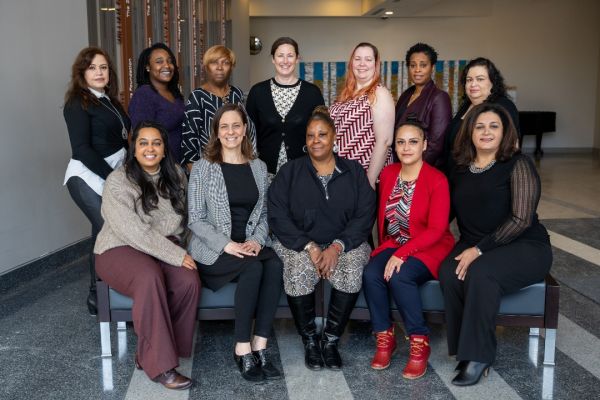
Our team works to increase awareness about cancers that pose a higher risk to minority, medically underserved and low socioeconomic groups in our community.
Building relationships in diverse communities
As one of the directors who works in the Roswell Park Broadview Community Outreach and Engagement Center at 907 Michigan, Clark is often meeting with people from Buffalo’s churches, community-based organizations and civic groups, building networks that help educate people about cancer and take an action. She also aims to help people feel empowered to join the fight against cancer through the I CAN program (Identify, Community, Action, Next Steps).
Now in her 40s, the education she helps provide is more personal: “When I started talking about cancer screening, I wasn’t even old enough to get a mammogram. I’m old enough now to get all of the cancer screenings. I have family members, friends and loved ones that have passed after being diagnosed with cancer. I have two college-aged sons that I make a point to talk with about reducing their health risks for cancer while caring for their overall health, reminding them of all the things that I would talk about in the community.”
Between the opportunities for outreach and education at 907 Michigan and efforts to meet with people throughout Western New York, Clark Robinson says it’s easy to see these efforts are paying off and resulting in earlier diagnoses and more trust within historically underserved communities and populations at Roswell Park.
“We can go into churches, we can go into community centers, we can go into our federally qualified health centers and people welcome us,” she says. “They want to partner with us. There’s not a day that goes by without a community member using the space at 907 Michigan, talking to me, one of our patient navigators or another COE team member, looking for a way to become more involved with Roswell Park’s mission.”
Clark Robinson remains focused on expanding access to research, both for community members and providing opportunities for survivors and caregivers whose lives have been touched by cancer to share their stories with Roswell Park through the patient and community research advocacy program called ROCKStars.
“As we continue to advance our impact on cancer in our community, we need to focus more on research, because that’s what will ultimately cure cancer. Next in my career, I want to highlight the importance of research and create space for survivors in underrepresented communities. By sharing their stories and shining a light on their experiences, we can inspire others in ways I never could alone.”