Cancer changes everything, even when it's the doctor facing a diagnosis
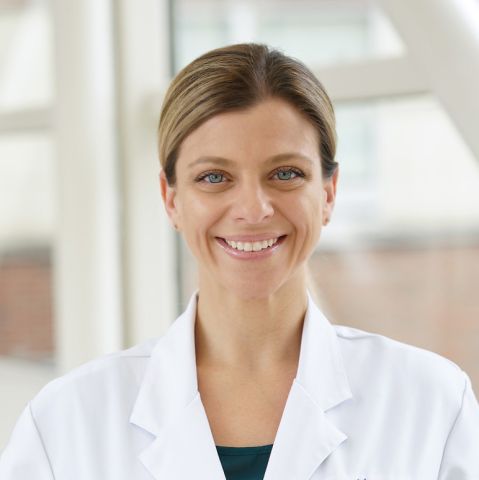
Laura Mango is a doctor, but that didn’t make it any easier when she was diagnosed with breast cancer. What it did do is completely change how she sees herself, her work, and her relationship with the people she cares for. In today’s episode, she sits down with David to talk about her parallel journeys as a doctor, a patient, and a mother, and how each has made the others richer and more profound.
Read transcript
David: Have you ever thought about what it would be like to be a doctor?
Hajar: You know what? I think about it all the time.
David: What… What do you think? What do you think about?
Hajar: Well, it… you know, it was supposed to be my career
David: No! Really? Like, according to who?
Hajar: According to my parents, according to my pre-med three years, um, before I made the switch. But now, doing this podcast, I'm talking to doctors all the time, and so it constantly comes up in my mind.
David: Well, I mean, okay, so I… it's not something I ever considered and I think maybe, just because of the levels of difficulty that I can see, like, the amount you have to learn and study and be responsible for is just amazing.
Hajar: Yeah. And it feels like all the stakes are so high all the time, right? Like if you make one mistake, it… the results could be terrible.
David: Life and death, Right? And so, I've often thought that a big part of doing it well must be confidence — Just knowing how to carry yourself. That you can walk into a room calmly and be the one who says, “Okay, I know what's going on. I'm here to take care of you.” And that sort of strength and confidence is maybe the thing that allows a patient to be vulnerable, which is how they would have to be to accept that help.
Hajar: Yeah, totally. That makes a lot of sense.
David: It's interesting, considering all of that, when a doctor is the one who gets sick. Because she'll find herself on both sides of that line, trying to navigate “When do I get to be confident? When do I get to be vulnerable? How do I work that out? How do I be a certain way with my own doctors? How do I maintain a certain way with my patients?”
This is Smarter than Cancer, by the way, and I'm David Hoffman,
Hajar: And I am Hajar Eldaas.
David: And I had an amazing conversation about this with Dr. Laura Mango, who's the Chief of the Assessment and Treatment Center here at Roswell Park. She went really deep in this one, and really vulnerable, and shared a story about her own journey with illness that I'm really excited to be able to share with you.
Hajar: Wow. Yeah, I can't wait to hear this one.
[Theme Music]
David (Narrator): Dr. Mango never planned to work at a cancer center. She followed her father's example and became an internist, a primary care doctor. When she moved back to Buffalo after medical school, she joined his practice part-time and also became an Attending Physician at Buffalo General. But when the job here at Roswell Park came open, it just felt right to her.
Mango: I was looking for something else, and I got wind of a job here at Roswell, and I kind of fell into it.
It's an Assessment And Treatment Center, A-T-C. I try to explain to people, it's almost as if it's an acute care clinic, an acute sick clinic, and it's specifically for our cancer patients. It's a referral based clinic, so the patient will call their oncologist or surgeon or whoever they see here at Roswell and they will tell them “I'm not feeling good, I'm nauseous, I'm having side effects,” or “I'm worried something else is going on. I have a fever,” whatever it is, they put in a referral and we bring the patient our clinic.
So, prior to the inception of the Assessment and Treatment Center, Roswell patients didn't have a place to go when they were sick. They were going to emergency rooms.
David: Wow.
Mango: They're waiting long hours. They're having fragmented care. They don't… like, here, when they come to the Assessment and Treatment Center, because it's referral based, you're not sitting in a waiting room. You come in, you get roomed right away, you start getting treatment right away. I have access to their oncologist. I have access to their imaging. I can look at a bigger picture. And then if they need to be admitted, I admit them right to Roswell.
And I… I started doing the work and it was a crossroads of everything. I loved taking care of people, taking care of people at their most vulnerable. So I closed down my private practice and signed on full time, initially as the Medical Director now officially the Chief.
David (Narrator): Then, just a couple of years later, she got a mammogram.
Mango: I scheduled my mammogram on the first day of school. The kids went back to school September 4th, 2024. You never forget the date. I went in, and when they did my mammogram, she said, “There's a little tiny spot.” It looks like a sprinkle of salt. I kid you not, it's…
David: Tiny.
Mango: Tiny. She goes, “That wasn't there before. And that we have to biopsy.” And that was where they found the cancer.
David: I mean, it's kind of… It doesn't feel real, it feels like fiction that you make this big career shift, you've started… you're working in a comprehensive cancer center, which wasn't your path, and then within just a few years, you yourself find out that you have cancer.
Mango: Yeah.
David: Tell, tell me about that.
Mango: I mean, um… I believe in… this is an overarching theme to my life. So I have this… I have a strong sense of faith, and call it luck, call it fate, call it divine intervention, call it the universe, whatever it is you believe in, I do believe that everything aligned for me to be exactly where I was when I was diagnosed with cancer. I can't even describe the feeling, because I get so emotional thinking about the fact that I am now here and here I am as the cancer patient and it… it turns your world upside down a little bit. Things get upended pretty quickly. I think anybody who's heard those words can attest to that.
David (Narrator): This was especially challenging because she knew it wasn't just going to upend her own life.
Mango: I have five beautiful children, a wonderful husband, and…
David: Five children!
Mango: Yeah. And then I take off my doctor hat and I put on my mom hat, and I found for me the toughest part was taking off the doctor hat and blurring the lines between the doctor and the patient.
My husband… when I didn't get the phone call immediately that the biopsy was clear, my brain started racing. And so this was on a Wednesday and on a Thursday. My husband, he's like… he looked at me and he just knew, he said, “It's gonna be okay. You're gonna be okay.” I'm like, “You don't know that I'm gonna be okay! They would've called me by now if I was okay. I'm a doctor. I know.”
Then on Friday, I'd still not gotten the diagnosis. And at this point I knew if they hadn't released it, something was wrong. Like, and I just… my whole body knew something was wrong. And I was driving home from the gym and I missed the phone call from the breast radiologist. And so I called her. I do not recommend calling your breast radiologist back when you're driving. Not a good idea. She goes, “Okay, well I have to tell you, it is cancer.” And they did exactly what I would hope they would've done. They said, “This is what's gonna happen. This is who you're gonna meet with, this who's gonna call you. This is when you're gonna schedule you an MRI,” and they explained all this.
And you just, you, you go deaf, you go numb. So I pulled over on the side of the road and I started to cry. And my husband knew that we were waiting for this, so when I FaceTimed him, he picked up. I just melted. I actually couldn't even speak. And I said “It's not good. They found cancer.” And I think he was a little stunned. I didn't think… you don't think it's gonna happen to you, you don't think it's gonna happen to your wife. You don't think that's what you're gonna hear when you're 44 years old and you have a six, an eight, and a nine-year-old. My older two are older, they're in their twenties. But you're thinking to yourself, “What just happened here?”
So of course I told the people closest to me. It's harder telling people that you have cancer sometimes, because you see their faces kind of crumple. And you… I am… being an empathetic person, don't ever wanna hurt other people. And everyone says, “How are you gonna tell the kids?” And you don't know how you're gonna tell the kids.
I find honesty in this… tailoring it to their age and honesty is the best way to do it. The older kids, we were able to just tell them, and they understood. For my younger kids that were nine, eight, and six the time, I didn't… they… I think they had to sense something was going on because mom was going to a lot of appointments and mom seemed sad, and so I can… I had a feeling they could pick up on that stuff. But we sat there and I waited. I didn't wanna worry them.
David: How long from the diagnosis till when you actually told your kids what was going on?
Mango: About a month.
David: Oh, that long?
Mango: About three weeks? Yeah, I… so I wanted to understand what I was dealing with first. So maybe it was about three weeks. And I said, “Mom has something to tell you.” And I just told them. I said “They found that mom has cancer in her breast, and I have to have surgery, and we're hoping that once they have surgery that I'll be okay.”
And I'll never forget, my 6-year-old looked at me, he goes, “Are you gonna die?” And I looked at him and he had the cutest little face on. And I just giggled, and I said, “No, I'm not gonna die.”
I didn't know if I was gonna die or not. I didn't know if they were gonna find more cancer. I didn't know what it is. I mean, they have an idea based on your pathology, but I work in a medical world and I operate under the assumption that not everyone may be perfect. Maybe they misread it. I don't… you… you have no idea.
I told my little buddy, said, “No, I'm not gonna die.” And maybe I have… maybe I will still, but right now — knock on wood — I've been cancer free since my surgery, my mastectomy, and that was October 17th, 2024.
David: Thank goodness.
Mango: Thank goodness.
David: How did the conversation go with your older kids? I bet they had more questions.
Mango: Yeah, so they did in a way we… we told them. My son was at college. He knew. He called me, and it was just a sweet conversation. It was a good conversation. And I just said, “I'm gonna figure this out, and I'll let you know where I need you when I need you.”
My daughter is local and she helped me with the younger kids a lot, watching them and just stepping in and just doing things that I needed. And every time she was there, it was almost like talking to a best friend, like I could talk to her about, like, “This is what we're gonna do. This is kind of what I'm worried about.” She said, “Okay.” And then she — what I found very sweet — she started doing her own research and showing me stuff that she was reading about or learning about. Even now, last night, she was telling me, “Oh, have you seen these tattoos?” because they had to take my nipple. I don't have a nipple. So just even stuff like that, it brought us close in a way that, um… I don't know that you'll ever be thankful you've cancer, but it changed a lot of things in my life, and some of it I can say I am better for because I went through this experience
David: There's something… challenging about being sick. And I haven't myself really been capital “S” sick. I'm gonna knock on wood…
Mango: I’ll knock on wood for that.
David: …but I've helped family members through stuff like that, and there's something where you, sort of, have to give yourself over to your doctors, in a way, where you have to, kind of, trust. And, you know, you… does being a doctor make that easier or harder?
Mango: I think harder. To be quite honest, I think harder.
David: I mean, was there an urge to “backseat doctor”, if that's the right way to put it?
Mango: Backseat doctor… so, yes and no. I think what happens is when you become a patient and you understand when you meet that the physician who's gonna help you, there's something where it clicks and you realize that this is the physician that you trust.
David: Mm-hmm.
Mango: And you sometimes have to go through a few of them to find that person, or physician. And when you do, then you can trust them. I… like, once I found a physician or a surgeon that I trusted, I gave it all to them. I said, “Here you go. I am gonna be the patient. I'm just gonna go through this journey and I need you to tell me what to do, because I… I don't know what to do either. I can tell you what I think is right, or what I'm feeling based on my medical knowledge, but I also need you to, kind of, put your arms around me and tell me what I need do, so I don't make wrong decision.”
And I think that's a lot the pressure patient feels, is you have to have that trust in your physician. And sometimes that goes really well, and sometimes it doesn't. So I can say, yeah, my advice to people to make sure you really trust your physician and you research them. And if there's something that doesn’t feel right, you talk to them about it. And there's nothing wrong second opinions. You know, I'm not saying you should, but there's always… it's always… when it comes to your health, when it comes to you and your body, that's it. What's the price of health?
David: Yeah.
Mango: There isn't one. So you fight for yourself, and fight for yourself in a way where you can go to bed knowing that you did everything possible.
David: When you came back to work,
Mango: Yeah.
David: How did that experience change the way that you interacted with the patients you were treating?
Mango: I've been thinking about this. I wanna say it didn't change me, right? Because you wanna think you're the best physician in the whole world and you do everything right. But I know…
David: I mean, we that's true, but…
Mango: (Laughs) But, in the sense that it changes you… you have the medical knowledge, but even for me, when I was diagnosed, being that I work at a cancer center, I still… I had to navigate understanding my options: what my treatment options were, what type of surgery, whether I do a lumpectomy or a mastectomy. How do I make sure I get a lymph node biopsy or a sentinel lymph node biopsy, all that stuff, I think, changed me and I think it also made me understand, maybe, where I didn't have the knowledge to help my patients prior to that, because now here I am immersed in this situation where I need to fully understand the nuances of it, and there is a lot of nuances to it.
I'm also… I do my best to be as compassionate as I can and as empathetic as I can. It’s something I've always prided myself on, but now I can sit down and listen and the compassionate side of really, truly understanding the patient and what they're feeling is something that I never had before, because I never sat on that side. I never… once you've sat through that feeling and that emotion, you can relate with your patients.
David: Did it make your job harder, in some ways?
Mango: It… it did, yeah. It did make my job harder.
I see some really tough things working in the Assessment and Treatment Center. I have some very difficult conversations. I see a lot of people who are patients who are near the end of life, who've failed multiple lines of treatment, and they're starting to get symptoms, whether it's because the treatments are toxic or the cancer's growing, and those days can be really hard. Especially when I see breast cancer patients,my later stage breast cancer patients, my stage four breast cancer patients, the patients that are younger than me, patients that I have to give really bad news to, that can be tough for me.
So that's one way it changed me, being that I've gone through what I've gone through and the trauma of it, it certainly brings back old feelings for me about the… just the diagnosis and being on that other side and knowing this could be the worst news you're about to get. I can hold it together very well for my patients, but on the back end, behind the scenes, behind closed doors, that's when it becomes a little bit more difficult.
I always had the ability to go home from work. I never used to cry, sometimes, in the car ride home, but sometimes I do. So it did make my job harder, but at the same time, it made it more beautiful. I don't know how to explain that.
David: Yeah.
Mango: In a way, I could relate to my patients in a way I never could before.
David: I mean, I can only imagine that you were a tremendously empathetic person to begin with, and then something that deepened your empathy…
Mango: Yeah.
David: There must always be a dance between empathy and enough, sort of, emotional remove that you can get on with your day.
Mango: Yes.
David: And… what advice would you have for a younger doctor who's learning that dance for how to find the right balance between those things?
Mango: So, I now look at empathy and compassion… I look at it as a superpower, not as a negative thing. And to find that dance of being able to emotionally get on with your day in a way where it doesn't drag you down. And then you also have to find a way where you can release or let go of all the stuff you're seeing, the things that people don't get to see on a day to day. Like, I think back through all my experiences, my patient interactions, the really hard days, the really good days, and for me personally, what breast cancer has gotten me to do is to start journaling again.
David: Mm.
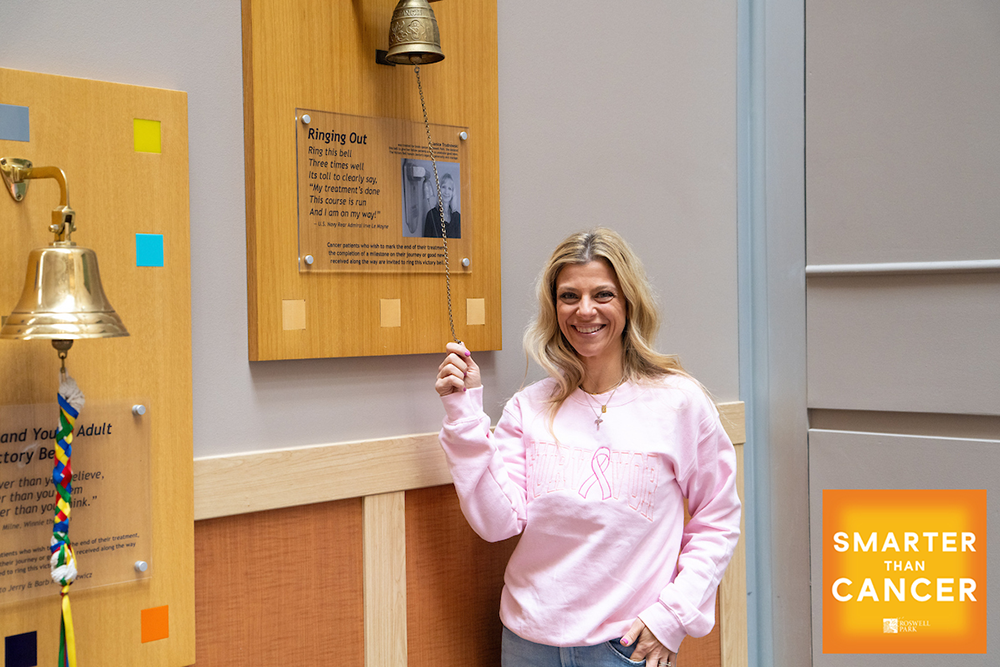
Mango: And to start meditating. I always… I started meditating beforehand, but the journaling, writing poems, I've never shared them with anybody, but they're for me. I've been through so much myself, and everybody's been through so much that if my experience can help somebody else in any way, then that's how I wanna move forward through this life. I wanna help as many people as I can and not just as a physician. Now — we were talking before — here's a bigger mission. I have a bigger mission here and how I get that out to the world, I'm working on that part, but I feel like this is the start of it. Sharing my story, ringing my bell, ringing the victory bell, that was a way for me to say the cancer part may be over right now, but there's more.
David: And I'm debating two very personal, very rude questions, and I'm deciding which one I want to lay on you.
Mango: Okay.
David: I'm gonna try for both.
Mango: Okay.
David: Feel free to slap me or whatever.
Mango: Okay.
David: The first one is just something you just said and… about they had to take your nipple. That's a hell of a thing.
Mango: That's a hell of a thing. A lot of women struggle with that decision.
David: Well, and, but…
Mango: Because…
David: How do you feel about… your body now? You know…
Mango: So, yes, that's… I understand what you're saying. So this is very real. You hear you have cancer, you do all the research, you go through all the things. You figure out what you're gonna do. Once you have plan for your cancer treatment, there is a little moment where you can exhale, like, you still have cancer, and this is still gonna change your entire life. And in some ways, even if you can be cancer free, your life's changed metaphysically, however you wanna say it. And for me, it physically changed because, you know, mastectomy is by all means an amputation. And that was part of me wanting to do research because I had to put my faith into a surgeon to reconstruct me in a way that at 44 or 45 years old, I would be at least comfortable.
I don't think you're ever comfortable. I look at myself in the mirror sometimes and I smile, because I'm like, “Holy crap. I went through that. What I look like is because I went through something really big.” And then other times you look in the mirror and you're like, “Holy crap, this is what I gotta look like the rest of my life.” You recognize you're altered forever because of this.
David: For sure.
Mango: I have found a lot of support through the breast cancer community and other women who've gone through this. And I, like I said, I'm doing my own work on myself so that I can be comfortable every day in my own skin. I find that it is very difficult. Some days you're like, “Wow, I went through that and this is amazing. My body's amazing, and I feel like I can't believe I went through all that.” then other days you just, you get really sad.
You're just sad, and you do your best to navigate that and recognize that it’s a passing emotion, it's not gonna last forever. And I sit with it for a little while and I accept that that's how I'm gonna feel. And then I try to find something to help me feel better. I exercise. I love spending time with my family. I love to cook. Sometimes just doing things, like, small things that aren't so small, having my nice cup coffee and watching the birds, I get to think to myself, “Okay, I've been through all this, but right now I can be comfortable in my own skin.”
David: All right, as rough as that question was…
Mango: All right, here we go!
David: I have an even worse one. So, I'm also a… parent. I have a 12-year-old and an 8-year-old.
Mango: Okay.
David: And when you said about your youngest asking you the question, “Mommy, are you gonna die?”…
Mango: Yeah.
David: The answer to that for all of us is yes.
Mango: Yes, exactly.
David: Like, we are all going to die. And in a way you've had a preview of what that might feel like.
Mango: Yes.
David: And I am wondering how this makes you think about what is hopefully very far in the future, but inevitable…
Mango: Correct.
David: …when you actually, you know, are getting ready to leave this world.
Mango: Yeah.
David: Have you… has it made you think about that differently?
Mango: Yes, absolutely.
David: Tell me about that.
Mango: So it's just tough, because I'm, like, going through my head because… so I took care of my grandfather when he died. My other grandfather died. I did CPR on my mom and she died in my arms, and then my dad died in my arms.
David: Yeah.
Mango: And in countless years of working in the medical field and seeing people pass away and having comfort family members… but when it comes to your own self. With my kids, I know it’s inevitable. You are gonna die. And what I hope for myself is that I can have, in a way, of preparing that I've done everything that I could do while I'm here to live my life to its fullest and to give them the experiences that I want to.
So there's two things I'm doing. One, the journaling — I'm essentially writing to them. These are my love letters to them. So one day when I'm not here, they have something to read. I know that I'm with them, because I have things from my parents that I can read, and they give me so much comfort. I recently found letters that, my dad wrote to me when I was at sleep-away camp when I was 10 years old, and I read those letters and I love them a lot.
So with my kids I want them to feel so loved every single day. Even on the days where I'm so annoyed and things are taking forever, or my son won't put on his shoes or something, you know, like he's whipping his basketball into the air, or my daughters are moving, you know, super slow and it's just like, “Oh, we have so much to do! Get in the car!” You're just like, we… So I, knowing that it's inevitable, knowing that I've had a preview, knowing that at one point these kids are going to be without me, hopefully I'm not without them, because I don't… I can never imagine a world where I'm living and they aren't. So to prepare them, I just… I try to be living in the present moment as best as I can to be. Like, it even happened the other day. We were watching the Bills game. It was just an ordinary day. You're just there and you're having so much fun and you're yelling the shout song, and we’re eating homemade wings and we eat our Moe’s queso, and there was multiple points throughout the day that I just looked at them and… and it was, I felt like the warm feeling inside of me that this is what all about. So that's how it's changed me. That's the preview, is to not sweat the small stuff, to… okay, yes, maybe I'm getting a little annoyed, maybe my pressure’s going up, and to recognize in the grand scheme of things that what I'm getting upset about right now probably doesn't matter in an hour, a day, a week, a month, a year. And I don't… why am I even getting upset?
And in my years of experience in going through what I've gone through with my family members, I can't help think that they're always with me. I wouldn't be where I am today without their guidance. And even in the afterlife, I feel like they're still guiding me. So I hope I can leave that to my children. I hope can give them sense of I'm always with them.
(Credits Music)
Thanks for listening to Smarter Than Cancer, a production of Roswell Park Comprehensive Cancer Center.
The show is written and produced by your hosts, Hajar Eldaas and David Hoffman.
Production Oversight by Peter Soscia.
Additional logistics and support from Michelle Eisenstein.
Our production partner for the series is CitizenRacecar.
Post-production by Gregory Schweitzer for DCP Entertainment.
Publication and Promotion supervised by Candice Chantalou.
If you or your loved one has been diagnosed with cancer and would like to schedule an appointment with Roswell Park, please call 1-800-ROSWELL. That's 1-800-R-O-S-W-E-L-L, or visit us at roswellpark.org.
If you're enjoying this series, we would love to hear from you. Please reach out and tell us about your cancer story and let us know what topics you'd like us to cover in future episodes by filling out the form at roswellpark.org/smarterthancancer.
And if you know someone else who might find value in what we're doing, please tell them about it. You can listen and subscribe wherever you get your podcasts.
Laura Mango is a doctor — and she works at a comprehensive cancer center — but that didn’t make it any easier when she was diagnosed with breast cancer. What it did do is completely change how she sees herself, her work, and her relationship with the people she cares for.
In this episode of Roswell Park's podcast, Smarter than Cancer, Dr. Mango talks about her parallel journeys as a doctor, a patient, and a mother, and how each has made the others richer and more profound.