Mesothelioma is a rare cancer that can be mistaken for other, more common respiratory and digestive conditions, and can take years for symptoms to appear.
It is also often difficult to distinguish from other cancers, and there are currently no recommended tests for detecting mesothelioma cancer early. Getting the right diagnosis as soon as possible after experiencing symptoms that may be related to mesothelioma means getting the best treatment and increases your chances for the best outcomes.
There still are no standard or nationally recognized screening recommendations for mesothelioma. For individuals who have significant asbestos exposure, a chest X-ray can be helpful in identifying fluid in the chest (pleural effusion) which can be associated with mesothelioma. This is often the first finding that leads to a diagnosis of mesothelioma.
How is mesothelioma diagnosed?
If you have mesothelioma symptoms, your doctor will first examine you thoroughly and ask questions about your health and lifestyle, including smoking and drinking habits and exposure to asbestos.
To accurately diagnose your mesothelioma and determine what kind of mesothelioma you have, your Roswell Park care team may order a combination of the following diagnostic tests:
Blood tests to look for certain biomarkers that may indicate mesothelioma, plus other panels to check your overall health and how well your liver and kidneys are working.
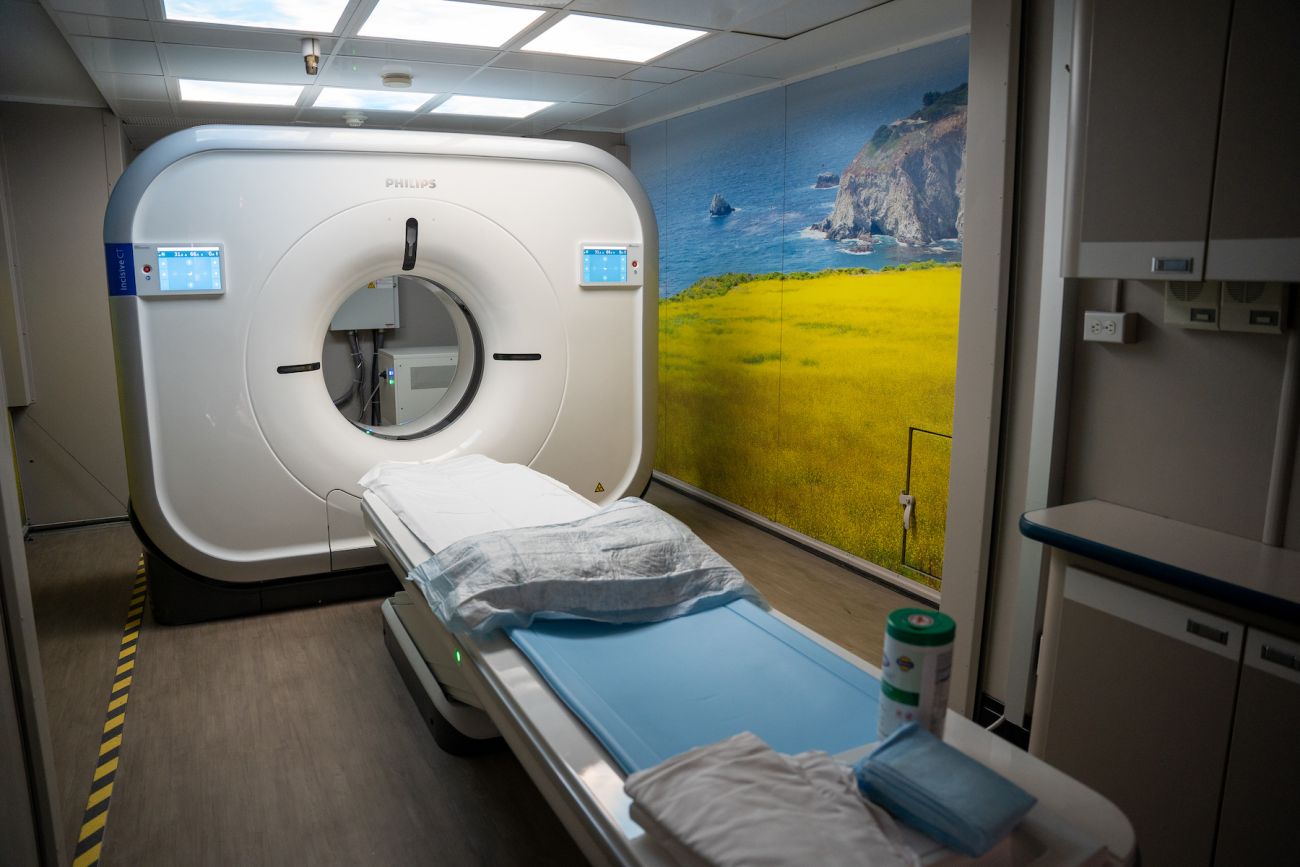
Imaging tests such as a chest X-ray, CT scan, ultrasound, magnetic resonance imaging (MRI), and positive emission tomography (PET) scans create pictures inside the body. Each of these scans works in a different way. For diagnosis, your physician may use the imaging to look for an abnormal thickening of the pleura (lining of the lung and chest wall), calcium deposits on the pleura or pleural effusion, sometimes called “water on the lungs.” If mesothelioma is identified, imaging with MRI and PET can provide more details of the cancer’s location and possible spread.
Echocardiogram – an ultrasound of the heart might be ordered if your doctor suspects you may have pericardial effusion - a buildup of fluid around the heart
Biopsy to take a sample of affected tissue for examination and testing by a pathologist, an expert in analyzing tissue and cells and confirming cancer. There are several types of biopsies for mesothelioma.
Biopsy methods include:
- Endobronchial ultrasound fine needle aspiration (FNA).
- Endoscopic ultrasound FNA and mediastinoscopy.
- Thoracoscopic biopsy removes tissue with medical tools inserted through small cuts made in your chest. It is preferred over other methods because it can extract enough tissue for an accurate diagnosis.
- Image-guided core biopsy uses a CT scan or ultrasound to guide a needle through your skin and into a tumor to remove tissue samples.
- Open biopsy makes a large cut into your chest through which the surgeon can see and remove tissue.
- Fluid biopsy is done by inserting a thin hollow needle through a numbed area of skin into the part of the body that may contain fluid from mesothelioma and extracting a small amount to examine for cancer cells. A fluid biopsy procedure for mesothelioma has different names depending on where the fluid is:
- Thoracentesis removes fluid from the chest
- Paracentesis removes fluid from the belly
- Pericardiocentesis removes fluid from the sac around the heart
- Lymph node biopsy: Mesothelioma typically travels to the tiny structures between your lungs called lymph nodes. Your care team may biopsy these lymph nodes using a thin scope that has a camera. The scope is guided down your throat or through a small cut into your body.
Types of mesothelioma
Cancerous tumors that develop in the mesothelium, the thin tissue that lines the lungs, stomach, heart and other organs, are called malignant mesothelioma. Between 2,500 and 3,000 cases of malignant mesotheliomas are diagnosed each year in the United States.
Malignant mesotheliomas can take from 40 to 50 years for signs and symptoms to appear. About 3 in 5 people diagnosed with malignant mesothelioma are over age 65, and it is four times more common in men than in women.
Pleural mesothelioma is the most common type of mesothelioma and accounts for more than 75% of all diagnosed mesotheliomas.
In pleural mesothelioma, cancer cells begin the thin but strong layer of tissue that lines your chest cavity and covers your lungs. These cells can grow uncontrollably into a tumor and may also spread to other parts of the body.
Possible symptoms of pleural mesothelioma may include:
- Pain in the side of the chest or lower back
- Shortness of breath
- Cough
- Trouble swallowing (feeling like food gets stuck)
- Hoarseness
Peritoneal mesothelioma is the second most common kind of malignant mesothelioma and accounts for 10 to 15% of all cases. It develops when microscopic asbestos fibers inflame the thin membrane that lines the inside of your stomach.
Symptoms of peritoneal mesothelioma may include:
- Abdominal (belly) pain
- Swelling or fluid in the abdomen
- Nausea and vomiting
- Loss of appetite
- Weight loss
Pericardial mesothelioma begins in the protective membrane lining that covers the heart. It is extremely rare, making up less than 1% of all malignant mesotheliomas. The median age of diagnosis is 55, with about 60% of all pericardial mesothelioma cases occurring in men.
Symptoms of pericardial mesothelioma can include:
- Chest pain
- Irregular heart rhythm
- Heart murmur
- Shortness of breath
While symptoms specific to pleural, peritoneal and pericardial types of mesothelioma cancer may be caused by mesothelioma, more often they are caused by other conditions.
If you experience any of the symptoms mentioned above, especially if you have been exposed to asbestos, it’s important to see a healthcare provider right away so the cause can be found and treated, if needed.
In addition to determining where the mesothelioma is located in the body, doctors classify the type of mesothelioma according to the type of cells. Mesothelioma cancer cells are classified into three cell types according to size, shape and structure, determined by a pathologist who examines your biopsy samples under a microscope.
- Epitheliod – the most common type, tends to have the best prognosis
- Sarcomatoid – accounts for 10-20% of all mesotheliomas
- Biphasic – contains both epithelioid and sarcomatoid cells, and accounts for 30-40% of all mesotheliomas
Benign mesothelium tumors
Not all tumors that begin in the mesothelioma are malignant. Some are benign (non-cancerous) and are usually successfully removed by surgery without requiring additional treatment and include:
- Adenomatoid tumors that develop in the mesothelium of reproductive organs, such as the duct that stores and carries sperms in men (epididymis), and the fallopian tubes in women.
- Cystic mesothelioma that begins in the mesothelium near female reproductive organs.
- Solitary fibrous tumors that form in the pleura.
Stages of mesothelioma
Knowing the stage and cell type of your mesothelioma helps doctors determine the most effective treatment for you. Early-stage mesothelioma is typically eligible for traditional treatments which can extend your life expectancy. Advanced-stage mesothelioma means traditional treatments may not be an option, but clinical trials may be, including newer treatments like immunotherapy.
Stage 1: At the earliest stage, there’s no spread to lymph nodes and the cancer is localized to one side of the body. Stage 1 patients have the most treatment options.
Stage 2: Mesothelioma is still localized to one side of the body but there are signs of metastasis to nearby lymph nodes. Aggressive treatment options are still an option.
Stage 3: The first significant signs of metastasis have occurred. Mesothelioma has spread to lymph nodes and surrounding organs. Surgical options become limited.
Stage 4: Mesothelioma has spread to the other side of the body. Treatment options for stage 4 patients primarily involve relieving symptoms and improving quality of life.
Survival rates of mesothelioma
Cancer survival rates are usually discussed in terms of 5-year relative survival, which means the proportion of patients alive five years after diagnosis. Statistics like these are based on large groups of people and cannot predict what might happen with an individual patient.
The most current national data is from patients diagnosed between 2018 and 2022, which doesn’t reflect the impact of recent improvements in detection and the latest treatment advances.
In the United States, overall mesothelioma survival rate (including all stages, both sexes, all races and ethnicities and all ages) of the disease among people diagnosed with mesothelioma is 15.6%. The National Cancer Institute records survival rates using three very broad categories:
- Localized disease. In patients with early-stage, localized cancers in whom the cancer is confined to the primary site, 5-year survival is 23.3%.
- Regional disease. Among those whose cancer has spread to regional lymph nodes, the survival is 15.4%.
- Distant disease. Patients with malignant mesothelioma that has metastasized to other body areas at the time of diagnosis have a survival rate of 12.1%.
You need an accurate diagnosis
We understand the urgency of a cancer diagnosis and your desire to move quickly. However, few diagnoses require that treatment or surgery occur immediately. The fastest treatment is not always the best treatment, and you owe it to yourself to take time now to ensure your treatment plan is the right one for you.