What stage is my liver cancer?
Cancer staging is the process of determining how advanced your disease is and how far it has spread throughout your body. Your cancer’s stage helps your physician team determine which treatment approaches will be most effective for you. Currently, liver cancer experts have concluded that no one staging system can be used to stage all liver cancers accurately. Talk to your oncologist about how your cancer is staged and what this means for your treatment going forward.
Barcelona Clinic Liver Cancer Staging System is one system that liver experts use to plan treatment is called the and is based on the following factors:
- Whether your cancer has spread within the liver, or to other body areas
- How well your liver is working
- Your general health and wellness
- Symptoms your cancer is causing
This system classifies liver cancers into five stages:
- Stage 0 – Very Early
- Stage A – Early
- Stage B – Intermediate
- Stage C – Advanced
- Stage D – End-stage
For liver cancer at stages 0, A and B, treatment options aimed at curing the cancer are the best approach. Treatment options for liver cancer at stage C and D are aimed at relieving symptoms and improving quality of life.
Other Staging Systems are based on the liver cancer’s number and size of tumors, whether the cancer has spread beyond the liver and if so, to where. With this type of system, livers cancers are staged as follows:
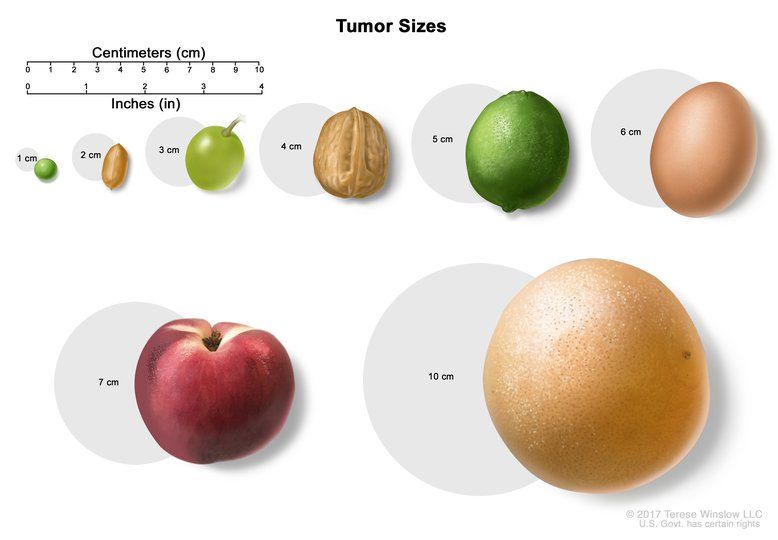
- Stage 1: One liver tumor is present, and cancer has not spread to nearby blood vessels.
- Stage 2: One liver tumor is present, and cancer has spread to nearby blood vessels; or there is more than one tumor in the liver, but none are larger than 5 centimeters (cm).
- Stage 3: Refers to one of these three scenarios.
- Stage 3A: More than one liver tumor larger than 5 cm is present, or a tumor has spread to a major branch of nearby blood vessels.
- Stage 3B: One or more tumors of any size have spread to nearby organs (other than the gallbladder), or the cancer has broken through the lining of the peritoneal cavity.
- Stage 3C: Liver tumors are present in nearby lymph nodes.
- Stage 4: Liver cancer has spread to other sites, such as the bones or lungs, and may also be found in nearby lymph nodes and/or blood vessels.
TNM classification is a staging system that the American Joint Committee on Cancer (AJCC) uses to define the stages of liver cancer:
T is for tumor. The number after the T indicates the size of the tumor and how far it has invaded. The larger the number, the bigger and/or more invasive the cancer.
- TX: The primary tumor cannot be assessed.
- T0: No evidence of primary tumor.
- T1: One tumor without vascular invasion.
- T2: One tumor with vascular invasion, or multiple tumors that are 5 cm or less.
- T3a: Multiple tumors larger than 5 cm.
- T3b: One or more tumors of any size involving a major branch of the portal vein or hepatic vein.
- T4: One or more tumors with direct invasion of adjacent organs other than the gallbladder or with perforation of the visceral peritoneum.
N is for nodes. The number after the N indicates whether the cancer has spread to the lymph nodes and to what extent.
- NX: The regional lymph nodes cannot be assessed.
- N0: No cancer in the lymph nodes in the region of the cancer.
- N1: Metastasis to regional lymph nodes.
M is for metastasis. The number after the M indicates whether the cancer has spread to distant areas of the body.
- M0: No distant metastasis.
- M1: Cancer has metastasized to at least one site distant from the kidney.
Stage Grouping
| Stage Groups | Tumor | Nodes | Metastases |
|---|---|---|---|
| Stage 1 | T1 | N0 | M0 |
| Stage 2 | T2 | N0 | M0 |
| Stage 2A | T3a | N0 | M0 |
| Stage 3B | T3b | N0 | M0 |
| Stage 3C | T4 | N0 | M0 |
| Stage 4A | Any T | N1 | M0 |
| Stage 4B | Any T | Any N | M1 |