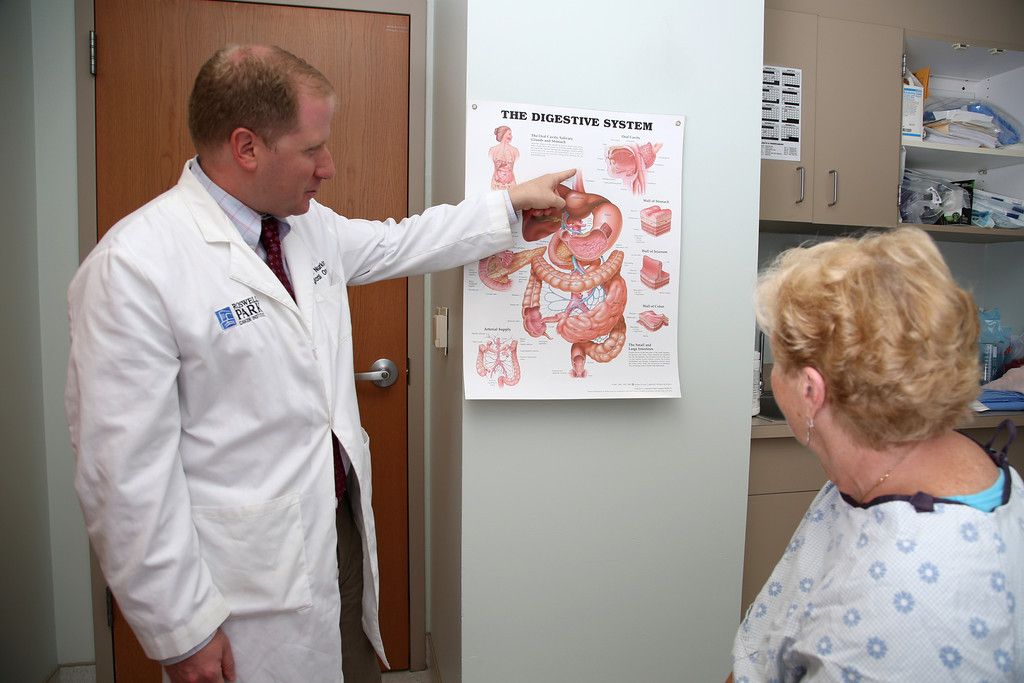
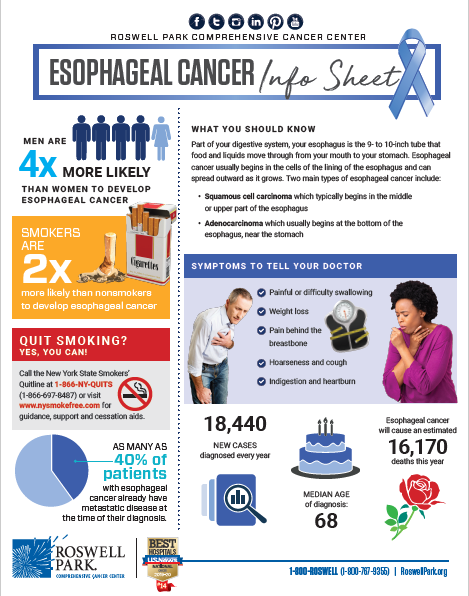
Part of your digestive system, your esophagus is the approximately 10-inch tube that food and liquids travel through from your mouth to your stomach. Esophageal cancer occurs when cells of the esophagus become abnormal and grow out of control. It typically starts in the inner lining of the esophagus and spreads outward through the four different layers of tissue, which include:
- Mucosa. The innermost lining of the esophagus, the mucosa remains moist to help food pass to the stomach.
- Submucosa. This layer contains glands which produce mucus that helps to keep the esophagus moist.
- Muscle layer. These muscles help to move food down to the stomach..
- Serosa. This layer forms the outer covering of the esophagus.
Whether or not your esophageal cancer has grown through any of these layers is an important factor in determining the stage of your cancer and how it is best treated.
Types of esophageal cancer
Most esophageal cancers fall into one of these two main types:
Adenocarcinoma
Adenocarcinoma is the most common esophageal cancer type in the United States. It begins in the gland cells that produce esophageal mucus. Adenocarcinoma usually occurs in the lower part of the esophagus, closest to the stomach and is associated with long term acid reflux. When stomach acids back up into the esophagus repeatedly, they irritate and damage the gland cells, leading them to grow abnormally and uncontrolled.
Squamous cell carcinoma
Squamous cell carcinoma occurs in the flat squamous cells in the upper part of the esophagus. Although this cancer type is less common in the U.S., it is the most common esophageal cancer type in the rest of the world.

Gastroesophageal junction cancers
A critical part of your digestive system is the location where the esophagus meets the stomach, called the gastroesophageal junction. Cancers at this location may have started as esophageal cancer that spread down into the stomach, or as stomach cancer that spread up into the esophagus, or it began at the junction and spread up and/or down into the other organs. Learning where the cancer originated is important to plan your appropriate treatment.
Cancers in this junction require specialized care from gastrointestinal surgeons and oncologists with expertise in esophageal and gastroesophageal junction cancer.