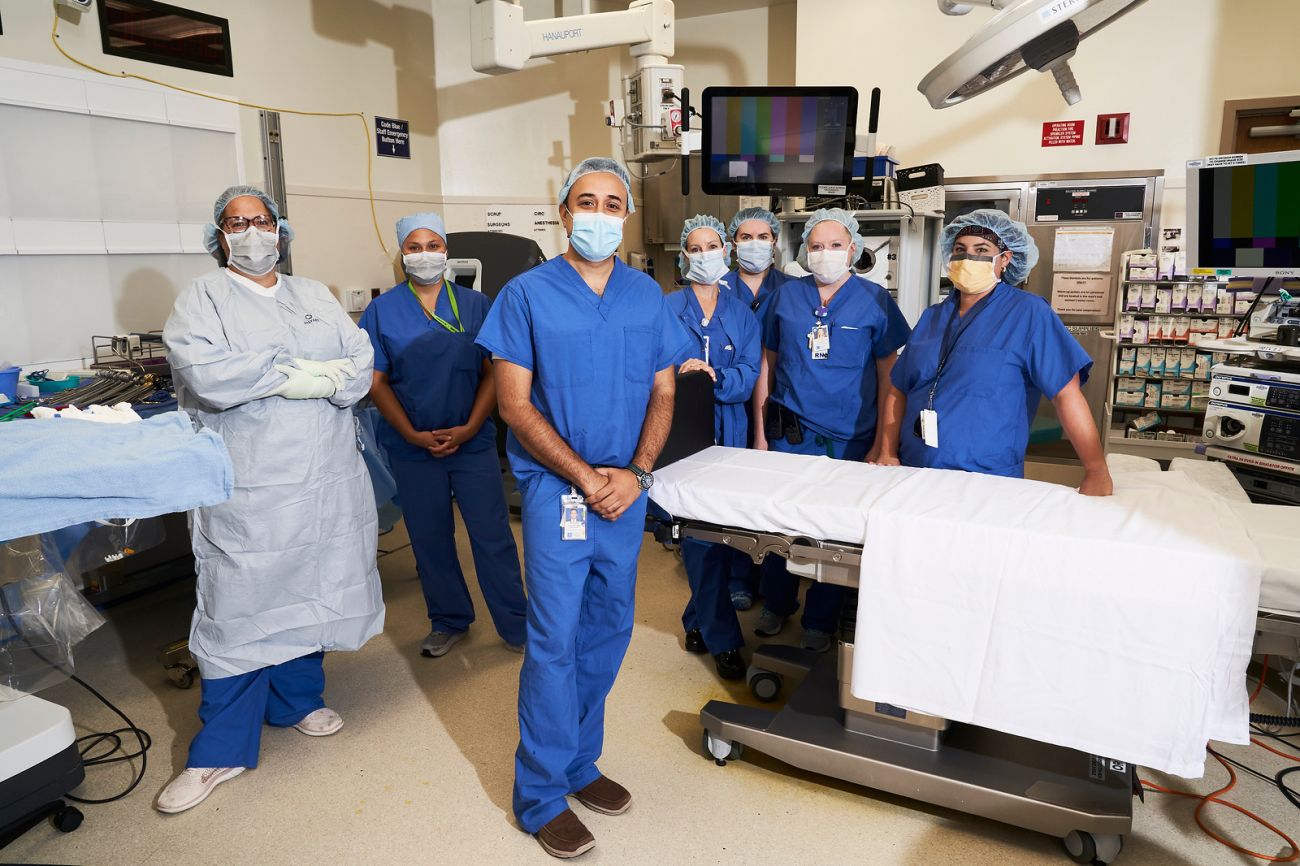
The treatment of Esophageal cancer requires a multidisciplinary approach. Members of the Esophageal team meet weekly to review and discuss patient cases and treatment recommendations. Patients are able to meet with multiple members of the team on the day of consultation.
The treatment that's right for you depends mainly on the following:
- Where the cancer is located within the esophagus
- Whether the cancer has invaded nearby structures
- Whether the cancer has spread to lymph nodes or other organs
- Your symptoms
- Your general health
Based on this information Individualized treatment recommendations will be made. Roswell Park offers a number of treatment options for esophageal cancer, ranging from outpatient endoscopic therapies for early-stage cancers to chemotherapy, radiation therapy and esophagectomy — surgery to remove the esophagus. For some patients, Photodynamic Therapy (PDT), a treatment that uses intense doses of red light to activate photosensitive, cancer-killing drugs, pioneered by RPCI, may be an option. Your treatment plan may include a combination of surgery, chemotherapy, and radiation therapy.
Your Esophageal team may also include a clinical pharmacist, a registered dietitian, and social worker.
Esophageal cancer is hard to control with current treatments. For that reason, many doctors encourage people with this disease to consider taking part in a clinical trial, a research study of new treatment methods. Roswell Park patients are frequently among the first to benefit from new ideas pioneered by Roswell Park physicians and researchers. This is also where you can learn about the opportunity to take advantage of our cutting-edge research programs, by participating in clinical trials and accessing potential new treatments before they reach the market.
Your esophageal team can describe your recommended treatment, the expected results of each, and the possible side effects. Because cancer therapy often affects healthy cells and tissues, side effects are common. Before treatment starts, ask your esophageal team about possible side effects and how treatment may change your regular activities. You and your esophageal team can work together to develop a treatment plan that meets your needs.
You may want to ask your doctor these questions before your treatment begins:
- What is the stage of the disease?
- Has the cancer spread?
- Do any lymph nodes show signs of cancer?
- What is the goal of treatment? What are my treatment choices?
- Which do you recommend for me? Why?
- Will I have more than one kind of treatment?
- What can I do to prepare for treatment?
- Will I need to stay in the hospital? If so, for how long?
- What are the risks and possible side effects of each treatment? For example, am I likely to have eating problems during or after treatment? How can side effects be managed?
- What will the treatment cost? Will my insurance cover it?
- Would a research study (clinical trial) be appropriate for me?
- Can you recommend other doctors who could give me a second opinion about my treatment options?
- How often should I have checkups?