
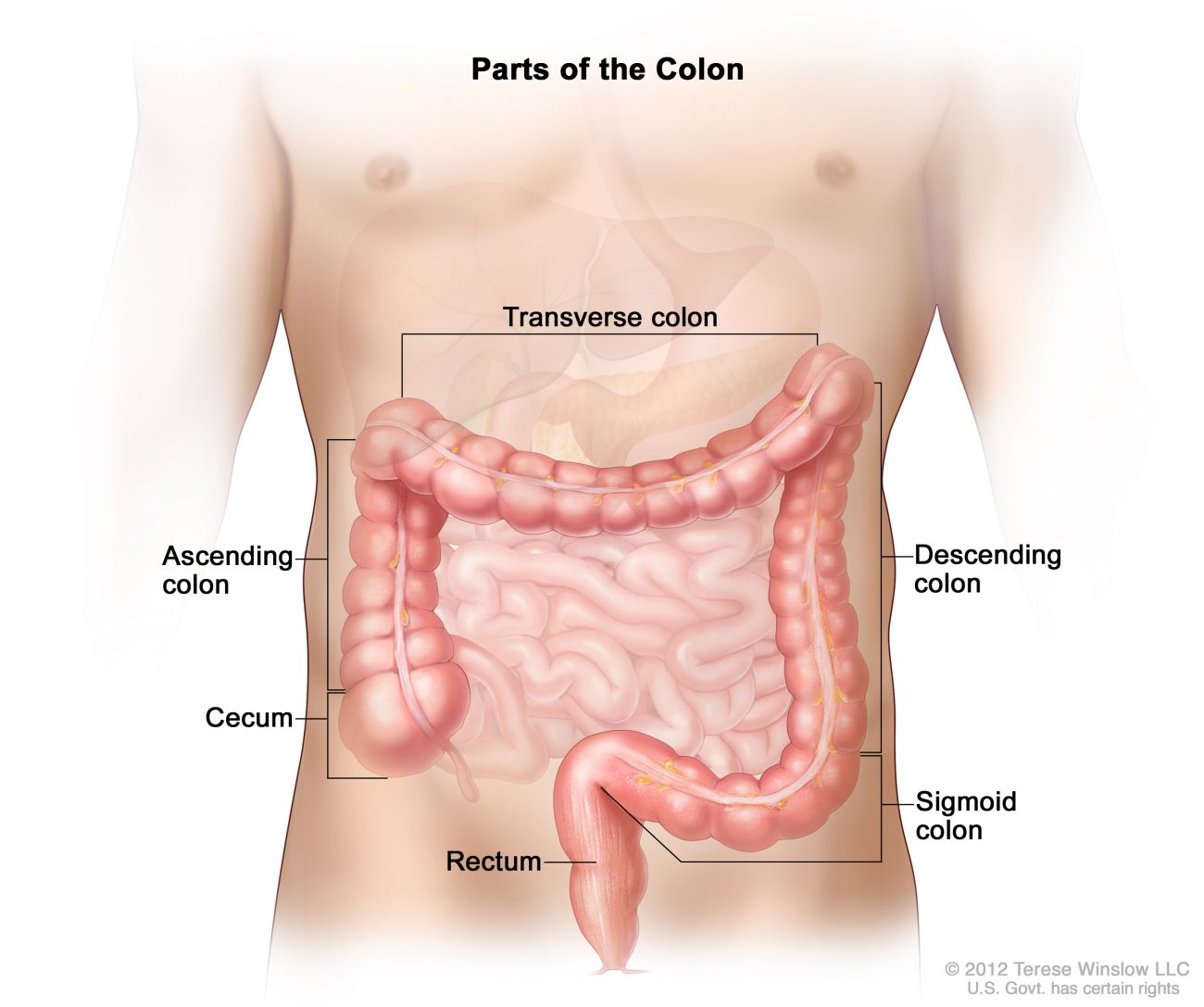
Your colon and rectum are parts of your large intestine, the final section of your digestive system. As food moves through your stomach and small intestine, your body absorbs nutrients and water. Whatever is left becomes waste, which then enters the large intestine and leaves the body as stool.
When cancer begins in the colon, the first 4 to 5 feet of the large intestine, it’s called colon cancer. When cancer begins in the rectum, the last several inches of the large intestine, it’s called rectal cancer. In the U.S. rectal cancer is increasing, especially among younger adults, and now accounts for 32% of all colorectal cases.
Anal cancer, a disease that develops in the anus and anal canal, is quite different from colorectal cancer in significant ways. Learn more about the differences between anal and colorectal cancer.
Colorectal cancer is the fourth most common cancer in the United States. But thanks to better screening and improved treatments, colorectal cancer is becoming one of the easiest cancers to detect, treat — and prevent.
Colorectal cancer in younger people
While most cases are diagnosed in patients 50 years and older, colorectal cancer in young people is becoming more common, and experts estimate that the number of cases among those younger than 50 will continue to rise. Young onset colorectal cancers are typically diagnosed at later stages when treatment is more difficult. Roswell Park has a dedicated program, offering services specifically for younger colon cancer patients who face unique challenges.
Learn about our Young Onset Colorectal Program
What are colorectal polyps?
Polyps are abnormal, fleshy growths that form in the lining of the colon or rectum, and these growths become more common as we age. Although polyps do not usually cause any symptoms, some may bleed resulting in blood in the stool or a low blood count (anemia).
Most colorectal polyps are benign (not cancerous), but some have the potential to become malignant (cancerous) and colon and rectal cancers typically begin in these polyps. The only way to know whether a polyp is benign or cancerous is to have it removed and evaluated by a pathologist. By detecting and removing polyps from the colon or rectum before they have the opportunity to become malignant, colon and rectal cancer can be prevented. Learn more about how colorectal screening can prevent cancer.
Read more about colorectal polyps
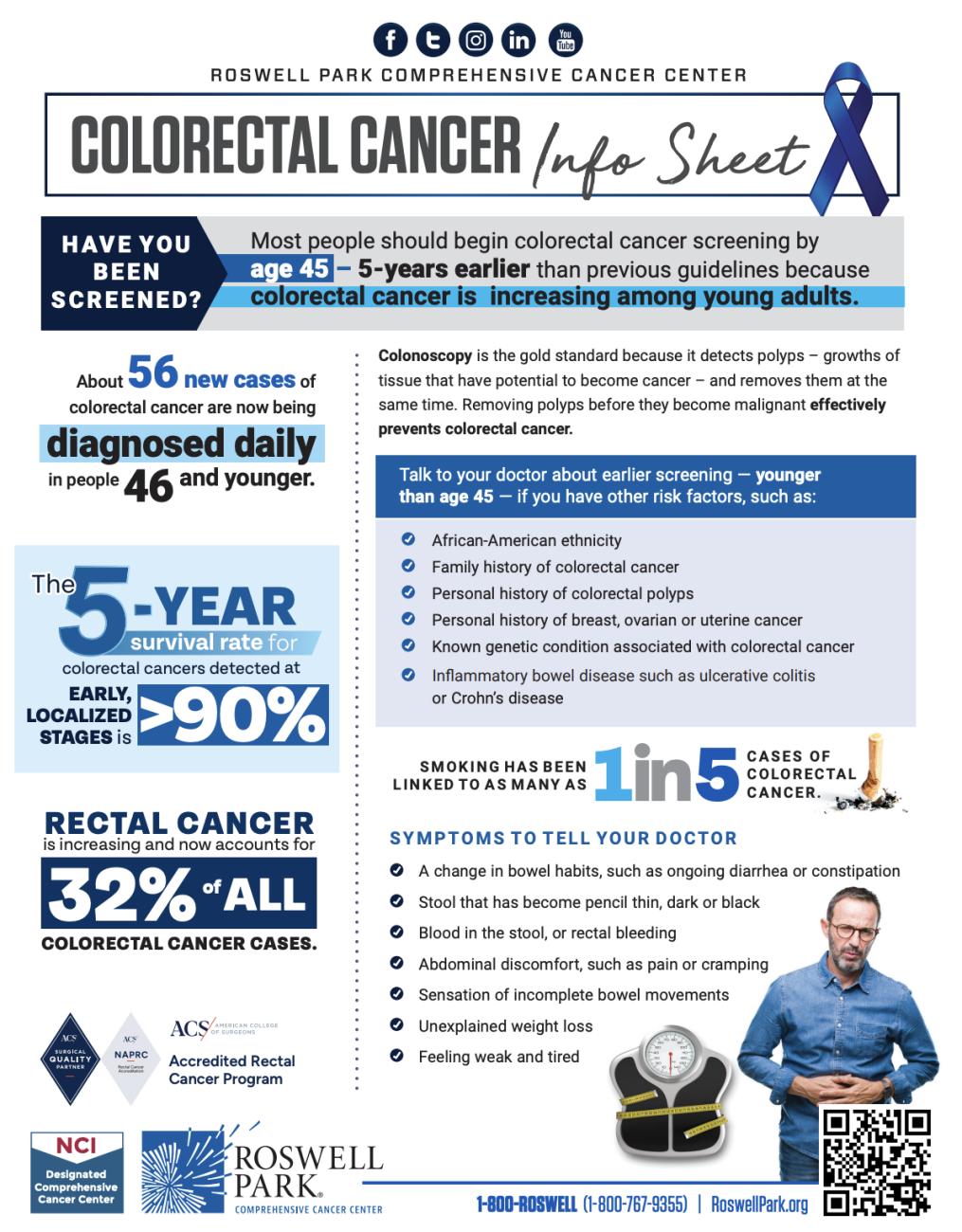
Most people should begin colorectal cancer screening by age 45 – five years earlier than previous guidelines because colorectal cancer among younger adults is increasing.