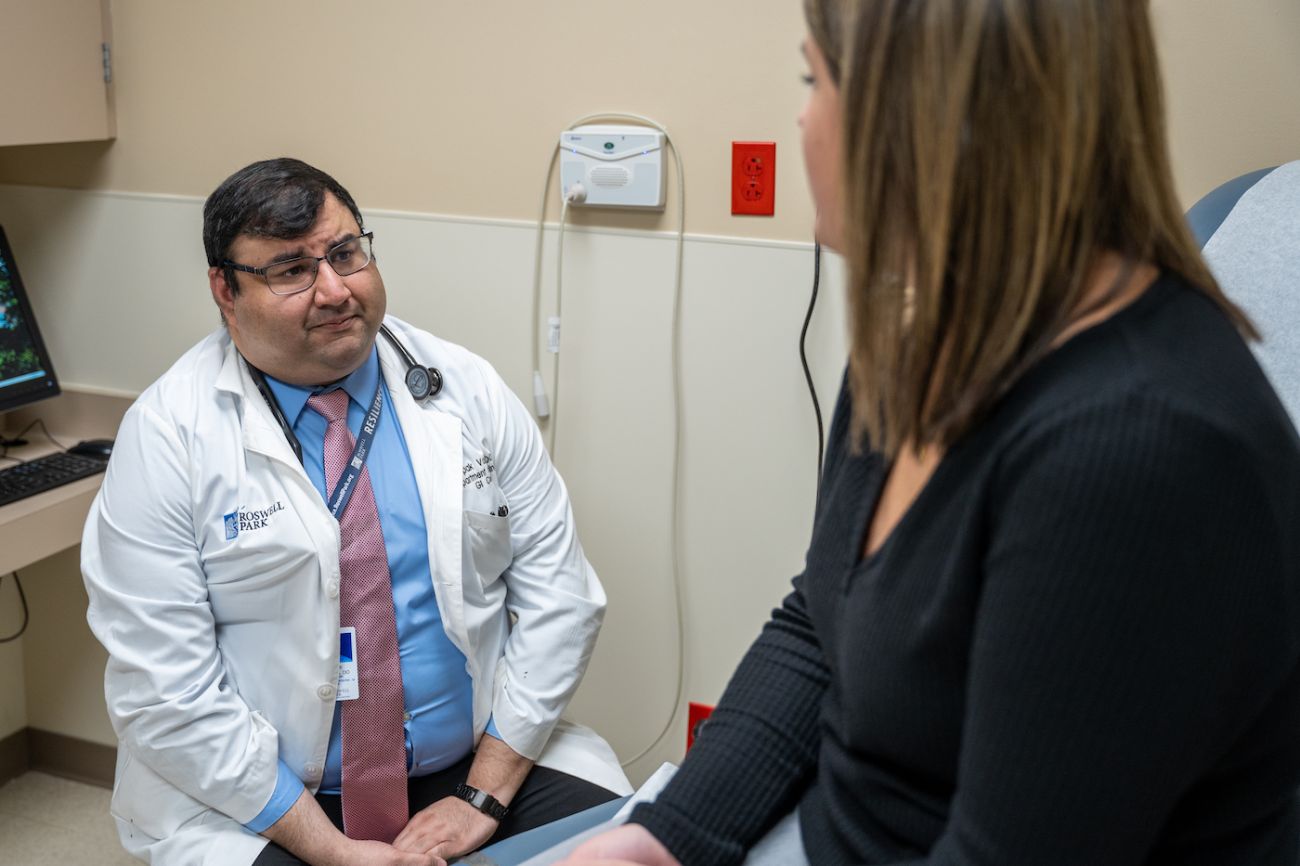

Anal tumors and cancers may require more than one type of treatment from more than one type of physician. At Roswell Park, your care team includes physicians from several medical specialties, including gastrointestinal-specific surgical, medical and radiation oncologists, gastroenterologists, pathologists, and other specialists, who collaborate to determine the very best treatment plan for you, including any clinical trials that may benefit you.
Our treatment approach to anal cancer has three goals:
- Optimal outcome for survivorship and quality of life
- Optimize treatment with chemoradiation therapy
- Avoid surgery, preserving sphincter function, and avoiding colostomy
Your personal treatment plan may include one or more of the following treatment approaches.
- Chemoradiation. This primary treatment for anal cancer combines chemotherapy and radiation treatment on the same day, maximizing the benefit of each approach.
- Surgery to remove the cancerous areas from the body.
- Clinical trials to access the latest options.
- Treatment to address side effects, including pelvic floor therapy and sacral nerve stimulation.