Why you need a second opinion
If you have a diagnosis or suspicion of thyroid or parathyroid cancer or disease, you need a second opinion. We will ensure you get it without delay.
We’ll obtain your scans and other medical reports, have Roswell Park’s experts review them promptly, and set up a consultation with our team. Many of our patients travel to receive cancer care at Roswell Park. If you live far from Roswell Park, we can help arrange what works best for you, including virtual consultations or receiving some of your care closer to home. Call 1-800-ROSWELL (1-800-767-9355) or click the button below to submit a request online.
A second opinion can be both helpful and reassuring — it’s the best way to ensure that your initial diagnosis is accurate, that the recommended treatment strategy is right for you, and that the surgical team and other specialists have the training and experience to provide you the best possible outcome.
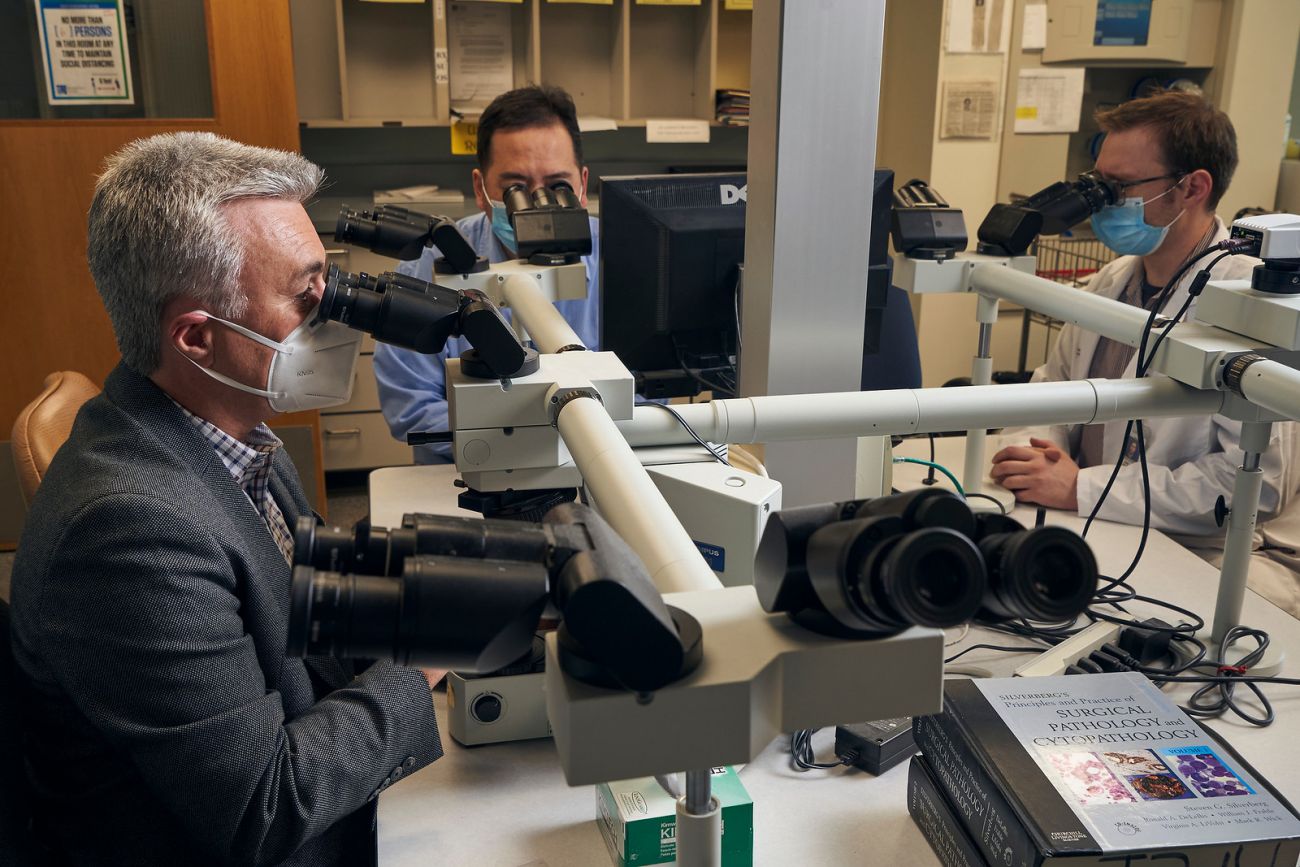
At Roswell Park, our pathologists review the pathology slides and testing of every new patient. In about 11 to 18% of these secondary reviews, the diagnosis is changed, impacting your treatment options and your way forward.
Why it matters for thyroid or parathyroid cancer or disease
- Accurate diagnosis needs specialty experience. It can be difficult to distinguish between certain kinds of thyroid tumors, especially rare types. Our pathologists at Roswell Park have the expertise and experience in evaluating thyroid cancer and thyroid disease, and will provide a timely, accurate diagnosis to determine the best individualized approach to your treatment.
- Some tumors are caused by an inherited genetic mutation. Our Genetic Screening team will help you make an informed decision about whether you and/or your children should undergo testing for any inherited gene mutations that may affect your risk of developing thyroid disease or thyroid cancer.
- Roswell Park offers the same expert care for malignant and benign tumors. Typically, more than one option is available, and it is important to know these options before starting the treatment plan. Our experts will discuss these options with you and guide you in the decision-making process for your optimal treatment plan.
Yes, you have time for a second opinion
We understand the urgency of a cancer diagnosis and your desire to move quickly. However, very few diagnoses require that treatment occur immediately. The fastest treatment is not always the best treatment, and you owe it to yourself to take time now to ensure your treatment plan is the right one for you. We can help.
To arrange for a second opinion, call 1-800-ROSWELL (1-800-767-9355) or fill out the online form below. We’ll take care of the rest.