Like all cancers, skin cancer begins in the body’s cells. The normal process of tissue growth and repair is usually controlled and orderly. Old cells die off and new cells are created to take their place. However, when cells become damaged and mutations change normal cell function, the cells can grow abnormally and uncontrolled, becoming cancerous.
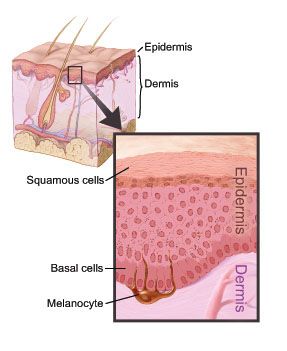
The skin is comprised of three main layers. The epidermis is the outer surface of the skin and contains several major cell types — squamous cells which are also known as keratinocytes, pigment cells also known as melanocytes, Merkel cells and leukocytes.
- The dermis lies underneath the epidermis and contains blood vessels, lymph vessels, nerves, hair follicles, and sweat and oil glands.
- The subcutis, or hypodermis layer, is the deepest skin layer, and helps to protect your body and keep it warm. This layer contains fat cells, collagen, blood vessels and nerves.
Types of skin cancer
The most common types of skin cancer include these three:
- Basal cell carcinoma is the most common skin cancer. They grow slowly and rarely spread to other parts of the body. Basal cell carcinomas are typically slowly enlarging, pink, pearly bumps that bleed easily, but they may also present as slow growing painless ulcers.
- Squamous cell carcinoma is a cancer that also begins in keratinocytes, squamous cells are the most abundant cells of the skin. Squamous cell cancer is the second most common type of skin cancer and some squamous cell carcinomas can spread to lymph nodes and other parts of the body.
- Melanoma is a skin cancer type that begins in the pigment cells, called melanocytes. Melanocytes are scattered among the basal cells and make melanin, the pigment that colors your skin. Melanoma is considered a more serious skin cancer type because it is more likely to spread than the much more common basal cell or squamous cell carcinomas.
Rare skin cancer types
For less common skin cancer types, it’s especially important to seek diagnosis and treatment from experienced cancer specialists. Roswell Park's expert team also treats these rare cancer types:
- Merkel cell carcinoma is a rare, aggressive cancer that begins in the Merkel cells that are found among the basal cells in the deepest part of the epidermis layer. Merkel cells are neuroendocrine cells and play a role in the sensation of touch. These cancers tend to grow quickly and metastasize (spread), first to nearby lymph nodes and then to distant sites such as the lungs, brain, bones, and other organs.
- Cutaneous T-cell lymphoma is cancer that affects a type of white blood cell called T cells, which help fight infection and other diseases. Because the skin is the body’s first line of defense against disease, most of our T cells are found in the skin. Cutaneous T-cell lymphoma often appears as a rash on the skin and may be mistaken for eczema or psoriasis.
- Sebaceous carcinoma is a rare and aggressive type of skin cancer that develops in a sebaceous gland, which produces sebum, a mixture of complex oils that help to lubricate the skin. Sebaceous carcinoma appears in and around the eyes most often.
- Atypical fibroxanthoma is a type of sarcoma that occurs on the skin however it is usually low grade, less aggressive type of cancer. It often appears as a red nodule or plaque and occurs most often on the head and neck.
- Pleomorphic dermal sarcoma is a rare type of soft tissue cancer (sarcoma) that occurs in the skin. They are typically found in sun-exposed areas of the arms, legs, and scalp.
- Dermatofibrosarcoma protuberans (DFSP) is a slow-growing cancer of the skin that appears as a growing scar-like area.
- Microcystic adnexal carcinoma is a cancer that begins in the sweat gland ducts, often on the face or other parts of the head or neck region.
- Cutaneous leiomyosarcoma usually appears as a single, firm nodule on the skin about 1 to 3 centimeters in size. This rare cancer type can recur after treatment and metastasize.
- Extramammary paget disease is a rare skin condition that causes red, scaly or crusty lesions that can be painful or itchy. Some cases result from an underlying cancer such as rectal, anal, bladder, prostate, and gynecological cancers.
- Eccrine porocarcinoma is a rare skin cancer type that occurs in certain types of sweat glands.
Learn more about skin cancer
Learn more ways to prevent skin cancer and know the warning signs of a changing mole or spot on your body.