Should I be screened for breast cancer?
Breast cancer screening offers the best protection against dying from breast cancer. Routine screening with mammography — a specialized x-ray of the breast — reduces a woman’s risk of dying from breast cancer by 20 to 40%.
Roswell Park recommends that women:
- Age 40 and older should have annual breast cancer screening with mammography along with clinical exams.
- Younger than age 40 should discuss their personal risk factors, and medical and family history with their physician to determine when to begin annual mammography screening.
- With major risk factors, including a strong family history or a known mutation in a gene associated with breast cancer, should begin yearly screening before age 40. Because breast cancer in younger women is harder to detect with mammography, women should speak with their doctor about whether other screening tests such as magnetic resonance imaging (MRI) are advised.
The controversy — when to start mammography
In recent years, organizations that develop screening recommendations have disagreed on the best age to begin screening mammograms and the frequency. Screening mammography lowers the risk of dying from breast cancer and each organization agrees with that statement.
The disagreement arises from how each organization balances the risks and benefits. The risk — having a false positive — means additional mammography images or ultrasound is needed to evaluate an inconclusive screening mammogram. Less than 10% of women need additional imaging and only 1 to 2% of women need a needle biopsy. Beginning screening at an older age and having them less frequently lowers the risk of a false positive.
However, starting screening mammography at age 40 saves the most lives, and for that reason Roswell Park continues to recommend starting annual screening at age 40.
3D-Mammography (digital tomosynthesis) is the latest technology for breast cancer screening. It improves ability to detect early cancers, especially in women with dense breast tissue, and reduces the number of women who need to have additional imaging. All of Roswell Park’s mammography is done with 3D imaging.
Why choose Roswell Park?
Abnormal mammogram?
Each year, 1 out of every 10 women screened for breast cancer will be called back for further testing. While most of these are not cancer, this follow-up after an abnormal mammogram is essential.
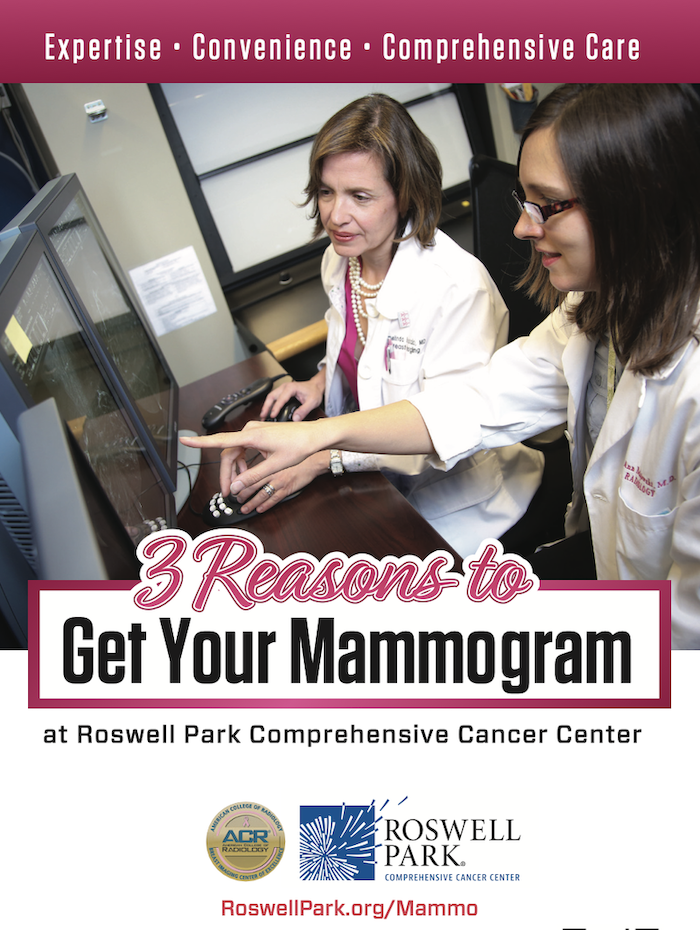
Our Breast Imaging Center is open to all women for all their breast cancer screening needs. Three reasons to have your screening at Roswell Park:
- Our expertise with performing and reading advanced breast imaging, including 3D-mammography (digital tomosynthesis), ultrasound and MRI.
- Convenience of express appointments that take 30 minutes or less, and free, on-site parking.
- Comprehensive care including referral to our high-risk program, genetic screening and counseling, and other breast-related medical services.
If a problem is found, you will be in the right place with trusted providers for:
- Minimally-invasive biopsy including core needle and fine-needle aspiration
- Pathology analysis by pathologists who focus exclusively on breast cancer
- Access to multidisciplinary breast oncology care team
Worried about your breast cancer risk?
Does breast cancer seem to run in your family? Have you had abnormal mammograms before? Roswell Park’s High Risk Breast Cancer Program can help. Our team of specialists will assess your personal risk for breast cancer, based on your family’s cancer history, your personal medical history, possible genetic mutations and more, and then provide you with a path forward for ongoing exams, surveillance, and preventive options.
Don’t live in fear of your breast cancer risk. Let us help you learn your personal breast cancer risk and what you can do about it — and leave the worry behind.
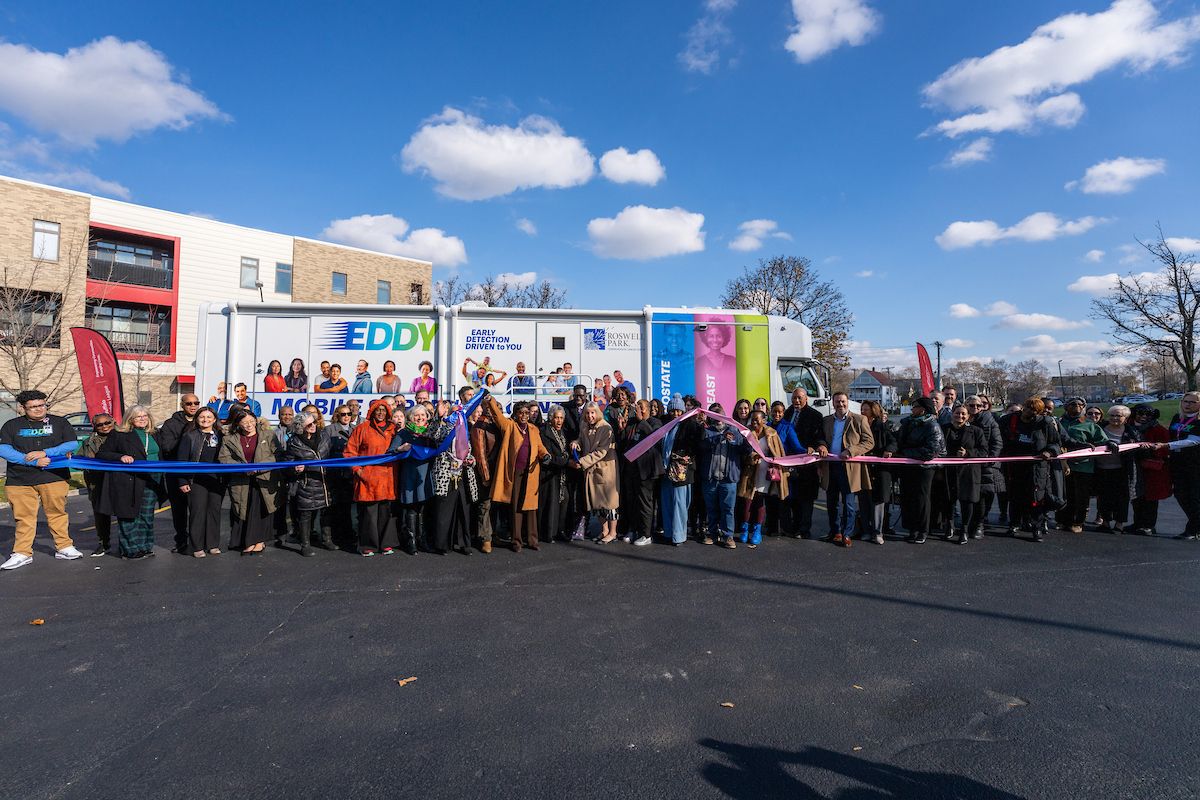
Mobile breast cancer screening
EDDY — Early Detection Driven to You — is cancer screening on wheels designed to make it easy for you to get screened for breast cancer. EDDY is outfitted with state-of-the-art screening technology funded by New York State to bring life-saving cancer screening to the New Yorkers who need it most.