Medical therapies use drugs to kill cancer cells or slow their growth. These are called systemic therapies because the medications travel through the blood to the whole body to find and attack cancer cells. These treatments may be used to treat your lung cancer before or after surgery, as a primary treatment if you cannot undergo surgery, or in combination with other treatments such as radiation therapy. Your personalized treatment plan may include one or more of the following approaches.
Chemotherapy for lung cancer
Chemotherapy is an important part of treatment for many lung cancer patients. Chemotherapy uses drugs designed to attack fast-growing cells (like cancer cells) in the body. Your chemotherapy will likely involve a combination of two or more medicines, which may be given as an infusion into a vein or taken as a pill.
Learn more about the Chemotherapy & Infusion Center at Roswell Park and what to expect before, during and after your appointment.
Immunotherapy for lung cancer
Immunotherapy is a class of cancer treatment that aims to stimulate your own immune system to recognize and attack your cancer cells. Several immunotherapies are now FDA-approved for lung cancer, and more are offered through clinical trials.
What are immune checkpoint inhibitors?
Many cancer cells grow because they’ve learned how to switch off the body’s natural immune response. Immune checkpoint inhibitors are a type of immunotherapy that aim to flip your immune system’s “off-switch” or checkpoint. Proteins such as PD-1 and PD-L1 are found in many body cells, and the PD-1 protein is also on T cells (special white blood cells that are part of your immune system). The PD-1 protein serves as a checkpoint, or off-switch that prevents your T cells from attacking your body’s normal, healthy cells. PD-1 attaches to PD-L1 and this interaction between them communicates to the T cells that there’s no need to attack and switches off the immune response.
Some cancer cells have large amounts of the PD-L1 protein, and when they tell T cells to switch off the immune response, the cancer can grow, unchecked by T cells and other parts of your immune system. Drugs that target or inhibit the PD-1 or PD-L1 proteins prevent them from attaching to each other, making cancer cells with large amounts of PD-L1 protein no longer “safe” from the T cells. Your tumor will be tested for PD-L1 levels to determine whether an immune checkpoint inhibitor could help you, such as:
- Atezolizumab (Tecentriq)
- Durvalumab (Imfinzi)
- Nivolumab (Opdivo)
- Pembrolizumab (Keytruda)
CIMAvax-EGF lung cancer vaccine
The CIMAvax-EGF vaccine is an immunotherapy that was developed in Cuba and is now available in the United States only through a clinical trial at Roswell Park. Our trial uses the CIMAvax-EGF vaccine in patients at high risk for developing lung cancer and in lung cancer survivors who are at risk for recurrence.
The vaccine blocks a protein called epidermal growth factor (EGF) that cancer cells need to grow. By “starving” the cancer cells of the EGF, they can no longer multiply.
What is targeted therapy for lung cancer?
Targeted therapies are drugs that find and attack cancer cells by targeting a specific, unique feature of the cancer cell, such as an abnormal mutation or protein that isn’t found in normal, healthy cells.
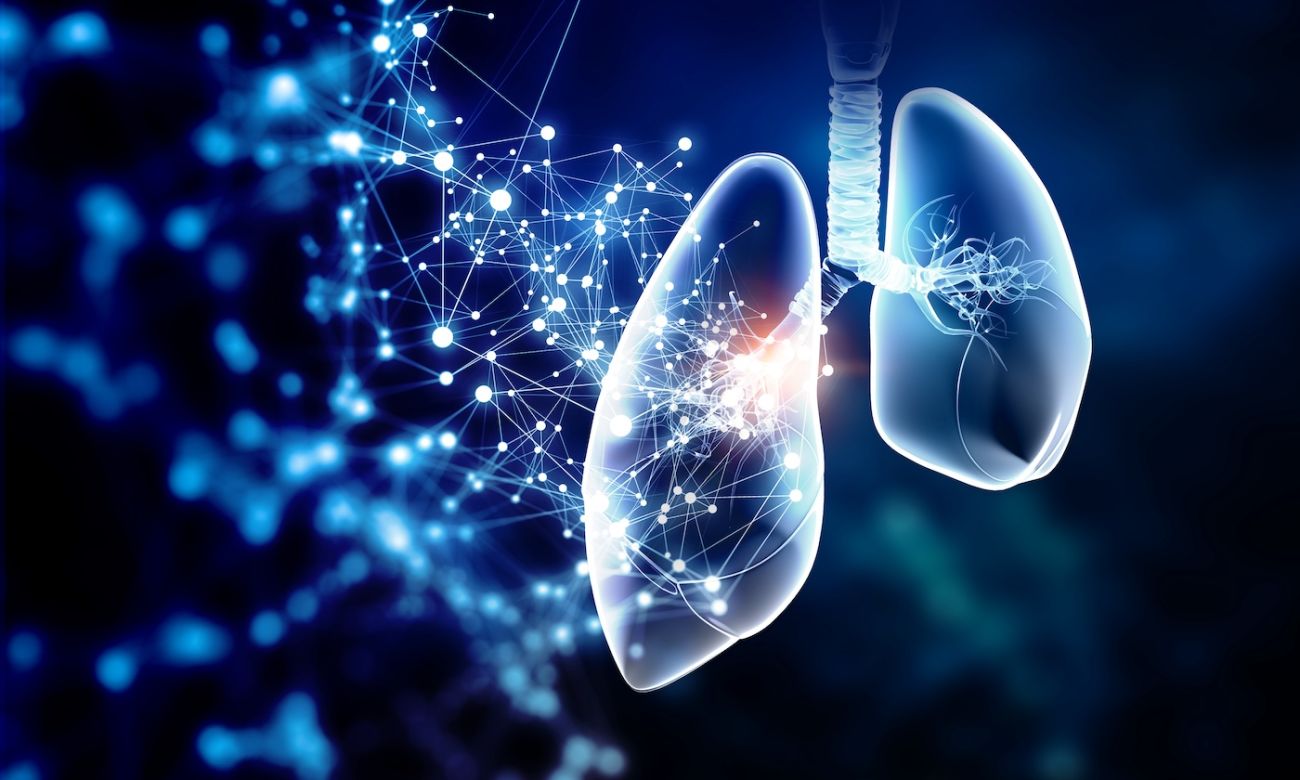
Roswell Park has long been at the forefront of the cancer research that makes Precision Medicine possible.
Several mutations, called “driver” mutations have been discovered in lung cancer, and these errors in the tumor’s DNA drive the cells to make proteins that help cancer cells grow. Some of these driver mutations include EGFR, ALK, ROS1, BRAF, NTRK, MET, RET, KRAS and ERBB2.
Using advanced genomic testing to analyze tumors for these mutations and choosing therapy for each patient according to whether any mutations are present and which ones, is an approach in cancer care called Precision Medicine.
Some of these drugs are in the form of a pill, taken orally; others are delivered by intravenous (IV) infusion and may include types of drugs such as:
- Kinase inhibitors. This type of drug inhibits or stops the activity of certain cell proteins called kinases and helps to lower the number of new cancer cells being made.
- Antibody therapy. Cells have receptors on their surface that act like an antenna to send and receive signals. Some types of antibody therapy attach to receptors and block the signal that tells the cells to grow. Other antibodies like VEGF prevent the tumor from creating the blood vessels necessary to “feed” it.
- Antibody drug conjugates combine two different drugs in one. One drug finds and binds to the cancer cell while carrying a “payload” of another drug that can kill the cancer cell.
Precision Medicine — The Roswell Park Advantage
Roswell Park tests lung cancer tumors using advanced comprehensive genomic profiling to analyze your tumor's DNA and identify any unique characteristics or gene mutations. This allows us to personalize your treatment and choose specific drugs, or new agents only available through clinical trials, that target the cells of your tumor, and optimize your therapy's effectiveness.