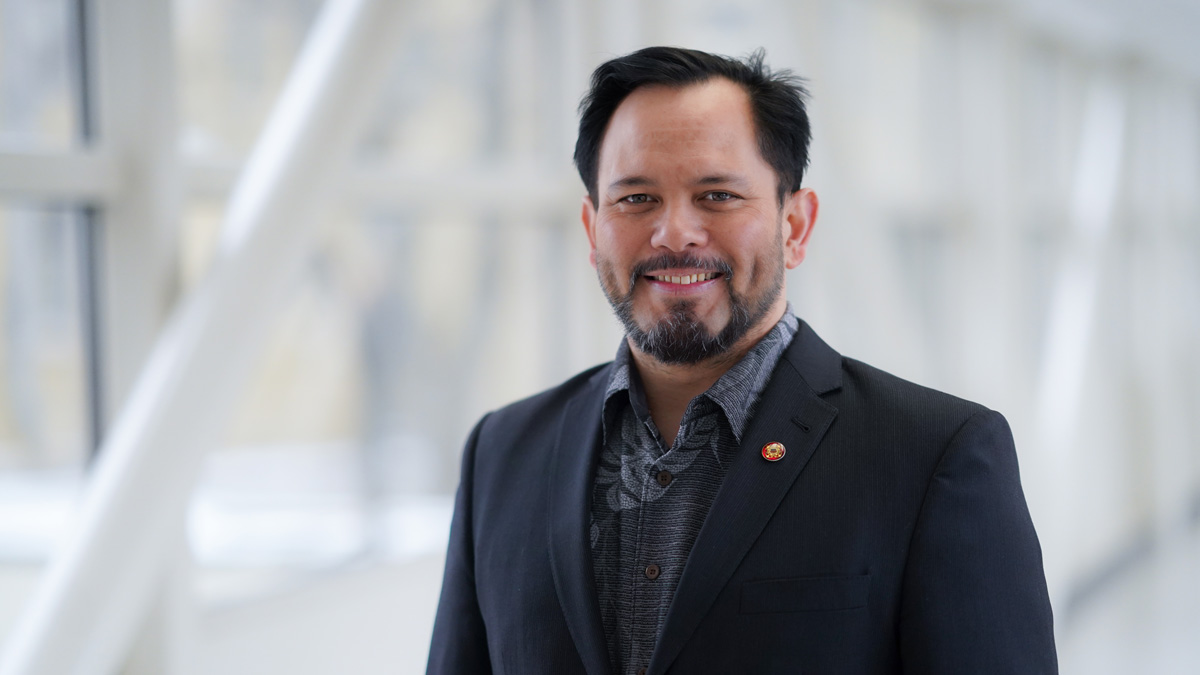
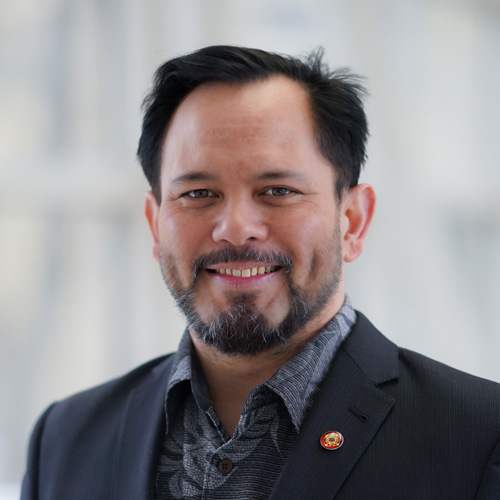

Dr. Mattson Jr. is a Buffalo Spree Top Doctor! See all of our physicians who made this year's list.
Top Doctors 2024

Cancers Treated:
Specializing In:
Gastrointestinal and gynecological radiotherapy Breast cancer brachytherapy and clinical researchResearch Interests:
Partial breast irradiation and hypofractionated partial breast irradiationAbout David Mattson Jr.
Positions
Roswell Park Comprehensive Cancer Center
- Associate Professor of Oncology
- Department of Radiation Medicine
- Director, GI & GYN Radiation Services
- Department of Indigenous Cancer Health, Native Hawaiian
Jacobs School of Medicine and Biomedical Sciences, University at Buffalo
- Clinical Associate Professor
- Department of Radiation Oncology
Background
Education and Training:
- MD - John A. Burns School of Medicine, University of Hawaii at Manoa, Honolulu, HI
Residency:
- University Hospital, State University of New York Health Sciences Center, Syracuse, NY
- University of Iowa Hospital & Clinics, Iowa City, IA
Fellowship:
- University of Iowa Hospital & Clinics, Iowa City, IA
- National Cancer Institute, Bethesda, MD
Featured on Cancer Talk
Publications
- Scarbrough PM, Mapuskar KA, Mattson DM, Gius D, Watson WH, Spitz DR. Simultaneous inhibition of glutathione- and thioredoxin-dependent metabolism is necessary to potentiate 17AAG-induced cancer cell killing via oxidative stress. Free radical biology and medicine 2012; 522:436-443
- Wilson JP , Mattson D , Edge SB. Is there a need for axillary dissection in breast cancer? . Journal of the National Comprehensive Cancer Network : JNCCN 2011; 92:225-230
- Mattson DM, Dornfeld KJ, Spitz DR, Orcutt KP, Li L, Aykin-Burns N, Parsons AD, Dayal D, Ahmad IM, Simons AL. Cisplatin combined with zidovudine enhances cytotoxicity and oxidative stress in human head and neck cancer cells via a thiol-dependent mechanism. Free radical biology and medicine 2009;462:232-237