Is your lymphoma diagnosis correct?
Lymphoma has more than 90 different subtypes and each has a different disease behavior, prognosis and requires a nuanced treatment approach. You need to be certain your diagnosis is correct to ensure that your treatment plan will work well. Our pathologists have extensive experience in identifying the many different subtypes of lymphoma.
To make a diagnosis when lymphoma is suspected, a lymph node is surgically removed during an excisional biopsy, and the tissue is then examined and tested by pathologists. This type of biopsy may not be possible in some circumstances — for example, if you have other serious health conditions or the lymph node is in a location that makes it hard to remove. In that case, a core biopsy may be done instead, using a needle with a large diameter to remove a tissue sample.
Roswell Park is equipped with the advanced technology to provide a complete diagnostic workup, right here in our facilities, making it possible to get results in just 1-4 days. These resources enable us to determine the unique features of your lymphoma so we can pinpoint the best treatment options.
At Roswell Park, standard diagnostic tests for lymphoma include:
- Physical exam: Your doctor checks for swollen lymph nodes, spleen or liver.
- Blood tests: The lab does a complete blood count to check the number of lymphocytes and other cells in the blood. Other blood tests will evaluate kidney and liver functions, or provide important information to determine prognosis.
- Chest X-ray: An X-ray can show swollen lymph nodes or other signs of disease in your chest.
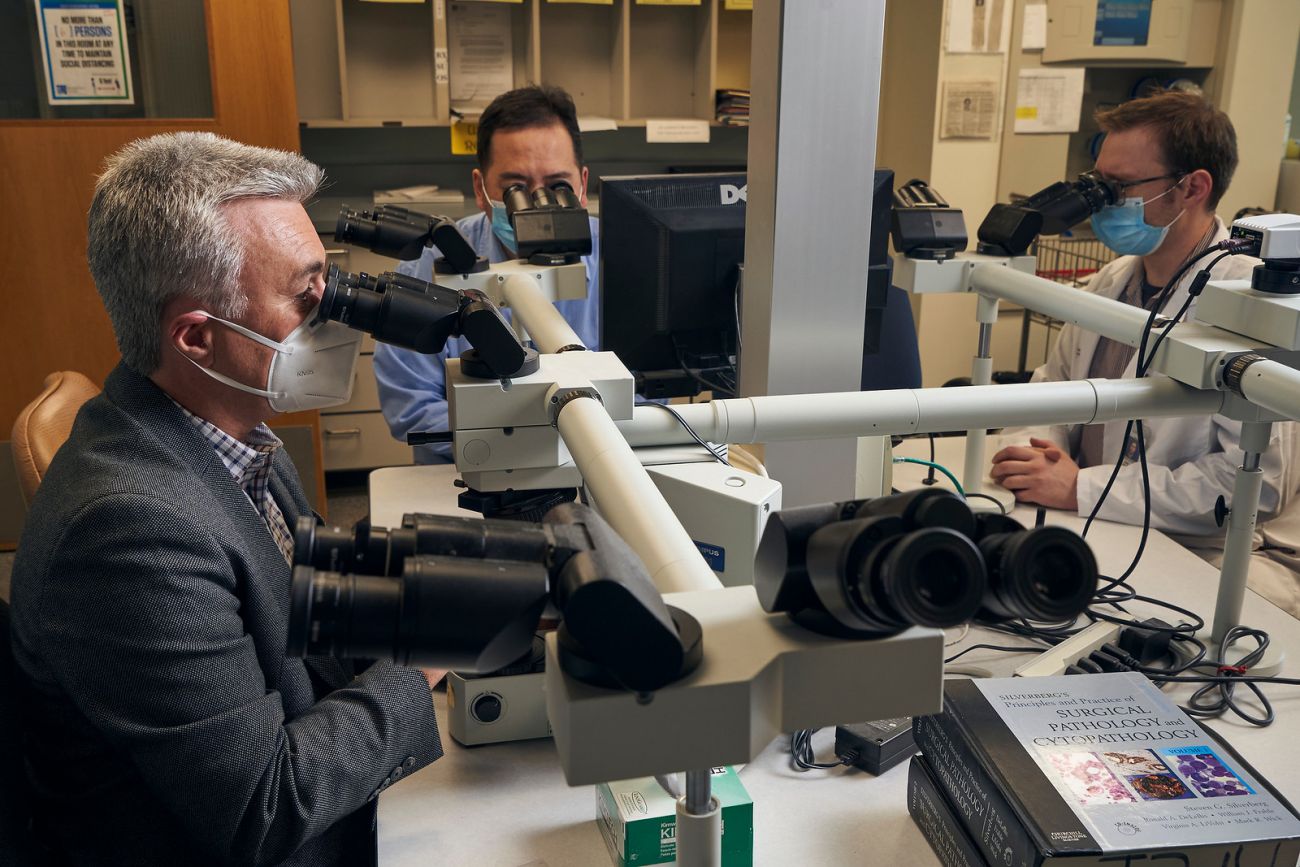
- Lymph node biopsy: The best way to diagnose lymphoma is to perform a biopsy of a lymph node. The pathologist then uses a microscope to look for abnormal cells in the tissue: For example, the presence of an abnormal cell called a Reed-Sternberg cell indicates that the disease is Hodgkin lymphoma.
Additional key pathology studies for a lymphoma diagnosis include:
- Immunohistochemistry study: After adding an antibody, dye or radioisotope (radioactive atoms) to the sample of cancer cells, the pathologist looks for certain antigens or proteins, which help distinguish one type of lymphoma from another.
- Light and electron microscopy: A high-powered microscope helps identify changes in the cancer cells.
- Cytogenetic analysis: This process makes it possible for the pathologist to look at the actual chromosomes of the cancer cells.
- FISH (fluorescence in situ hybridization): This enables the pathologist to look at the actual genes and chromosomes of the cell to identify any abnormalities.
- Flow cytometry: This test measures the number of cells in a sample and can determine the percentage of cells that are live, or that have a certain characteristic, size, shape or tumor marker.
- Molecular diagnostics: These tests can examine DNA, proteins and other components of blood or tissue. Gene sequencing is a new technology that evaluates the mutations that are present in cancer cells. Identifying specific mutations can help pinpoint a lymphoma diagnosis or suggest the best targeted agent to treat the lymphoma. For example, the presence of EZH2 mutations in patients with follicular lymphoma means that their cancer could be successfully controlled with tazemetostat, an approved EZH2 inhibitor recently approved by the FDA.
Using information from these tests, our hematology (blood) pathologists will work with our medical oncologists to determine the type and subtype of your lymphoma.
Our specialized laboratories will also provide information about unusual genetic and molecular markers of your disease, which may be important for your prognosis and also used to determine whether you are eligible for clinical trials.
Getting a second opinion
A second opinion is the best way to ensure that your initial diagnosis is accurate and that the recommended treatment plan is right for you.
Between 11-18% of the outside cases we review at Roswell Park result in a change of diagnosis — either a reversal of diagnosis (someone received a cancer diagnosis but does not actually have cancer, or someone has cancer but was told no cancer was present) or our pathologists identify a subtype of cancer that is different from the one that was originally diagnosed. This information can dramatically alter the treatment plan.