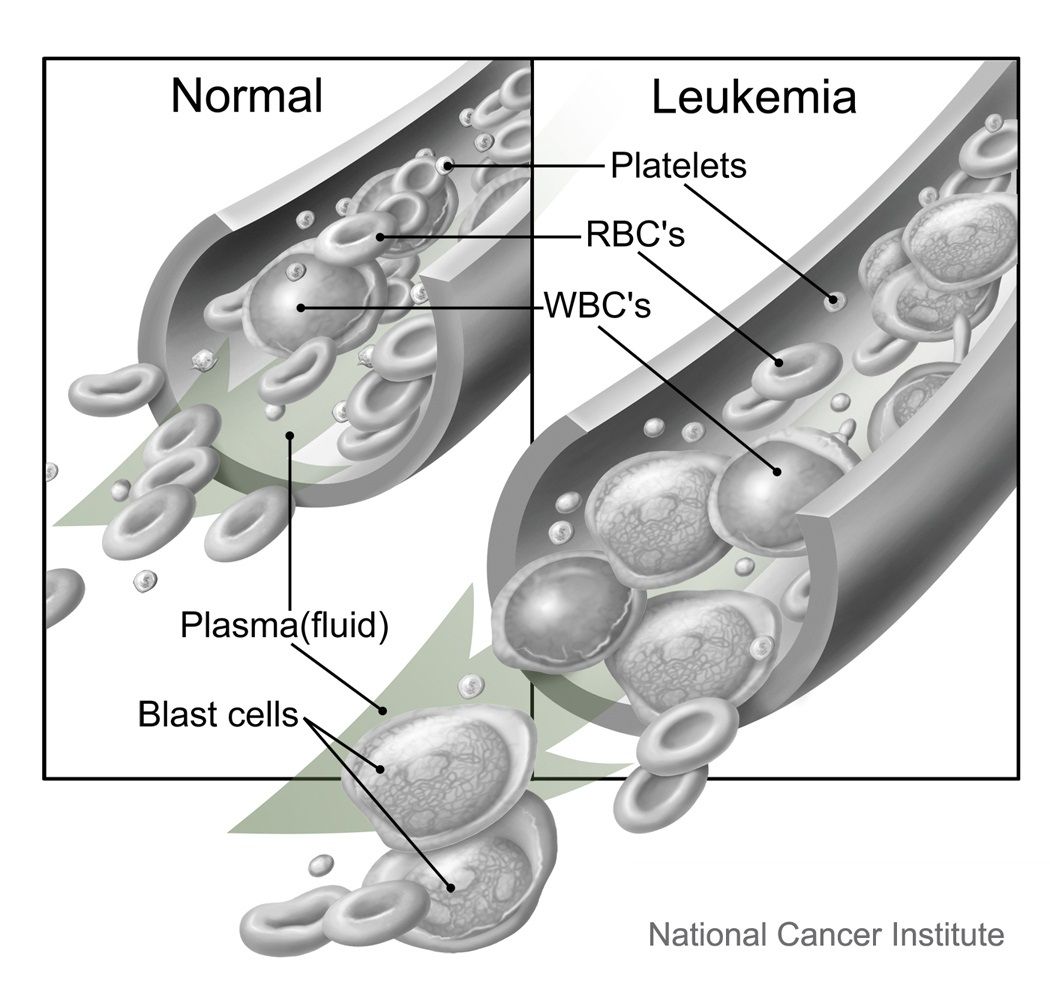
Leukemia is the name given to several types of cancer that begin in the tissue that creates blood cells. To understand leukemia, it helps to know how normal blood cells form.
Roswell Park has specific programs for patients with pediatric leukemia as well as chronic lymphocytic leukemia (CLL). Please visit those pages if you are looking for more detailed information.
Normal blood cells
Most blood cells develop in the marrow, the soft material at the center of most bones. Bone marrow contains hematopoietic stem cells, which produce all the different kinds of blood cells, depending on what kind your body needs at a particular time. These stem cells are extremely busy, making billions of blood cells every day. When any of the three types of blood cells grow old or are damaged, they die, and hematopoietic stem cells then produce new ones.
Each type of blood cell has a special job:
- White blood cells, which are part of your body’s immune system, help fight disease. There are several types of white blood cells.
- Red blood cells carry oxygen to tissues throughout the body.
- Platelets help form blood clots to control bleeding when you’re injured.
Leukemia cells
Leukemia is just another name for blood cancer. When you develop leukemia, your bone marrow begins to make abnormal white blood cells, which are called leukemia cells. Unlike normal blood cells, leukemia cells don't die when they should. They may crowd out normal white blood cells, red blood cells and platelets. This makes it hard for normal blood cells to do their work — and that’s when symptoms develop.
Types of leukemia
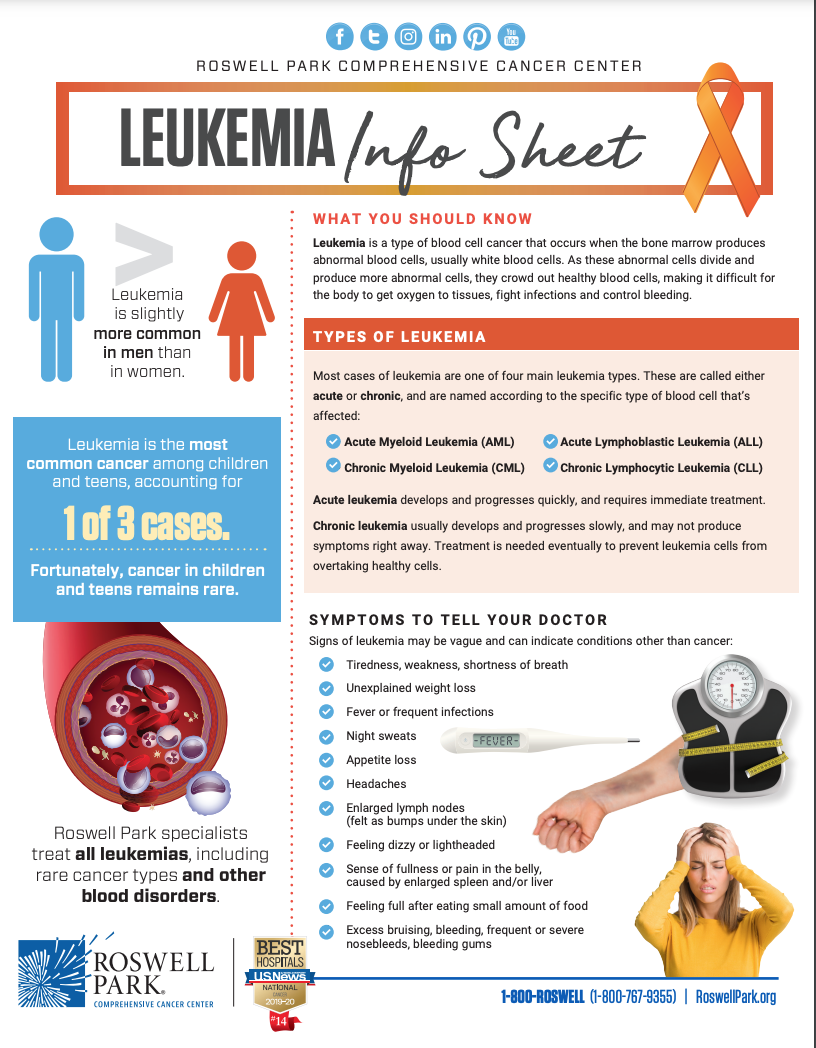
There are different types of leukemia, which are organized into two main groups — chronic and acute. Chronic leukemia usually gets worse slowly, over months to years, while acute leukemia develops quickly and progresses over days to weeks.
The two main types of leukemia can be further organized into groups that are based on the type of white blood cell that is affected — lymphoid or myeloid.
Lymphoid cells are part of the immune system. They help fight against infection and control cancer growth. Leukemia that begins in lymphoid cells is called lymphoid, lymphocytic, or lymphoblastic leukemia.
Myeloid cells consist of different types of immune cells that help fight against bacterial infections; red blood cells, which carry oxygen around the body; and platelets, which clot the blood. Leukemia that affects myeloid cells is called myeloid, myelogenous, or myeloblastic leukemia.
Chronic leukemia
In the beginning stages of chronic leukemia, the leukemia cells grow slowly, over a period of months to years, and can still do some of the work of normal white blood cells, so you may not notice any symptoms at first. That’s why doctors often discover chronic leukemia through laboratory tests performed as part of a routine checkup.
Slowly, chronic leukemia gets worse. As the number of leukemia cells in the blood increases, you will experience swollen lymph nodes, enlarged organs — such as the liver and spleen, in your stomach area — and infections or other symptoms. When symptoms do appear, they are usually mild at first, but gradually they get worse.
Chronic lymphocytic leukemia (CLL): CLL affects lymphoid cells and usually grows slowly. It accounts for nearly 21,000 new cases of leukemia each year. Most people diagnosed with the disease are over age 55. It almost never affects children. Because CLL can be similar to other cancers of the lymph node (called lymphomas), at Roswell Park, CLL is usually treated by clinicians on the Lymphoma team.
Chronic myeloid leukemia (CML): CML affects all types of myeloid cells and usually grows slowly at first. Usually patients are found to have increased numbers of white blood cells and have a genetic abnormality called a Philadelphia chromosome. CML is treated most often with specific chemotherapy pills. It accounts for about 8,430 new cases of leukemia each year. It affects mainly adults in their 40s and 50s.
Acute leukemia
In acute leukemia, the leukemia cells can't do any of the work of normal white blood cells. The number of leukemia cells increases rapidly, so the disease gets worse quickly.
Many patients with acute leukemia have symptoms or blood counts that require urgent evaluation and diagnosis. If you have this diagnosis and would like to be seen as soon as possible, please call 1-800-ROSWELL (1-800-767-9355).
Acute myeloid leukemia (AML): AML is the most common type of aggressive leukemia in adults. This cancer involves rapid growth of abnormal myeloid cells and grows very quickly, leading to very high numbers of white blood cells or very low numbers of white blood cells. It accounts for more than 19,500 new cases of leukemia each year. It occurs mostly in adults.
Acute lymphocytic leukemia (ALL) is the most common type of blood cancer in infants, children and young adults, but it can also occur in adults. The word “lymphocytic” refers to the kind of white blood cells, called lymphocytes, which ALL affects. Also called acute lymphoblastic leukemia, it is considered acute because it progresses quickly and creates immature blood cells rather than full-grown ones.
Acute lymphocytic (lymphoblastic) leukemia (ALL): ALL is the most common type of cancer. It is an aggressive blood cancer occurring mostly in infants, children and young adults. Patients under 18 are typically treated by Roswell Park physicians in our Pediatric Hematology Oncology group. This cancer, which can also affect adults, accounts for nearly 6,000 new cases of leukemia each year.
Eunice S. Wang, MD, Chief of the Roswell Park Leukemia Service, plays a national role in setting the standard of care for the treatment of both AML and ALL as a member of the AML and ALL Guidelines panels of the National Comprehensive Cancer Network (NCCN). The NCCN Guidelines specify the best ways of preventing, detecting and treating different types of cancer and are the most widely used standards in the U.S.
Rare leukemias
A few other, rarer types of leukemia account for more than 6,000 new leukemia diagnoses each year. These include blastic plasmacytoid dendritic cell neoplasm (BPDCN) and hairy cell leukemia.
This cancer, also known as BPDCN, is a very rare blood cancer that presents most often with skin nodules or abnormalities as well as abnormal blood counts and sometimes swelling in various lymph nodes throughout the body. Diagnosis can be made after skin biopsy or with blood or bone marrow samples, and may require specialized pathology review.
Tagraxofusp-eraz (Elzonris™), a new drug for this cancer, was approved by the FDA in December of 2018. Roswell Park was one of only eight centers nationwide to offer a clinical trial of Elzonris, giving our patients access to the drug before FDA approval. Roswell Park’s Leukemia Service offers clinical trials of other promising new therapies for both newly diagnosed and treatment-resistant BPDCN.
Hairy cell leukemia occurs when your bone marrow begins producing abnormal lymphocytes, or leukemia cells, that look hairy under the microscope.
Hairy cell leukemia is more likely to be diagnosed in older men. Because these cells may grow slowly or not at all, treatment may not be necessary. Many patients undergo active surveillance — also called watchful waiting — to monitor the situation. Treatment can begin whenever the disease starts to get worse. It may include chemotherapy, targeted therapy, surgery or biologic therapy. While hairy cell leukemia cannot be cured, treatment can put it into remission for many years, so it is considered a chronic disease.