The Kidney Cancer Center at Roswell Park Cancer Institute
RPCI offers kidney cancer patients the best robot-assisted surgical team in WNY as part of a multidisciplinary team of surgical, medical and radiation oncologists, pathologists and other urology specialists who collaborate to determine the best treatment plan for each patient.
We take a comprehensive approach to the disease, discussing the advantages and disadvantages of each therapy to help patients choose the plan that best fits their treatment goals.
What you need to know:
Early kidney cancer doesn’t reveal itself with symptoms. Most cases are small lesions picked up incidentally through an exam or imaging.
These signs do not always mean cancer, however, patients with the following symptoms should see a doctor for further examination:
Blood in the urine, even microscopic
Persistent pain in the side
A lump in the side of the abdomen
Weight loss
Fever
Feeling very tired or a general feeling of being unwell
How we treat kidney cancer:
When a patient is diagnosed with kidney cancer, removing the tumor is one of the first options considered. Like other cancers, detecting kidney cancer at an early, localized stage dramatically increases survival rates.
Based on the evidence-driven guidelines of the National Comprehensive Cancer Network and the Society of Urologic Oncology, treatment plans may include:
Surgery
We are the robot-assisted surgery experts for kidney cancer in WNY.
At RPCI, the vast majority of kidney cancer surgeries are laparoscopic; surgery via five tiny “keyhole” incisions, resulting in less pain and blood loss and a shorter hospital stay and recovery period. RPCI surgeons have performed more than 300 partial and 200 radical nephrectomies over the last five years, the highest volume of kidney cancer surgery and the highest volume of partial nephrectomy in WNY. Learn more about RPCI’s Center for Robotic Surgery.
Drug Therapies
Interleukin2 (IL-2) is a biologic therapy for advanced metastatic kidney cancer. It boosts the body's immune system to fight cancer and is the only FDA-approved immunotherapy for kidney cancer.
RPCI’s IL-2 Clinic is one of the busiest in the nation and also serves patients from Canada. Its clinical staff has developed a high expertise for selecting patients and delivering immunotherapy safely. Patients are carefully screened for cardiopulmonary, kidney and liver functions plus response-related characteristics.
Ongoing clinical research studies at RPCI include:
Combining high-dose Interleukin-2 with entinostat (an HDAC inhibitor):
After positive results in laboratory studies, this National Cancer Institute-sponsored trial adds entinostat, which modulates immune response, to IL-2 in the hope of boosting the 15 to 20 percent response rate seen with IL-2 alone.
Adding an anticoagulant to sunitinib:
This study looks at the effect of combining sunitinib, an FDA-approved drug for kidney cancer, which inhibits the formation of new blood vessels to the tumor, and the anticoagulant heparin. Coagulation is part of the mechanism for forming new blood vessels and metastases, and it is hoped that the combination will improve the success of these drugs.
Combining an HDAC and an mTOR inhibitor:
Based on promising results in animal studies, the combination of the FDA-approved everolimus with the HDAC inhibitor, panobinostat, aims to reduce blood flow and inhibit tumor growth in patients who have been treated already with sunitinib.
Stereotactic Body Radiation Therapy (SBRT)
Sometimes called cyberknife surgery, this therapy focuses a very high radiation dose precisely on the tumor. With Stereotactic Body Radiation Therapy (SBRT), radiologists direct very high and more effective radiation doses over a shorter time period than conventional radiation treatment. “Instead of giving a patient two units of radiation 25 times,” says Anurag K. Singh, MD, Director of Clinical Radiation Research, “with stereotactic body radiation therapy, we can give a patient 15 units of radiation as a single treatment. ”
The potential promise of this novel treatment is two-fold. When a large number of cells die at once from radiation, they cause the blood vessels feeding the tumor to collapse. In addition, a massive die-off of cells by radiation invokes the immune system to respond, triggering another mechanism for immunotherapy, at least in theory.
Radiofrequency Ablation (RFA)
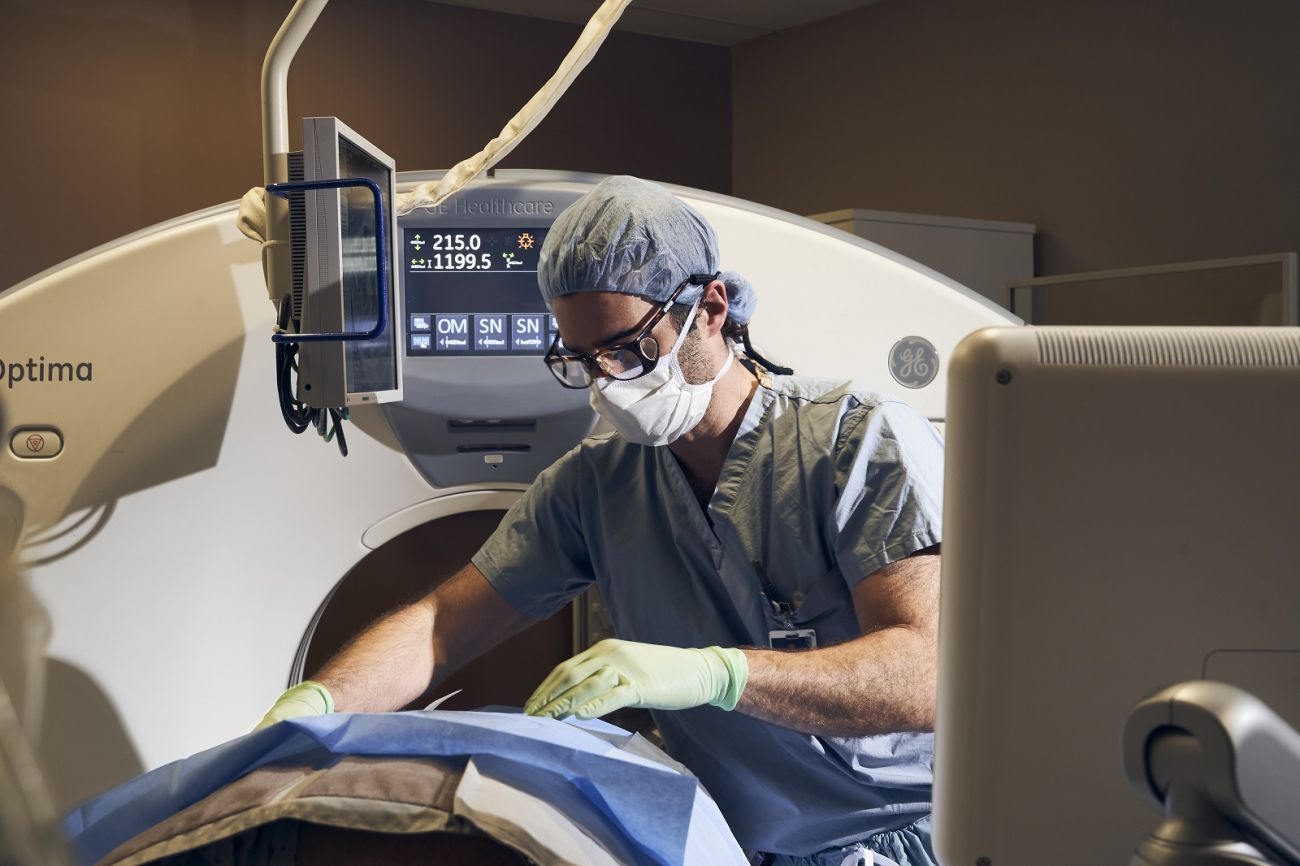
This can be done in two ways: A thin needle is inserted into the tumor’s core and the tumor is ablated or destroyed essentially by “cooking” it. Or a thin needle is inserted into the tumor and liquid nitrogen or argon gas is supplied to “freeze” and destroy the tumor.
You are missing some Flash content that should appear here! Perhaps your browser cannot display it, or maybe it did not initialize correctly.
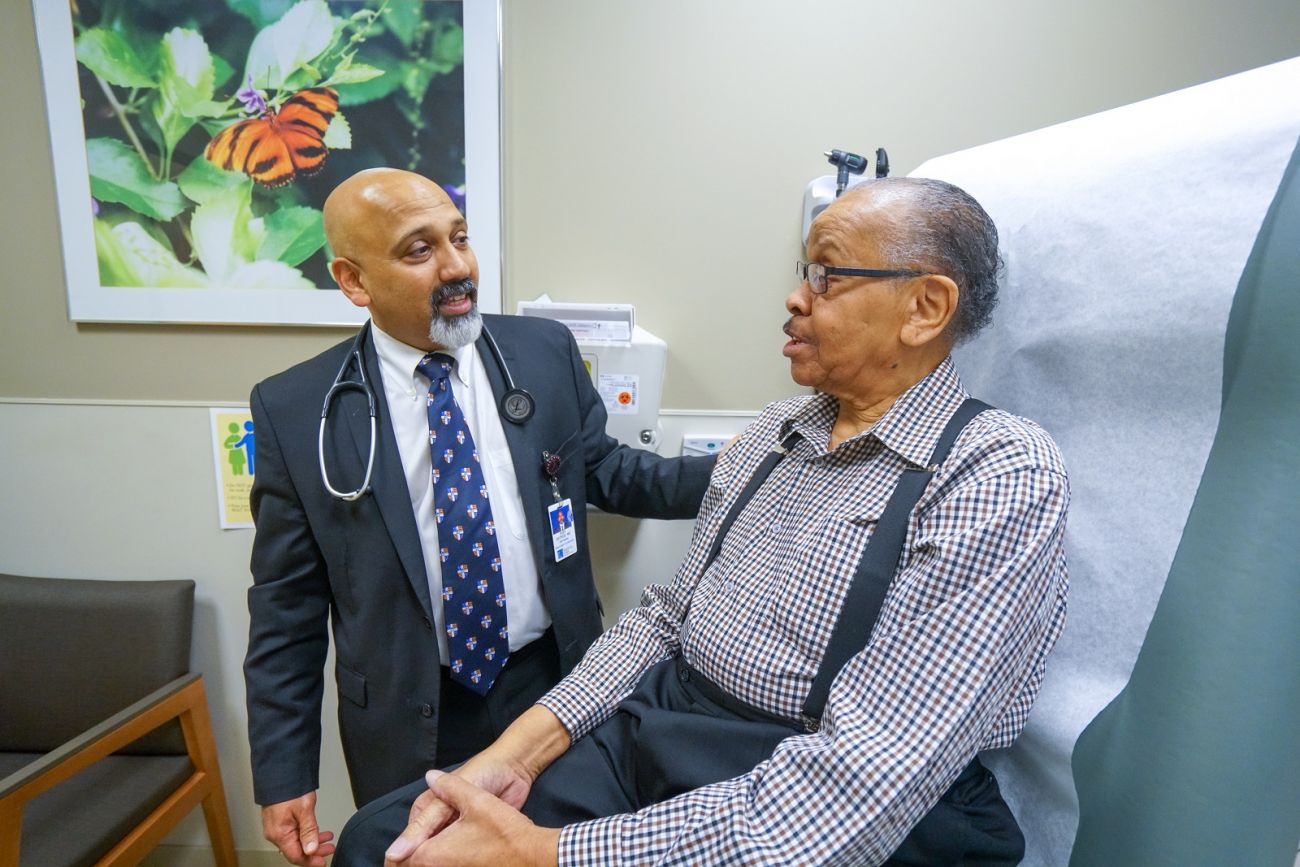
Kidney-cancer survivor Vince joins Roberto Pili, MD, Professor of Oncology, Chief of the Genitourinary Section and Leader of the Genitourinary Program, for a conversation about today's treatment options for...