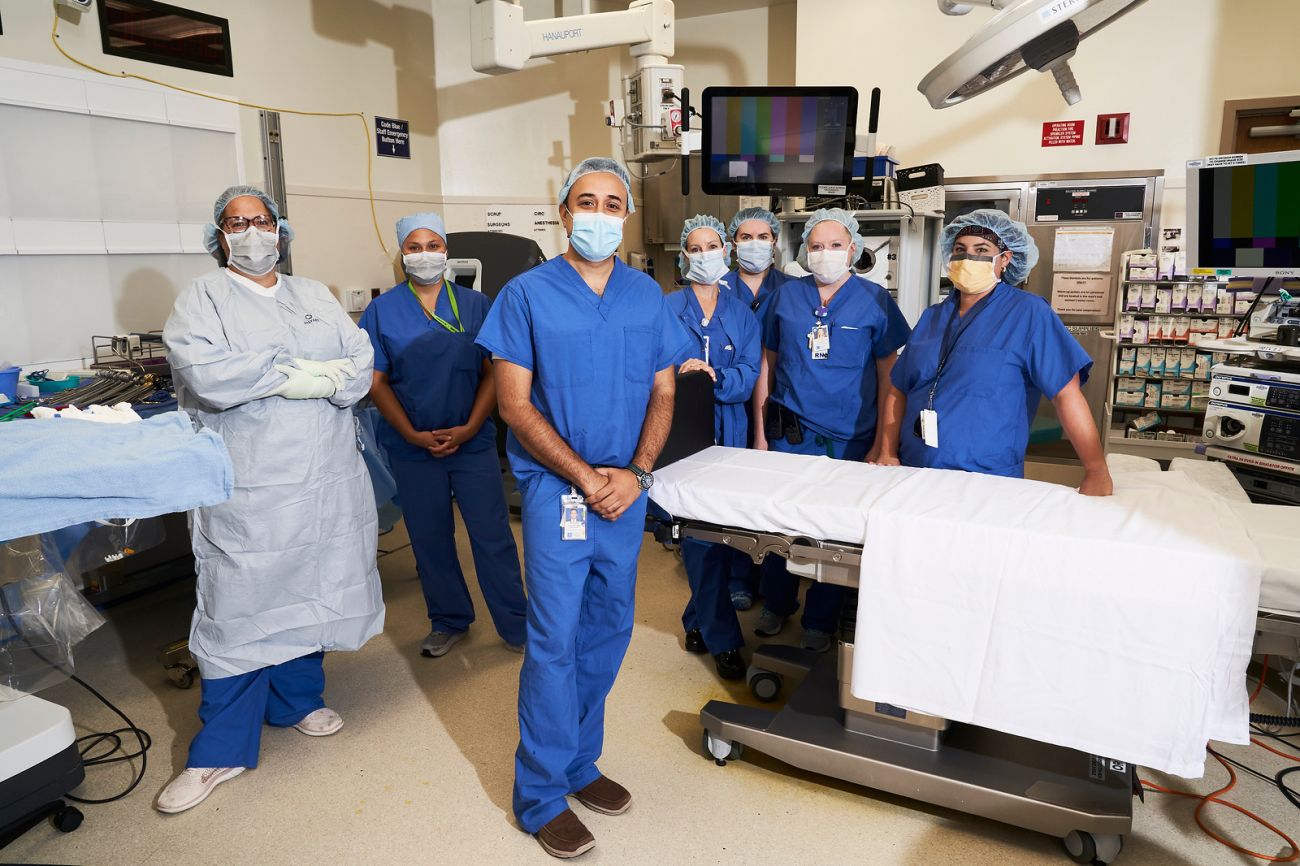
At Roswell Park, you will have more than just one esophageal cancer expert, you will have a team of them.
This team includes physicians from different medical specialties — gastrointestinal and thoracic surgeons, pathologists, gastroenterologists, medical and radiation oncologists and others — that bring their unique expertise together to determine the very best path forward for you.
Your treatment for esophageal cancer will likely include more than one type of treatment approach, and you may have one or more of the following:
- Endoscopic treatment to remove or destroy small tumors without major surgery
- Surgery to remove larger tumors
- Radiation therapy to kill cancer cells with high energy x-rays
- Chemotherapy to fight cancer cells in the body with drugs that circulate through your system.
- Targeted therapy to fight cancer by homing in on certain proteins or molecules the cancer needs to grow.
- Immunotherapy to trigger or boost your own immune system into action against the cancer.
- Clinical trials to gain access to the very latest promising treatments
Treatment for Barrett’s esophagus
Anyone with Barrett’s esophagus should have periodic endoscopy with a biopsy to monitor how abnormal the cells of the esophagus look, a condition known as dysplasia. Having Barrett’s esophagus with high-grade dysplasia is considered a pre-cancerous condition and most people should be treated in a timely manner. Roswell Park offers multiple minimally invasive treatments for this condition.