An estimated 9,000 new cases of anal cancer are diagnosed each year and that number has been growing for several years. Anal cancer is more common in women than in men, and most people are in their early 60s at the time of diagnosis.
The anus is the opening at the lower end of the intestines and rectum, through which stool (solid waste) leaves the body. The anus is made up of both the intestines and outer skin of the body. The anal canal is the 1 ½-inch tube that connects the rectum to the anus and the outside of the body. Two ring muscles, called sphincter muscles control the opening and closing of the anus.
Anal cancer occurs when cells in the tissues of the anus become malignant, and most commonly begins in the squamous cells that line the anal canal leading from the skin surface outside of the body to rectum.
Determining whether the cancer is rectal cancer or anal cancer depends on the cell type that is malignant, rather than the location of the tumor. Careful examination and testing by a pathologist experienced with anal and rectal cancer is key to a correct diagnosis and treatment plan.
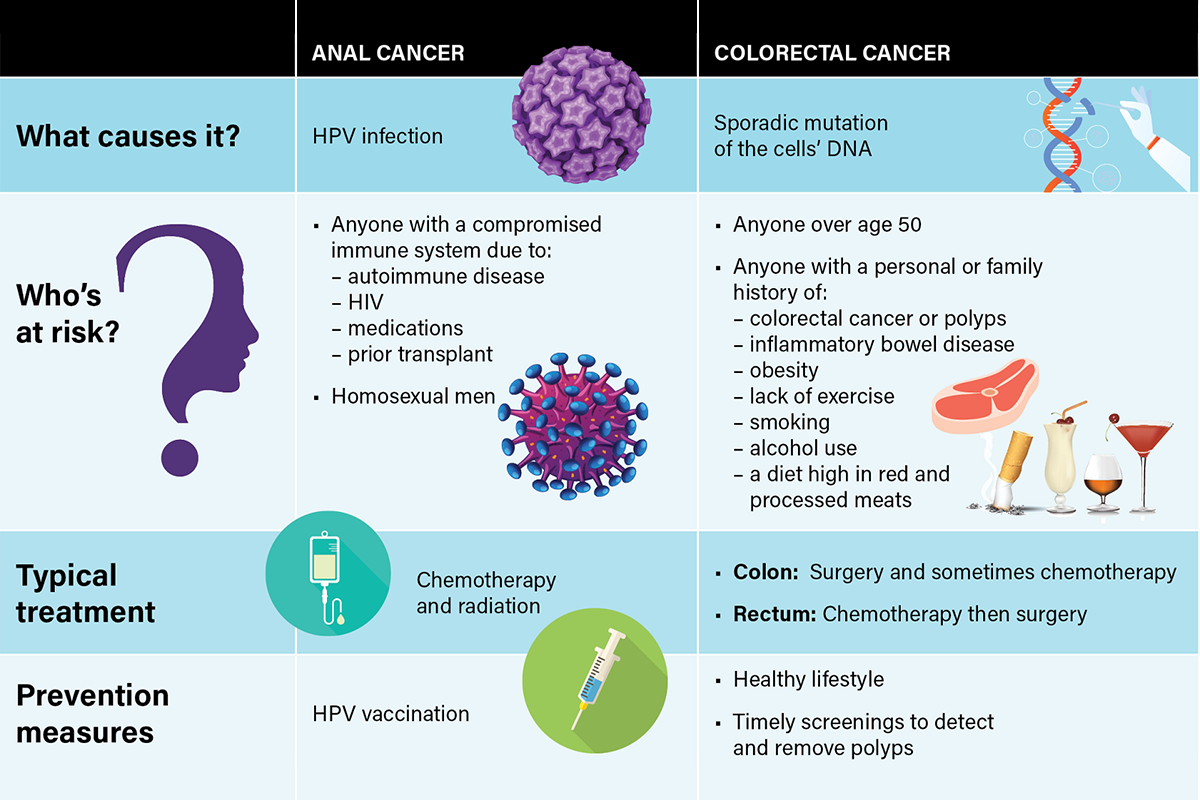
Are anal cancer and colorectal cancer the same?
Not at all. The rectum is the very lower end of the colon (large intestine). The anus is the lower end of the rectum and consists of the tissues that make up the actual opening. The location of the tumor, however, is not what determines the cancer type. Anal cancer is very different from rectal cancer in terms of the cell type that becomes malignant. Anal cancer is more like squamous cell skin cancer. Rectal cancer develops more like colon cancer. What’s more, treatment approaches for anal cancer and rectal cancers are very different. Most patients with anal cancer do not need surgery.